

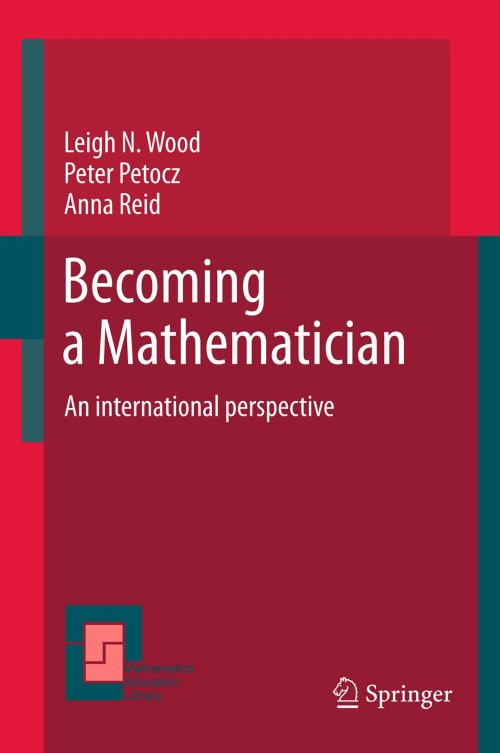
Becoming a Mathematician [electronic resource] : An international perspective / by Leigh N Wood, Peter Petocz, Anna Reid.
Erişim Adresi
ISBN
9789400729841
Dil Kodu
İngilizce
Yer Numarası
DK/7409
Yazar
Basım Bildirimi
1st ed. 2012.
Yayın Bilgisi
Dordrecht : Springer Netherlands : Imprint: Springer, 2012.
Fiziksel Niteleme
VIII, 188 p. online resource.
Dizi
Mathematics Education Library, 2214-983X ; 56
İçindekiler Notu
Chapter 1: Introduction: How does a person become a mathematician? -- Chapter 2: How do mathematics students think of mathematics? – a first look -- Chapter 3: How do mathematics students go about learning mathematics? – a first look -- Chapter 4: What do mathematics students say about mathematics internationally? -- Chapter 5: How can we track our students’ progress towards becoming mathematicians? -- Chapter 6: What is the contribution of mathematics to graduates’ professional working life? -- Chapter 7: What is the role of communication in mathematics graduates’ transition to professional work? -- Chapter 8: What university curriculum best helps students to become mathematicians? -- Chapter 9: How can professional development contribute to university mathematics teaching? -- Chapter 10: Conclusion: Becoming a mathematician – revisited -- References -- Appendix 1. Short form of conceptions of mathematics survey -- Appendix 2. Mathematical communication outcomes -- Appendix 3. Australian professional development framework. .
Özet, vb.
Mathematicians are everywhere and nowhere: although they play key roles in industry and research, business and science, the people who use the ideas and tools of the mathematics are often invisible and difficult to identify. This leads to a lack of clarity for students who are studying the mathematical sciences in their transition to professional life. Becoming a Mathematician considers the process of developing a mathematical identity and becoming a mathematician from the point of view of the participants in the process – students and recent graduates. It focuses on the people who do mathematics rather than on the topics of mathematics. It investigates the development of mathematical scientists for a variety of workplaces, and incorporates the experiences of those who were unsuccessful as well as those who were successful in the transition to the profession. The research presented is based on interviews, observations and surveys of students and graduates as they develop their identity as mathematicians, carried out over a decade in Australia and a diverse range of countries.
Konu
Mathematics __ Study and teaching .
Learning, Psychology of.
Professional education.
Vocational education.
Mathematics Education.
Instructional Psychology.
Professional and Vocational Education.
Learning, Psychology of.
Professional education.
Vocational education.
Mathematics Education.
Instructional Psychology.
Professional and Vocational Education.
Diğer Yazarlar
Kurum Adı
Eseri Alıntıla
Referansları kullanmadan önce gözden geçirmeniz ve varsa gerekli düzeltmeleri yapmanız önerilir.
Dijital Kaynak
MARC Görünümü
LEADER 04305nam a22005775i 4500
001 806099
003 TR_AnAIT
005 20260127001420
007 cr nn 008mamaa
008 120213s2012 ne | s |||| 0|eng d
020 |a9789400729841|9978-94-007-2984-1
024 7 |a10.1007/978-94-007-2984-1|2doi
041 |aeng
049 |aTürk Tarih Kurumu Kütüphanesi
050 4|aQA10.92-20
072 7|aJNU|2bicssc
072 7|aPB|2bicssc
072 7|aEDU029010|2bisacsh
072 7|aJNU|2thema
072 7|aPB|2thema
082 04|a510.71|223
090 |aDK/7409
100 1 |aWood, Leigh N.|eauthor.|4aut|4http://id.loc.gov/vocabulary/relators/aut
245 10|aBecoming a Mathematician|h[electronic resource] :|bAn international perspective /|cby Leigh N Wood, Peter Petocz, Anna Reid.
250 |a1st ed. 2012.
264 1|aDordrecht :|bSpringer Netherlands :|bImprint: Springer,|c2012.
300 |aVIII, 188 p.|bonline resource.
336 |atext|btxt|2rdacontent
337 |acomputer|bc|2rdamedia
338 |aonline resource|bcr|2rdacarrier
347 |atext file|bPDF|2rda
490 1 |aMathematics Education Library,|x2214-983X ;|v56
505 0 |aChapter 1: Introduction: How does a person become a mathematician? -- Chapter 2: How do mathematics students think of mathematics? – a first look -- Chapter 3: How do mathematics students go about learning mathematics? – a first look -- Chapter 4: What do mathematics students say about mathematics internationally? -- Chapter 5: How can we track our students’ progress towards becoming mathematicians? -- Chapter 6: What is the contribution of mathematics to graduates’ professional working life? -- Chapter 7: What is the role of communication in mathematics graduates’ transition to professional work? -- Chapter 8: What university curriculum best helps students to become mathematicians? -- Chapter 9: How can professional development contribute to university mathematics teaching? -- Chapter 10: Conclusion: Becoming a mathematician – revisited -- References -- Appendix 1. Short form of conceptions of mathematics survey -- Appendix 2. Mathematical communication outcomes -- Appendix 3. Australian professional development framework. .
520 |aMathematicians are everywhere and nowhere: although they play key roles in industry and research, business and science, the people who use the ideas and tools of the mathematics are often invisible and difficult to identify. This leads to a lack of clarity for students who are studying the mathematical sciences in their transition to professional life. Becoming a Mathematician considers the process of developing a mathematical identity and becoming a mathematician from the point of view of the participants in the process – students and recent graduates. It focuses on the people who do mathematics rather than on the topics of mathematics. It investigates the development of mathematical scientists for a variety of workplaces, and incorporates the experiences of those who were unsuccessful as well as those who were successful in the transition to the profession. The research presented is based on interviews, observations and surveys of students and graduates as they develop their identity as mathematicians, carried out over a decade in Australia and a diverse range of countries.
650 0|aMathematics|xStudy and teaching .
650 0|aLearning, Psychology of.
650 0|aProfessional education.
650 0|aVocational education.
650 14|aMathematics Education.
650 24|aInstructional Psychology.
650 24|aProfessional and Vocational Education.
700 1 |aPetocz, Peter.|eauthor.|4aut|4http://id.loc.gov/vocabulary/relators/aut
700 1 |aReid, Anna.|eauthor.|4aut|4http://id.loc.gov/vocabulary/relators/aut
710 2 |aSpringerLink (Online service)
773 0 |tSpringer Nature eBook
776 08|iPrinted edition:|z9789400729834
776 08|iPrinted edition:|z9789400729858
776 08|iPrinted edition:|z9789401783774
830 0|aMathematics Education Library,|x2214-983X ;|v56
856 40|uhttps://doi.org/10.1007/978-94-007-2984-1
912 |aZDB-2-SHU
912 |aZDB-2-SXED
950 |aHumanities, Social Sciences and Law (SpringerNature-11648)
950 |aEducation (R0) (SpringerNature-43721)
001 806099
003 TR_AnAIT
005 20260127001420
007 cr nn 008mamaa
008 120213s2012 ne | s |||| 0|eng d
020 |a9789400729841|9978-94-007-2984-1
024 7 |a10.1007/978-94-007-2984-1|2doi
041 |aeng
049 |aTürk Tarih Kurumu Kütüphanesi
050 4|aQA10.92-20
072 7|aJNU|2bicssc
072 7|aPB|2bicssc
072 7|aEDU029010|2bisacsh
072 7|aJNU|2thema
072 7|aPB|2thema
082 04|a510.71|223
090 |aDK/7409
100 1 |aWood, Leigh N.|eauthor.|4aut|4http://id.loc.gov/vocabulary/relators/aut
245 10|aBecoming a Mathematician|h[electronic resource] :|bAn international perspective /|cby Leigh N Wood, Peter Petocz, Anna Reid.
250 |a1st ed. 2012.
264 1|aDordrecht :|bSpringer Netherlands :|bImprint: Springer,|c2012.
300 |aVIII, 188 p.|bonline resource.
336 |atext|btxt|2rdacontent
337 |acomputer|bc|2rdamedia
338 |aonline resource|bcr|2rdacarrier
347 |atext file|bPDF|2rda
490 1 |aMathematics Education Library,|x2214-983X ;|v56
505 0 |aChapter 1: Introduction: How does a person become a mathematician? -- Chapter 2: How do mathematics students think of mathematics? – a first look -- Chapter 3: How do mathematics students go about learning mathematics? – a first look -- Chapter 4: What do mathematics students say about mathematics internationally? -- Chapter 5: How can we track our students’ progress towards becoming mathematicians? -- Chapter 6: What is the contribution of mathematics to graduates’ professional working life? -- Chapter 7: What is the role of communication in mathematics graduates’ transition to professional work? -- Chapter 8: What university curriculum best helps students to become mathematicians? -- Chapter 9: How can professional development contribute to university mathematics teaching? -- Chapter 10: Conclusion: Becoming a mathematician – revisited -- References -- Appendix 1. Short form of conceptions of mathematics survey -- Appendix 2. Mathematical communication outcomes -- Appendix 3. Australian professional development framework. .
520 |aMathematicians are everywhere and nowhere: although they play key roles in industry and research, business and science, the people who use the ideas and tools of the mathematics are often invisible and difficult to identify. This leads to a lack of clarity for students who are studying the mathematical sciences in their transition to professional life. Becoming a Mathematician considers the process of developing a mathematical identity and becoming a mathematician from the point of view of the participants in the process – students and recent graduates. It focuses on the people who do mathematics rather than on the topics of mathematics. It investigates the development of mathematical scientists for a variety of workplaces, and incorporates the experiences of those who were unsuccessful as well as those who were successful in the transition to the profession. The research presented is based on interviews, observations and surveys of students and graduates as they develop their identity as mathematicians, carried out over a decade in Australia and a diverse range of countries.
650 0|aMathematics|xStudy and teaching .
650 0|aLearning, Psychology of.
650 0|aProfessional education.
650 0|aVocational education.
650 14|aMathematics Education.
650 24|aInstructional Psychology.
650 24|aProfessional and Vocational Education.
700 1 |aPetocz, Peter.|eauthor.|4aut|4http://id.loc.gov/vocabulary/relators/aut
700 1 |aReid, Anna.|eauthor.|4aut|4http://id.loc.gov/vocabulary/relators/aut
710 2 |aSpringerLink (Online service)
773 0 |tSpringer Nature eBook
776 08|iPrinted edition:|z9789400729834
776 08|iPrinted edition:|z9789400729858
776 08|iPrinted edition:|z9789401783774
830 0|aMathematics Education Library,|x2214-983X ;|v56
856 40|uhttps://doi.org/10.1007/978-94-007-2984-1
912 |aZDB-2-SHU
912 |aZDB-2-SXED
950 |aHumanities, Social Sciences and Law (SpringerNature-11648)
950 |aEducation (R0) (SpringerNature-43721)
Materyaller
Depodan talep edilen materyal sadece kütüphane içerisinde kullanılmaktadır.
Materyal dışarıya ödünç verilmemektedir.
Materyal dışarıya ödünç verilmemektedir.
