LEADER 03960nam a22005055i 4500
001 806107
003 TR_AnAIT
005 20260127001429
007 cr nn 008mamaa
008 130514s2013 xxu| s |||| 0|eng d
020 |a9781461468745|9978-1-4614-6874-5
024 7 |a10.1007/978-1-4614-6874-5|2doi
041 |aeng
049 |aTürk Tarih Kurumu Kütüphanesi
050 4|aCC1-960
072 7|aHD|2bicssc
072 7|aSOC003000|2bisacsh
072 7|aNK|2thema
082 04|a930.1|223
090 |aDK/7417
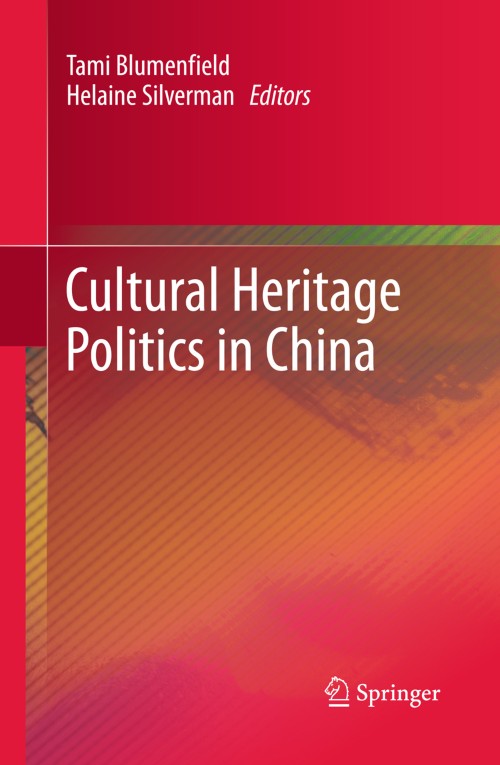
245 10|aCultural Heritage Politics in China|h[electronic resource] /|cedited by Tami Blumenfield, Helaine Silverman.
250 |a1st ed. 2013.
264 1|aNew York, NY :|bSpringer New York :|bImprint: Springer,|c2013.
300 |aXVIII, 297 p.|bonline resource.
336 |atext|btxt|2rdacontent
337 |acomputer|bc|2rdamedia
338 |aonline resource|bcr|2rdacarrier
347 |atext file|bPDF|2rda
520 |aThis volume explores China’s cultural heritage ideology and policies from three interrelated perspectives: the State and World Heritage tourism; cultural heritage tourism at sites not designated through an international system; and the cultural politics of museums and collections . It also considers the broader implications of China as a heritage power as the nation mobilizes routes beyond its borders as essential components of its own patrimony. The volume is timely because a cultural heritage designation craze is underway in China. Officials at many levels now see heritage preservation as a means for commoditizing and developing their regions. They are devoting new resources and attention to national and international heritage designations, but contradictions and complications in the actual practices of designating and protecting heritage abound . Thus, addressing cultural heritage politics in a nation dedicated to designation is an important project, particularly in the context of a rapidly growing economy increasingly interested in asserting its cultural power beyond its borders. Cultural Heritage Politics in China addresses a wide range of cultural heritage issues, providing an excellent mix of interdisciplinary case studies: historic vernacular urban environments, ethnic tourism, scenic tourism, pilgrimage as tourism, museums, border heritage, underwater remains, and the actual governance and management of the sites[TB4] . Moreover, the volume draws from an impressive range of contributors, including scholars from China, Hong Kong, Australia, Europe, and the United States, who have both scholarly and applied experience in the fields of heritage tourism and museum studies. In addition to their extensive field research, many contributors have served as consultants for UNESCO, helped China develop applications for World Heritage sites, and consulted with museums. With its extensive case studies from experienced heritage experts, Cultural Heritage Politics in China provides an outstanding introduction to current cultural heritage issues in China and contributes to Chinese studies for those with greater knowledge of the area.
650 0|aArchaeology.
650 0|aCultural property.
650 0|aEthnology.
650 0|aCulture.
650 14|aArchaeology.
650 24|aCultural Heritage.
650 24|aRegional Cultural Studies.
700 1 |aBlumenfield, Tami.|eeditor.|4edt|4http://id.loc.gov/vocabulary/relators/edt
700 1 |aSilverman, Helaine.|eeditor.|4edt|4http://id.loc.gov/vocabulary/relators/edt
710 2 |aSpringerLink (Online service)
773 0 |tSpringer Nature eBook
776 08|iPrinted edition:|z9781461468738
776 08|iPrinted edition:|z9781461468752
776 08|iPrinted edition:|z9781489997616
856 40|uhttps://doi.org/10.1007/978-1-4614-6874-5
912 |aZDB-2-SHU
912 |aZDB-2-SXS
950 |aHumanities, Social Sciences and Law (SpringerNature-11648)
950 |aSocial Sciences (R0) (SpringerNature-43726)