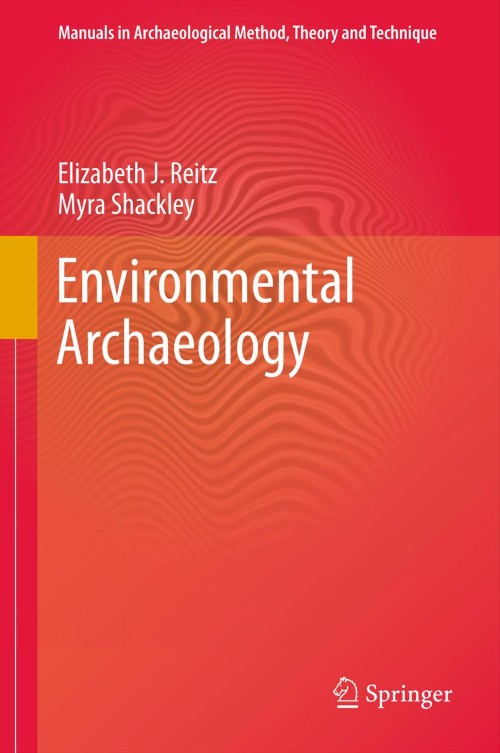
Environmental Archaeology [electronic resource] / by Elizabeth Reitz, Myra Shackley.
Erişim Adresi
ISBN
9781461433392
Dil Kodu
İngilizce
Yer Numarası
DK/7465
Yazar
Basım Bildirimi
1st ed. 2012.
Yayın Bilgisi
New York, NY : Springer US : Imprint: Springer, 2012.
Fiziksel Niteleme
XLIV, 516 p. 151 illus., 7 illus. in color. online resource.
Dizi
Manuals in Archaeological Method, Theory and Technique
İçindekiler Notu
Introduction to Environmental Archaeology -- Factors Affecting the Composition of an Assemblage -- Research Designs and Field Methods -- Classification and Nomenclature -- Sediments and Soils -- Seeds, Fruits, Nuts and Tubers -- Woods and Charcoal -- Pollen -- Phytoliths, Starch Grains and Spores -- Micro-organisms -- Arthropods: Spiders and Mites, fleas, Chironomids, Lice, Beetles, Rickettsiae, Ostracods, Nematode Worms, Crabs, Shrimp -- Echinoderms and Molluscs -- Vertebrate Bones and Teeth -- Other Vertebrate Tissues -- Stable Isotopes, Trace Elements, Ancient Genetics and Enzymes -- Conclusion.
Özet, vb.
One of the most significant developments in archaeology in recent years is the emergence of its environmental branch: the study of humans’ interactions with their natural surroundings over long periods and of organic remains instead of the ceramic, lithic and architectural elements generally associated with sites. With the current attention paid to human responsibility for environmental change, this innovative field is recognized by scientists, conservation and heritage managers, and policymakers worldwide. In this context comes Environmental Archaeology by Elizabeth Reitz and Myra Shackley, updating the seminal 1981 text Environmental Archaeology by Myra Shackley. Rigorously detailed yet concise and accessible, this volume surveys the complex and technical field of environmental archaeology for researchers interested in the causes, consequences, and potential future impact of environmental change from the perspective of archaeology. Its coverage acknowledges the multiple disciplines involved in the field, expanding the possibilities for using environmental data from archaeological sites in enriching related disciplines and improving communication among them. Introductory chapters explain the processes involved in the formation of sites, introduce research designs and field methods and walk the reader through biological classifications before focusing on the various levels of biotic and abiotic materials found at sites, including: Sediments and soils. Viruses, bacteria, archaea, protists and fungi. Bryophytes and vascular plants. Wood, charcoal, stems, leaves and roots. Spores, pollen and other microbotanical remains. Arthropods, molluscs, echinoderms and vertebrates. Stable isotopes, elements and biomolecules. The updated Environmental Archaeology is a major addition to the resource library of archaeologists,environmentalists, historians, researchers, policymakers—anyone involved in studying, managing, or preserving archaeological sites.
Konu
Archaeology.
Environment.
Archaeology.
Environmental Sciences.
Environment.
Archaeology.
Environmental Sciences.
Diğer Yazarlar
Kurum Adı

Eseri Alıntıla
Referansları kullanmadan önce gözden geçirmeniz ve varsa gerekli düzeltmeleri yapmanız önerilir.
Dijital Kaynak
MARC Görünümü
LEADER 04458nam a22005175i 4500
001 806155
003 TR_AnAIT
005 20260127001527
007 cr nn 008mamaa
008 120604s2012 xxu| s |||| 0|eng d
020 |a9781461433392|9978-1-4614-3339-2
024 7 |a10.1007/978-1-4614-3339-2|2doi
041 |aeng
049 |aTürk Tarih Kurumu Kütüphanesi
050 4|aCC1-960
072 7|aHD|2bicssc
072 7|aSOC003000|2bisacsh
072 7|aNK|2thema
082 04|a930.1|223
090 |aDK/7465
100 1 |aReitz, Elizabeth.|eauthor.|4aut|4http://id.loc.gov/vocabulary/relators/aut
245 10|aEnvironmental Archaeology|h[electronic resource] /|cby Elizabeth Reitz, Myra Shackley.
250 |a1st ed. 2012.
264 1|aNew York, NY :|bSpringer US :|bImprint: Springer,|c2012.
300 |aXLIV, 516 p. 151 illus., 7 illus. in color.|bonline resource.
336 |atext|btxt|2rdacontent
337 |acomputer|bc|2rdamedia
338 |aonline resource|bcr|2rdacarrier
347 |atext file|bPDF|2rda
490 1 |aManuals in Archaeological Method, Theory and Technique
505 0 |aIntroduction to Environmental Archaeology -- Factors Affecting the Composition of an Assemblage -- Research Designs and Field Methods -- Classification and Nomenclature -- Sediments and Soils -- Seeds, Fruits, Nuts and Tubers -- Woods and Charcoal -- Pollen -- Phytoliths, Starch Grains and Spores -- Micro-organisms -- Arthropods: Spiders and Mites, fleas, Chironomids, Lice, Beetles, Rickettsiae, Ostracods, Nematode Worms, Crabs, Shrimp -- Echinoderms and Molluscs -- Vertebrate Bones and Teeth -- Other Vertebrate Tissues -- Stable Isotopes, Trace Elements, Ancient Genetics and Enzymes -- Conclusion.
520 |aOne of the most significant developments in archaeology in recent years is the emergence of its environmental branch: the study of humans’ interactions with their natural surroundings over long periods and of organic remains instead of the ceramic, lithic and architectural elements generally associated with sites. With the current attention paid to human responsibility for environmental change, this innovative field is recognized by scientists, conservation and heritage managers, and policymakers worldwide. In this context comes Environmental Archaeology by Elizabeth Reitz and Myra Shackley, updating the seminal 1981 text Environmental Archaeology by Myra Shackley. Rigorously detailed yet concise and accessible, this volume surveys the complex and technical field of environmental archaeology for researchers interested in the causes, consequences, and potential future impact of environmental change from the perspective of archaeology. Its coverage acknowledges the multiple disciplines involved in the field, expanding the possibilities for using environmental data from archaeological sites in enriching related disciplines and improving communication among them. Introductory chapters explain the processes involved in the formation of sites, introduce research designs and field methods and walk the reader through biological classifications before focusing on the various levels of biotic and abiotic materials found at sites, including: Sediments and soils. Viruses, bacteria, archaea, protists and fungi. Bryophytes and vascular plants. Wood, charcoal, stems, leaves and roots. Spores, pollen and other microbotanical remains. Arthropods, molluscs, echinoderms and vertebrates. Stable isotopes, elements and biomolecules. The updated Environmental Archaeology is a major addition to the resource library of archaeologists,environmentalists, historians, researchers, policymakers—anyone involved in studying, managing, or preserving archaeological sites.
650 0|aArchaeology.
650 0|aEnvironment.
650 14|aArchaeology.
650 24|aEnvironmental Sciences.
700 1 |aShackley, Myra.|eauthor.|4aut|4http://id.loc.gov/vocabulary/relators/aut
710 2 |aSpringerLink (Online service)
773 0 |tSpringer Nature eBook
776 08|iPrinted edition:|z9781461433378
776 08|iPrinted edition:|z9781461433385
776 08|iPrinted edition:|z9781461433408
776 08|iPrinted edition:|z9781461496441
830 0|aManuals in Archaeological Method, Theory and Technique
856 40|uhttps://doi.org/10.1007/978-1-4614-3339-2
912 |aZDB-2-SHU
912 |aZDB-2-SXS
950 |aHumanities, Social Sciences and Law (SpringerNature-11648)
950 |aSocial Sciences (R0) (SpringerNature-43726)
001 806155
003 TR_AnAIT
005 20260127001527
007 cr nn 008mamaa
008 120604s2012 xxu| s |||| 0|eng d
020 |a9781461433392|9978-1-4614-3339-2
024 7 |a10.1007/978-1-4614-3339-2|2doi
041 |aeng
049 |aTürk Tarih Kurumu Kütüphanesi
050 4|aCC1-960
072 7|aHD|2bicssc
072 7|aSOC003000|2bisacsh
072 7|aNK|2thema
082 04|a930.1|223
090 |aDK/7465
100 1 |aReitz, Elizabeth.|eauthor.|4aut|4http://id.loc.gov/vocabulary/relators/aut
245 10|aEnvironmental Archaeology|h[electronic resource] /|cby Elizabeth Reitz, Myra Shackley.
250 |a1st ed. 2012.
264 1|aNew York, NY :|bSpringer US :|bImprint: Springer,|c2012.
300 |aXLIV, 516 p. 151 illus., 7 illus. in color.|bonline resource.
336 |atext|btxt|2rdacontent
337 |acomputer|bc|2rdamedia
338 |aonline resource|bcr|2rdacarrier
347 |atext file|bPDF|2rda
490 1 |aManuals in Archaeological Method, Theory and Technique
505 0 |aIntroduction to Environmental Archaeology -- Factors Affecting the Composition of an Assemblage -- Research Designs and Field Methods -- Classification and Nomenclature -- Sediments and Soils -- Seeds, Fruits, Nuts and Tubers -- Woods and Charcoal -- Pollen -- Phytoliths, Starch Grains and Spores -- Micro-organisms -- Arthropods: Spiders and Mites, fleas, Chironomids, Lice, Beetles, Rickettsiae, Ostracods, Nematode Worms, Crabs, Shrimp -- Echinoderms and Molluscs -- Vertebrate Bones and Teeth -- Other Vertebrate Tissues -- Stable Isotopes, Trace Elements, Ancient Genetics and Enzymes -- Conclusion.
520 |aOne of the most significant developments in archaeology in recent years is the emergence of its environmental branch: the study of humans’ interactions with their natural surroundings over long periods and of organic remains instead of the ceramic, lithic and architectural elements generally associated with sites. With the current attention paid to human responsibility for environmental change, this innovative field is recognized by scientists, conservation and heritage managers, and policymakers worldwide. In this context comes Environmental Archaeology by Elizabeth Reitz and Myra Shackley, updating the seminal 1981 text Environmental Archaeology by Myra Shackley. Rigorously detailed yet concise and accessible, this volume surveys the complex and technical field of environmental archaeology for researchers interested in the causes, consequences, and potential future impact of environmental change from the perspective of archaeology. Its coverage acknowledges the multiple disciplines involved in the field, expanding the possibilities for using environmental data from archaeological sites in enriching related disciplines and improving communication among them. Introductory chapters explain the processes involved in the formation of sites, introduce research designs and field methods and walk the reader through biological classifications before focusing on the various levels of biotic and abiotic materials found at sites, including: Sediments and soils. Viruses, bacteria, archaea, protists and fungi. Bryophytes and vascular plants. Wood, charcoal, stems, leaves and roots. Spores, pollen and other microbotanical remains. Arthropods, molluscs, echinoderms and vertebrates. Stable isotopes, elements and biomolecules. The updated Environmental Archaeology is a major addition to the resource library of archaeologists,environmentalists, historians, researchers, policymakers—anyone involved in studying, managing, or preserving archaeological sites.
650 0|aArchaeology.
650 0|aEnvironment.
650 14|aArchaeology.
650 24|aEnvironmental Sciences.
700 1 |aShackley, Myra.|eauthor.|4aut|4http://id.loc.gov/vocabulary/relators/aut
710 2 |aSpringerLink (Online service)
773 0 |tSpringer Nature eBook
776 08|iPrinted edition:|z9781461433378
776 08|iPrinted edition:|z9781461433385
776 08|iPrinted edition:|z9781461433408
776 08|iPrinted edition:|z9781461496441
830 0|aManuals in Archaeological Method, Theory and Technique
856 40|uhttps://doi.org/10.1007/978-1-4614-3339-2
912 |aZDB-2-SHU
912 |aZDB-2-SXS
950 |aHumanities, Social Sciences and Law (SpringerNature-11648)
950 |aSocial Sciences (R0) (SpringerNature-43726)
Materyaller
Depodan talep edilen materyal sadece kütüphane içerisinde kullanılmaktadır.
Materyal dışarıya ödünç verilmemektedir.
