

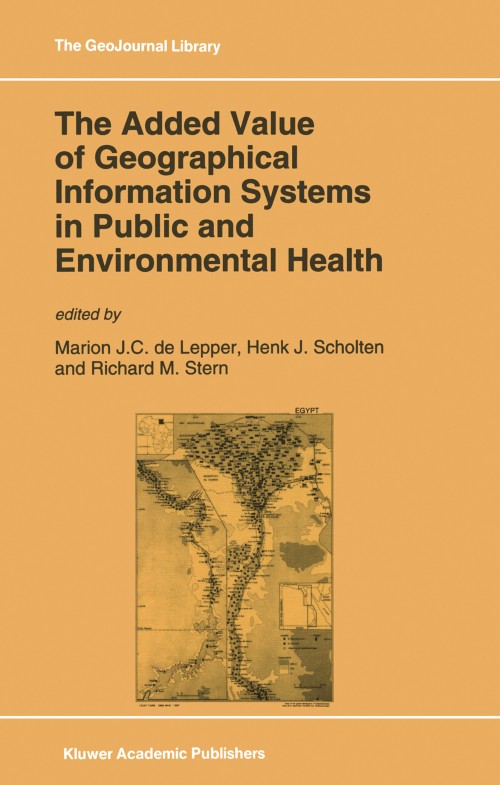
The Added Value of Geographical Information Systems in Public and Environmental Health [electronic resource] / edited by M.J. de Lepper, Henk J. Scholten, Richard M. Stern.
Erişim Adresi
ISBN
9780585315607
Dil Kodu
İngilizce
Yer Numarası
DK/7501
Basım Bildirimi
1st ed. 1995.
Yayın Bilgisi
Dordrecht : Springer Netherlands : Imprint: Springer, 1995.
Fiziksel Niteleme
XXIX, 358 p. 54 illus. online resource.
Dizi
GeoJournal Library, 2215-0072 ; 24
İçindekiler Notu
Need of Information in Public and Environmental Health -- Environment and Health Data in Europe as a Tool for Risk Management: Needs, Uses and Strategies -- Indicators of Public Health and Environmental Quality -- Meta-Information Systems for Environment and Health -- The Components of Geographical Information Systems -- An Introduction to Geographical Information Systems -- The Integration of Information in Geographical Information Systems -- Organizational Aspects of Geographical Information Systems -- Data Aspects of Geographical Information Systems -- Analysis of Spatial Information -- Spatial Analysis in Health Research -- Strategies for the Use of Geography in Epidemiological Analysis -- Analysing Spatial Patterns of Disease: Some Issues in the Mapping of Incidence Data for Relatively Rare Conditions -- Applications of Geogrpaphical Information Systems in Public and Environmental Health -- The Exploration of the Possible Relationship Between Deaths, Births and Air Pollution in Scottish Towns.-Road Traffic Accidents Involving Children in North-East England -- Geographical Software Applications for Health Sector Planning: Experiences from a Study for Famine Management -- Geographical Information Systems: A New Tool in the Fight Against Schistosomiasis -- Geographical Information Systems and Spatial Epidemiology: Modelling the Possible Association Between Cancer of the Larynx and Incineration in North-west England -- The Potential Role of Geographical Information Systems Technology in Air Toxics Risk Assessment, Communication and Management -- Value Added by Geographical Information Systems -- Spatial Information to Make a Difference: Value Added Decision-Making in the Health Sector with Geographical Information Systems -- The Long-Term Potential of Geographical Information Systems for Epidemiology -- Implementing Geographical Information Systems -- Geographical Information Systems in Organizations: Some Conditions for Their Effective Utilization -- Building a Geographical InformationSystem in the European Community: The Corine Experience -- Implementing a Global Geographical Information System for Modelling Sustainable Environmental Quality: The Critical Load Experience -- Towards a Health and Environmental Geographical Information System for Europe -- Development of a Health and Environment Geographical Information System for the European Region.
Özet, vb.
Health for all by the year 2000 is the blueprint for change agreed to by the Member States of the World Health Organization. In Europe, this blueprint is built on 38 regional targets, many of which have the underlying aim of uncovering new knowledge and of using existing knowledge more effectively. The targets related to a healthy environment have the ultimate goals of safeguarding human health against environmental hazards, and of enhancing the quality of life by providing clean and safe water, air, food, and working and living conditions. Allied to these goals is the need to reduce the sense of jeopardy that many people feel about what they perceive as 'the risks of everyday life'. These goals are an integral part of the European Charter on Environment and Health, adopted by 29 European Member States and the Commission of the European Communities in December 1989. The Charter stresses the shared responsibility of everyone to protect the environment, to be given adequate and accurateinformation, and to be involved in decision-making. It outUnes the principles for public policy as well as what needs to be done to transform them into action. In this, strong information systems have a vital role to play by helping to monitor the effectiveness of measures taken, of trends analysed, of priorities set and of decisions made.
Konu
Human geography.
Geography.
Public health.
Environment.
Human Geography.
Geography.
Public Health.
Environmental Sciences.
Geography.
Public health.
Environment.
Human Geography.
Geography.
Public Health.
Environmental Sciences.
Diğer Yazarlar
Kurum Adı
Eseri Alıntıla
Referansları kullanmadan önce gözden geçirmeniz ve varsa gerekli düzeltmeleri yapmanız önerilir.
Dijital Kaynak
MARC Görünümü
LEADER 06588nam a22006255i 4500
001 806194
003 TR_AnAIT
005 20260127001616
007 cr nn 008mamaa
008 100301s1995 ne | s |||| 0|eng d
020 |a9780585315607|9978-0-585-31560-7
024 7 |a10.1007/978-0-585-31560-7|2doi
041 |aeng
049 |aTürk Tarih Kurumu Kütüphanesi
050 4|aGF
072 7|aRGC|2bicssc
072 7|aSOC015000|2bisacsh
072 7|aRGC|2thema
082 04|a304.2|223
090 |aDK/7501
245 14|aThe Added Value of Geographical Information Systems in Public and Environmental Health|h[electronic resource] /|cedited by M.J. de Lepper, Henk J. Scholten, Richard M. Stern.
250 |a1st ed. 1995.
264 1|aDordrecht :|bSpringer Netherlands :|bImprint: Springer,|c1995.
300 |aXXIX, 358 p. 54 illus.|bonline resource.
336 |atext|btxt|2rdacontent
337 |acomputer|bc|2rdamedia
338 |aonline resource|bcr|2rdacarrier
347 |atext file|bPDF|2rda
490 1 |aGeoJournal Library,|x2215-0072 ;|v24
505 0 |aNeed of Information in Public and Environmental Health -- Environment and Health Data in Europe as a Tool for Risk Management: Needs, Uses and Strategies -- Indicators of Public Health and Environmental Quality -- Meta-Information Systems for Environment and Health -- The Components of Geographical Information Systems -- An Introduction to Geographical Information Systems -- The Integration of Information in Geographical Information Systems -- Organizational Aspects of Geographical Information Systems -- Data Aspects of Geographical Information Systems -- Analysis of Spatial Information -- Spatial Analysis in Health Research -- Strategies for the Use of Geography in Epidemiological Analysis -- Analysing Spatial Patterns of Disease: Some Issues in the Mapping of Incidence Data for Relatively Rare Conditions -- Applications of Geogrpaphical Information Systems in Public and Environmental Health -- The Exploration of the Possible Relationship Between Deaths, Births and Air Pollution in Scottish Towns.-Road Traffic Accidents Involving Children in North-East England -- Geographical Software Applications for Health Sector Planning: Experiences from a Study for Famine Management -- Geographical Information Systems: A New Tool in the Fight Against Schistosomiasis -- Geographical Information Systems and Spatial Epidemiology: Modelling the Possible Association Between Cancer of the Larynx and Incineration in North-west England -- The Potential Role of Geographical Information Systems Technology in Air Toxics Risk Assessment, Communication and Management -- Value Added by Geographical Information Systems -- Spatial Information to Make a Difference: Value Added Decision-Making in the Health Sector with Geographical Information Systems -- The Long-Term Potential of Geographical Information Systems for Epidemiology -- Implementing Geographical Information Systems -- Geographical Information Systems in Organizations: Some Conditions for Their Effective Utilization -- Building a Geographical InformationSystem in the European Community: The Corine Experience -- Implementing a Global Geographical Information System for Modelling Sustainable Environmental Quality: The Critical Load Experience -- Towards a Health and Environmental Geographical Information System for Europe -- Development of a Health and Environment Geographical Information System for the European Region.
520 |aHealth for all by the year 2000 is the blueprint for change agreed to by the Member States of the World Health Organization. In Europe, this blueprint is built on 38 regional targets, many of which have the underlying aim of uncovering new knowledge and of using existing knowledge more effectively. The targets related to a healthy environment have the ultimate goals of safeguarding human health against environmental hazards, and of enhancing the quality of life by providing clean and safe water, air, food, and working and living conditions. Allied to these goals is the need to reduce the sense of jeopardy that many people feel about what they perceive as 'the risks of everyday life'. These goals are an integral part of the European Charter on Environment and Health, adopted by 29 European Member States and the Commission of the European Communities in December 1989. The Charter stresses the shared responsibility of everyone to protect the environment, to be given adequate and accurateinformation, and to be involved in decision-making. It outUnes the principles for public policy as well as what needs to be done to transform them into action. In this, strong information systems have a vital role to play by helping to monitor the effectiveness of measures taken, of trends analysed, of priorities set and of decisions made.
532 8 |aAccessibility summary: This PDF is not accessible. It is based on scanned pages and does not support features such as screen reader compatibility or described non-text content (images, graphs etc). However, it likely supports searchable and selectable text based on OCR (Optical Character Recognition). Users with accessibility needs may not be able to use this content effectively. Please contact us at accessibilitysupport@springernature.com if you require assistance or an alternative format.
532 8 |aInaccessible, or known limited accessibility
532 8 |aNo reading system accessibility options actively disabled
532 8 |aPublisher contact for further accessibility information: accessibilitysupport@springernature.com
650 0|aHuman geography.
650 0|aGeography.
650 0|aPublic health.
650 0|aEnvironment.
650 14|aHuman Geography.
650 24|aGeography.
650 24|aPublic Health.
650 24|aEnvironmental Sciences.
700 1 |ade Lepper, M.J.|eeditor.|4edt|4http://id.loc.gov/vocabulary/relators/edt
700 1 |aScholten, Henk J.|eeditor.|4edt|4http://id.loc.gov/vocabulary/relators/edt
700 1 |aStern, Richard M.|eeditor.|4edt|4http://id.loc.gov/vocabulary/relators/edt
710 2 |aSpringerLink (Online service)
773 0 |tSpringer Nature eBook
776 08|iPrinted edition:|z9780792318873
776 08|iPrinted edition:|z9789401737708
776 08|iPrinted edition:|z9789401737715
830 0|aGeoJournal Library,|x2215-0072 ;|v24
856 40|uhttps://doi.org/10.1007/978-0-585-31560-7
912 |aZDB-2-SHU
912 |aZDB-2-SXS
912 |aZDB-2-BAE
950 |aHumanities, Social Sciences and Law (SpringerNature-11648)
950 |aSocial Sciences (R0) (SpringerNature-43726)
001 806194
003 TR_AnAIT
005 20260127001616
007 cr nn 008mamaa
008 100301s1995 ne | s |||| 0|eng d
020 |a9780585315607|9978-0-585-31560-7
024 7 |a10.1007/978-0-585-31560-7|2doi
041 |aeng
049 |aTürk Tarih Kurumu Kütüphanesi
050 4|aGF
072 7|aRGC|2bicssc
072 7|aSOC015000|2bisacsh
072 7|aRGC|2thema
082 04|a304.2|223
090 |aDK/7501
245 14|aThe Added Value of Geographical Information Systems in Public and Environmental Health|h[electronic resource] /|cedited by M.J. de Lepper, Henk J. Scholten, Richard M. Stern.
250 |a1st ed. 1995.
264 1|aDordrecht :|bSpringer Netherlands :|bImprint: Springer,|c1995.
300 |aXXIX, 358 p. 54 illus.|bonline resource.
336 |atext|btxt|2rdacontent
337 |acomputer|bc|2rdamedia
338 |aonline resource|bcr|2rdacarrier
347 |atext file|bPDF|2rda
490 1 |aGeoJournal Library,|x2215-0072 ;|v24
505 0 |aNeed of Information in Public and Environmental Health -- Environment and Health Data in Europe as a Tool for Risk Management: Needs, Uses and Strategies -- Indicators of Public Health and Environmental Quality -- Meta-Information Systems for Environment and Health -- The Components of Geographical Information Systems -- An Introduction to Geographical Information Systems -- The Integration of Information in Geographical Information Systems -- Organizational Aspects of Geographical Information Systems -- Data Aspects of Geographical Information Systems -- Analysis of Spatial Information -- Spatial Analysis in Health Research -- Strategies for the Use of Geography in Epidemiological Analysis -- Analysing Spatial Patterns of Disease: Some Issues in the Mapping of Incidence Data for Relatively Rare Conditions -- Applications of Geogrpaphical Information Systems in Public and Environmental Health -- The Exploration of the Possible Relationship Between Deaths, Births and Air Pollution in Scottish Towns.-Road Traffic Accidents Involving Children in North-East England -- Geographical Software Applications for Health Sector Planning: Experiences from a Study for Famine Management -- Geographical Information Systems: A New Tool in the Fight Against Schistosomiasis -- Geographical Information Systems and Spatial Epidemiology: Modelling the Possible Association Between Cancer of the Larynx and Incineration in North-west England -- The Potential Role of Geographical Information Systems Technology in Air Toxics Risk Assessment, Communication and Management -- Value Added by Geographical Information Systems -- Spatial Information to Make a Difference: Value Added Decision-Making in the Health Sector with Geographical Information Systems -- The Long-Term Potential of Geographical Information Systems for Epidemiology -- Implementing Geographical Information Systems -- Geographical Information Systems in Organizations: Some Conditions for Their Effective Utilization -- Building a Geographical InformationSystem in the European Community: The Corine Experience -- Implementing a Global Geographical Information System for Modelling Sustainable Environmental Quality: The Critical Load Experience -- Towards a Health and Environmental Geographical Information System for Europe -- Development of a Health and Environment Geographical Information System for the European Region.
520 |aHealth for all by the year 2000 is the blueprint for change agreed to by the Member States of the World Health Organization. In Europe, this blueprint is built on 38 regional targets, many of which have the underlying aim of uncovering new knowledge and of using existing knowledge more effectively. The targets related to a healthy environment have the ultimate goals of safeguarding human health against environmental hazards, and of enhancing the quality of life by providing clean and safe water, air, food, and working and living conditions. Allied to these goals is the need to reduce the sense of jeopardy that many people feel about what they perceive as 'the risks of everyday life'. These goals are an integral part of the European Charter on Environment and Health, adopted by 29 European Member States and the Commission of the European Communities in December 1989. The Charter stresses the shared responsibility of everyone to protect the environment, to be given adequate and accurateinformation, and to be involved in decision-making. It outUnes the principles for public policy as well as what needs to be done to transform them into action. In this, strong information systems have a vital role to play by helping to monitor the effectiveness of measures taken, of trends analysed, of priorities set and of decisions made.
532 8 |aAccessibility summary: This PDF is not accessible. It is based on scanned pages and does not support features such as screen reader compatibility or described non-text content (images, graphs etc). However, it likely supports searchable and selectable text based on OCR (Optical Character Recognition). Users with accessibility needs may not be able to use this content effectively. Please contact us at accessibilitysupport@springernature.com if you require assistance or an alternative format.
532 8 |aInaccessible, or known limited accessibility
532 8 |aNo reading system accessibility options actively disabled
532 8 |aPublisher contact for further accessibility information: accessibilitysupport@springernature.com
650 0|aHuman geography.
650 0|aGeography.
650 0|aPublic health.
650 0|aEnvironment.
650 14|aHuman Geography.
650 24|aGeography.
650 24|aPublic Health.
650 24|aEnvironmental Sciences.
700 1 |ade Lepper, M.J.|eeditor.|4edt|4http://id.loc.gov/vocabulary/relators/edt
700 1 |aScholten, Henk J.|eeditor.|4edt|4http://id.loc.gov/vocabulary/relators/edt
700 1 |aStern, Richard M.|eeditor.|4edt|4http://id.loc.gov/vocabulary/relators/edt
710 2 |aSpringerLink (Online service)
773 0 |tSpringer Nature eBook
776 08|iPrinted edition:|z9780792318873
776 08|iPrinted edition:|z9789401737708
776 08|iPrinted edition:|z9789401737715
830 0|aGeoJournal Library,|x2215-0072 ;|v24
856 40|uhttps://doi.org/10.1007/978-0-585-31560-7
912 |aZDB-2-SHU
912 |aZDB-2-SXS
912 |aZDB-2-BAE
950 |aHumanities, Social Sciences and Law (SpringerNature-11648)
950 |aSocial Sciences (R0) (SpringerNature-43726)
Materyaller
Depodan talep edilen materyal sadece kütüphane içerisinde kullanılmaktadır.
Materyal dışarıya ödünç verilmemektedir.
Materyal dışarıya ödünç verilmemektedir.
