

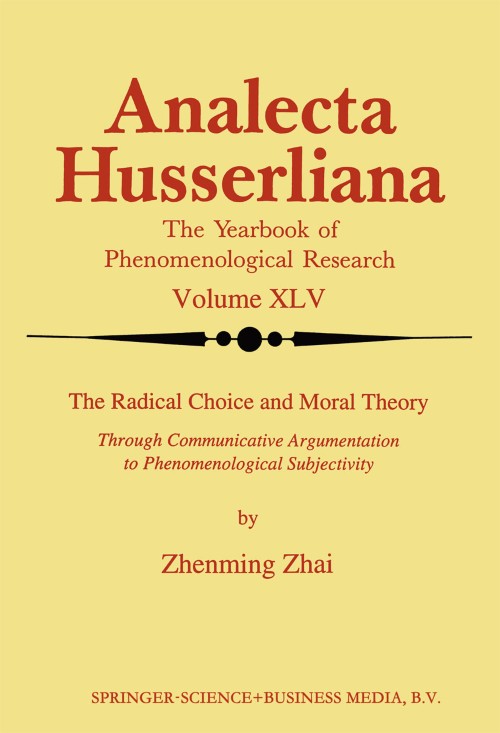
The Radical Choice and Moral Theory [electronic resource] : Through Communicative Argumentation to Phenomenological Subjectivity / by Zhenming Zhai.
Erişim Adresi
ISBN
9789401105019
Dil Kodu
İngilizce
Yer Numarası
DK/7508
Yazar
Basım Bildirimi
1st ed. 1994.
Yayın Bilgisi
Dordrecht : Springer Netherlands : Imprint: Springer, 1994.
Fiziksel Niteleme
XI, 194 p. online resource.
Dizi
Analecta Husserliana, The Yearbook of Phenomenological Research, 2542-8330 ; 45
İçindekiler Notu
1. Introduction: The Issue and the Background -- § 1. The Is-Ought Controversy -- § 2. The Continental Tradition -- § 3. Communicative Rationality and My Aim in this Program -- 2. Communicative Rationality and the Justification of Normative Validity Claims -- § 1. Communicative Rationality: the Counter-Factual -- § 2. Communicative vs. Cognitive Rationality -- § 3. Initial Principles -- § 4. Human Reason as the Only Justificatory Power of Values -- § 5. Normative Validity Claims and Cultural Relativism -- 3. The Necessity of Radical Choice -- § 1. Habermas’ Communicative Ethics -- § 2. Alan Gewirth’s Attempt -- § 3. The Question of Death -- § 4. Good life No More And No Less Than the Life of Humans -- § 5. The Rationality of Radical Choice -- § 6. Humanitude vs. Human Nature -- 4. Meaning, Ideality and Subjectivity -- § 1. Recapitulation and Strategy 91 § 2. The Naturalistic Notion of “ Subjectivity” and Reason vs. Cause -- § 3. The Thesis of Subjectivity -- § 4. Ideality and Validity Claims -- § 5. Subjectivity and the Lifeworld Experience -- § 6. The Transcendence of Subjectivity -- § 7. Constitutive as Opposed to Conative Subjectivity -- 5. Radical Choice Fulfilled and the First “ Ought” -- § 1. Subjectivity and Humanitude -- § 2. Radical Choice fulfilled and the Normative Redeemed -- § 3. Freedom and the Normative -- § 4. “ Ought” and Responsibility -- § 5. ?Value), ?Disvalue? and ?Non-Value? -- § 6. Pre-Moralic and Moralic; ?Moral?, ?Immoral? and ?Amoral? -- § 7. Semi-Final Remarks and Anticipations.
Özet, vb.
In a crisp, original style the author approaches the crucial question of moral theory, the `is--ought' problem via communicative argumentation. Moving to the end of Habermas's conception of the communicative action, he introduces the concept of `radical choice' as the key to the transition from the descriptive to the normative. Phenomenological subjectivity of the intersubjective life-world is being vindicated as the `arch-value' of all derivative values, or the first principle for all normative precepts. With exceptional acumen and mastery of the philosophical argument, the author -- a young native Chinese lately trained in a Western university -- delineates a fascinating route along which the philosophical question of justification raised in the analytic tradition can be answered on the basis of phenomenology. A noteworthy contribution to the interplay between the Anglo--American and Continental schools of philosophy.
Konu
Ethics.
Phenomenology .
Anthropology.
Philosophy of mind.
Self.
Moral Philosophy and Applied Ethics.
Phenomenology.
Anthropology.
Philosophy of the Self.
Phenomenology .
Anthropology.
Philosophy of mind.
Self.
Moral Philosophy and Applied Ethics.
Phenomenology.
Anthropology.
Philosophy of the Self.
Kurum Adı
Eseri Alıntıla
Referansları kullanmadan önce gözden geçirmeniz ve varsa gerekli düzeltmeleri yapmanız önerilir.
Dijital Kaynak
MARC Görünümü
LEADER 05296nam a22006135i 4500
001 806201
003 TR_AnAIT
005 20260127001624
007 cr nn 008mamaa
008 121227s1994 ne | s |||| 0|eng d
020 |a9789401105019|9978-94-011-0501-9
024 7 |a10.1007/978-94-011-0501-9|2doi
041 |aeng
049 |aTürk Tarih Kurumu Kütüphanesi
050 4|aBJ1-1725
072 7|aHPQ|2bicssc
072 7|aPHI005000|2bisacsh
072 7|aQDTQ|2thema
082 04|a170|223
090 |aDK/7508
100 1 |aZhenming Zhai.|eauthor.|4aut|4http://id.loc.gov/vocabulary/relators/aut
245 14|aThe Radical Choice and Moral Theory|h[electronic resource] :|bThrough Communicative Argumentation to Phenomenological Subjectivity /|cby Zhenming Zhai.
250 |a1st ed. 1994.
264 1|aDordrecht :|bSpringer Netherlands :|bImprint: Springer,|c1994.
300 |aXI, 194 p.|bonline resource.
336 |atext|btxt|2rdacontent
337 |acomputer|bc|2rdamedia
338 |aonline resource|bcr|2rdacarrier
347 |atext file|bPDF|2rda
490 1 |aAnalecta Husserliana, The Yearbook of Phenomenological Research,|x2542-8330 ;|v45
505 0 |a1. Introduction: The Issue and the Background -- § 1. The Is-Ought Controversy -- § 2. The Continental Tradition -- § 3. Communicative Rationality and My Aim in this Program -- 2. Communicative Rationality and the Justification of Normative Validity Claims -- § 1. Communicative Rationality: the Counter-Factual -- § 2. Communicative vs. Cognitive Rationality -- § 3. Initial Principles -- § 4. Human Reason as the Only Justificatory Power of Values -- § 5. Normative Validity Claims and Cultural Relativism -- 3. The Necessity of Radical Choice -- § 1. Habermas’ Communicative Ethics -- § 2. Alan Gewirth’s Attempt -- § 3. The Question of Death -- § 4. Good life No More And No Less Than the Life of Humans -- § 5. The Rationality of Radical Choice -- § 6. Humanitude vs. Human Nature -- 4. Meaning, Ideality and Subjectivity -- § 1. Recapitulation and Strategy 91 § 2. The Naturalistic Notion of “ Subjectivity” and Reason vs. Cause -- § 3. The Thesis of Subjectivity -- § 4. Ideality and Validity Claims -- § 5. Subjectivity and the Lifeworld Experience -- § 6. The Transcendence of Subjectivity -- § 7. Constitutive as Opposed to Conative Subjectivity -- 5. Radical Choice Fulfilled and the First “ Ought” -- § 1. Subjectivity and Humanitude -- § 2. Radical Choice fulfilled and the Normative Redeemed -- § 3. Freedom and the Normative -- § 4. “ Ought” and Responsibility -- § 5. ?Value), ?Disvalue? and ?Non-Value? -- § 6. Pre-Moralic and Moralic; ?Moral?, ?Immoral? and ?Amoral? -- § 7. Semi-Final Remarks and Anticipations.
520 |aIn a crisp, original style the author approaches the crucial question of moral theory, the `is--ought' problem via communicative argumentation. Moving to the end of Habermas's conception of the communicative action, he introduces the concept of `radical choice' as the key to the transition from the descriptive to the normative. Phenomenological subjectivity of the intersubjective life-world is being vindicated as the `arch-value' of all derivative values, or the first principle for all normative precepts. With exceptional acumen and mastery of the philosophical argument, the author -- a young native Chinese lately trained in a Western university -- delineates a fascinating route along which the philosophical question of justification raised in the analytic tradition can be answered on the basis of phenomenology. A noteworthy contribution to the interplay between the Anglo--American and Continental schools of philosophy.
532 8 |aAccessibility summary: This PDF is not accessible. It is based on scanned pages and does not support features such as screen reader compatibility or described non-text content (images, graphs etc). However, it likely supports searchable and selectable text based on OCR (Optical Character Recognition). Users with accessibility needs may not be able to use this content effectively. Please contact us at accessibilitysupport@springernature.com if you require assistance or an alternative format.
532 8 |aInaccessible, or known limited accessibility
532 8 |aNo reading system accessibility options actively disabled
532 8 |aPublisher contact for further accessibility information: accessibilitysupport@springernature.com
650 0|aEthics.
650 0|aPhenomenology .
650 0|aAnthropology.
650 0|aPhilosophy of mind.
650 0|aSelf.
650 14|aMoral Philosophy and Applied Ethics.
650 24|aPhenomenology.
650 24|aAnthropology.
650 24|aPhilosophy of the Self.
710 2 |aSpringerLink (Online service)
773 0 |tSpringer Nature eBook
776 08|iPrinted edition:|z9780792328919
776 08|iPrinted edition:|z9789401105026
776 08|iPrinted edition:|z9789401042239
830 0|aAnalecta Husserliana, The Yearbook of Phenomenological Research,|x2542-8330 ;|v45
856 40|uhttps://doi.org/10.1007/978-94-011-0501-9
912 |aZDB-2-SHU
912 |aZDB-2-SXPR
912 |aZDB-2-BAE
950 |aHumanities, Social Sciences and Law (SpringerNature-11648)
950 |aPhilosophy and Religion (R0) (SpringerNature-43725)
001 806201
003 TR_AnAIT
005 20260127001624
007 cr nn 008mamaa
008 121227s1994 ne | s |||| 0|eng d
020 |a9789401105019|9978-94-011-0501-9
024 7 |a10.1007/978-94-011-0501-9|2doi
041 |aeng
049 |aTürk Tarih Kurumu Kütüphanesi
050 4|aBJ1-1725
072 7|aHPQ|2bicssc
072 7|aPHI005000|2bisacsh
072 7|aQDTQ|2thema
082 04|a170|223
090 |aDK/7508
100 1 |aZhenming Zhai.|eauthor.|4aut|4http://id.loc.gov/vocabulary/relators/aut
245 14|aThe Radical Choice and Moral Theory|h[electronic resource] :|bThrough Communicative Argumentation to Phenomenological Subjectivity /|cby Zhenming Zhai.
250 |a1st ed. 1994.
264 1|aDordrecht :|bSpringer Netherlands :|bImprint: Springer,|c1994.
300 |aXI, 194 p.|bonline resource.
336 |atext|btxt|2rdacontent
337 |acomputer|bc|2rdamedia
338 |aonline resource|bcr|2rdacarrier
347 |atext file|bPDF|2rda
490 1 |aAnalecta Husserliana, The Yearbook of Phenomenological Research,|x2542-8330 ;|v45
505 0 |a1. Introduction: The Issue and the Background -- § 1. The Is-Ought Controversy -- § 2. The Continental Tradition -- § 3. Communicative Rationality and My Aim in this Program -- 2. Communicative Rationality and the Justification of Normative Validity Claims -- § 1. Communicative Rationality: the Counter-Factual -- § 2. Communicative vs. Cognitive Rationality -- § 3. Initial Principles -- § 4. Human Reason as the Only Justificatory Power of Values -- § 5. Normative Validity Claims and Cultural Relativism -- 3. The Necessity of Radical Choice -- § 1. Habermas’ Communicative Ethics -- § 2. Alan Gewirth’s Attempt -- § 3. The Question of Death -- § 4. Good life No More And No Less Than the Life of Humans -- § 5. The Rationality of Radical Choice -- § 6. Humanitude vs. Human Nature -- 4. Meaning, Ideality and Subjectivity -- § 1. Recapitulation and Strategy 91 § 2. The Naturalistic Notion of “ Subjectivity” and Reason vs. Cause -- § 3. The Thesis of Subjectivity -- § 4. Ideality and Validity Claims -- § 5. Subjectivity and the Lifeworld Experience -- § 6. The Transcendence of Subjectivity -- § 7. Constitutive as Opposed to Conative Subjectivity -- 5. Radical Choice Fulfilled and the First “ Ought” -- § 1. Subjectivity and Humanitude -- § 2. Radical Choice fulfilled and the Normative Redeemed -- § 3. Freedom and the Normative -- § 4. “ Ought” and Responsibility -- § 5. ?Value), ?Disvalue? and ?Non-Value? -- § 6. Pre-Moralic and Moralic; ?Moral?, ?Immoral? and ?Amoral? -- § 7. Semi-Final Remarks and Anticipations.
520 |aIn a crisp, original style the author approaches the crucial question of moral theory, the `is--ought' problem via communicative argumentation. Moving to the end of Habermas's conception of the communicative action, he introduces the concept of `radical choice' as the key to the transition from the descriptive to the normative. Phenomenological subjectivity of the intersubjective life-world is being vindicated as the `arch-value' of all derivative values, or the first principle for all normative precepts. With exceptional acumen and mastery of the philosophical argument, the author -- a young native Chinese lately trained in a Western university -- delineates a fascinating route along which the philosophical question of justification raised in the analytic tradition can be answered on the basis of phenomenology. A noteworthy contribution to the interplay between the Anglo--American and Continental schools of philosophy.
532 8 |aAccessibility summary: This PDF is not accessible. It is based on scanned pages and does not support features such as screen reader compatibility or described non-text content (images, graphs etc). However, it likely supports searchable and selectable text based on OCR (Optical Character Recognition). Users with accessibility needs may not be able to use this content effectively. Please contact us at accessibilitysupport@springernature.com if you require assistance or an alternative format.
532 8 |aInaccessible, or known limited accessibility
532 8 |aNo reading system accessibility options actively disabled
532 8 |aPublisher contact for further accessibility information: accessibilitysupport@springernature.com
650 0|aEthics.
650 0|aPhenomenology .
650 0|aAnthropology.
650 0|aPhilosophy of mind.
650 0|aSelf.
650 14|aMoral Philosophy and Applied Ethics.
650 24|aPhenomenology.
650 24|aAnthropology.
650 24|aPhilosophy of the Self.
710 2 |aSpringerLink (Online service)
773 0 |tSpringer Nature eBook
776 08|iPrinted edition:|z9780792328919
776 08|iPrinted edition:|z9789401105026
776 08|iPrinted edition:|z9789401042239
830 0|aAnalecta Husserliana, The Yearbook of Phenomenological Research,|x2542-8330 ;|v45
856 40|uhttps://doi.org/10.1007/978-94-011-0501-9
912 |aZDB-2-SHU
912 |aZDB-2-SXPR
912 |aZDB-2-BAE
950 |aHumanities, Social Sciences and Law (SpringerNature-11648)
950 |aPhilosophy and Religion (R0) (SpringerNature-43725)
Materyaller
Depodan talep edilen materyal sadece kütüphane içerisinde kullanılmaktadır.
Materyal dışarıya ödünç verilmemektedir.
Materyal dışarıya ödünç verilmemektedir.
