LEADER 03080nam a22005295i 4500
001 806226
003 TR_AnAIT
005 20260127001658
007 cr nn 008mamaa
008 130109s2001 xxu| s |||| 0|eng d
020 |a9781475754124|9978-1-4757-5412-4
024 7 |a10.1007/978-1-4757-5412-4|2doi
041 |aeng
049 |aTürk Tarih Kurumu Kütüphanesi
050 4|aD1-2027
072 7|aHB|2bicssc
072 7|aHBAH|2bicssc
072 7|aHIS000000|2bisacsh
072 7|aNH|2thema
072 7|aNHAH|2thema
082 04|a900|223
090 |aDK/7533
100 1 |aBernstein, Jeremy.|eauthor.|4aut|4http://id.loc.gov/vocabulary/relators/aut
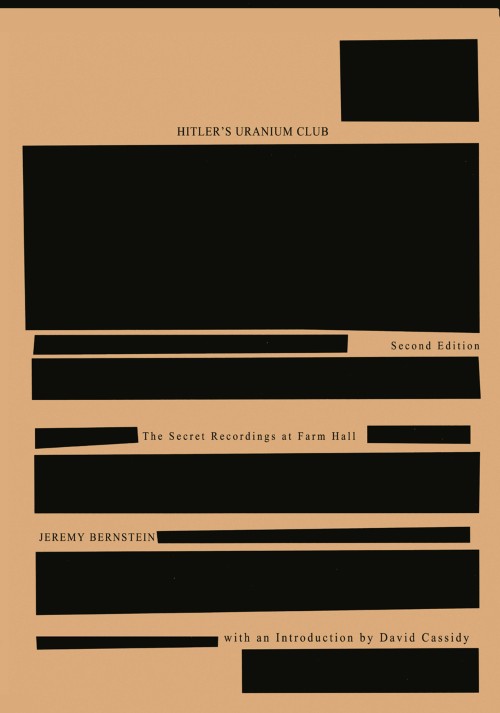
245 10|aHitler’s Uranium Club|h[electronic resource] :|bThe Secret Recordings at Farm Hall /|cby Jeremy Bernstein.
250 |a2nd ed. 2001.
264 1|aNew York, NY :|bSpringer New York :|bImprint: Copernicus,|c2001.
300 |aXXXI, 384 p. 26 illus.|bonline resource.
336 |atext|btxt|2rdacontent
337 |acomputer|bc|2rdamedia
338 |aonline resource|bcr|2rdacarrier
347 |atext file|bPDF|2rda
505 0 |aPrologue: The Uranium Club -- I: Settling in -- II: The Bomb Drops -- III: Putting the Pieces Together -- IV: Looking to the Future -- V: Looking toward Home -- VI: A Nobel for Otto Hahn -- Epilogue: Aftermaths -- Appendix A: Heisenberg’s Lecture, February 26, 1942 -- Translation by William Sweet -- Original German Text -- Appendix B: Von Laue’s Letters to Paul Rosbaud, 1959 -- Appendix C: BBC Report, August 6, 1945 -- Appendix D: Biographical Sketches of the Ten Detainees -- Selected Bibliography.
520 |aFrom April through December of 1945, ten of Nazi Germany's greatest nuclear physicists were detained by Allied military and intelligence services in a kind of gilded cage at Farm Hall, an English country manor near Cambridge. The physicists knew the Reich had failed to develop an atomic bomb, and they soon learned, from a BBC radio report on August 6, that the Allies had succeeded in their own efforts to create such a weapon. But what they did not know was that many of their meetings and private conversations were being monitored and recorded by British agents. This book contains the complete collection of transcripts that were made from these secret recordings, providing an unprecedented view of how the German scientists, including two Nobel Laureates, thought and spoke about their roles during the war.
650 0|aHistory.
650 0|aAtoms.
650 0|aMolecules.
650 0|aPhysics|xPhilosophy.
650 14|aHistory.
650 24|aAtomic, Molecular and Chemical Physics.
650 24|aPhilosophical Foundations of Physics and Astronomy.
710 2 |aSpringerLink (Online service)
773 0 |tSpringer Nature eBook
776 08|iPrinted edition:|z9780387950891
776 08|iPrinted edition:|z9781475754131
856 40|uhttps://doi.org/10.1007/978-1-4757-5412-4
912 |aZDB-2-SHU
912 |aZDB-2-SXH
912 |aZDB-2-BAE
950 |aHumanities, Social Sciences and Law (SpringerNature-11648)
950 |aHistory (R0) (SpringerNature-43722)