

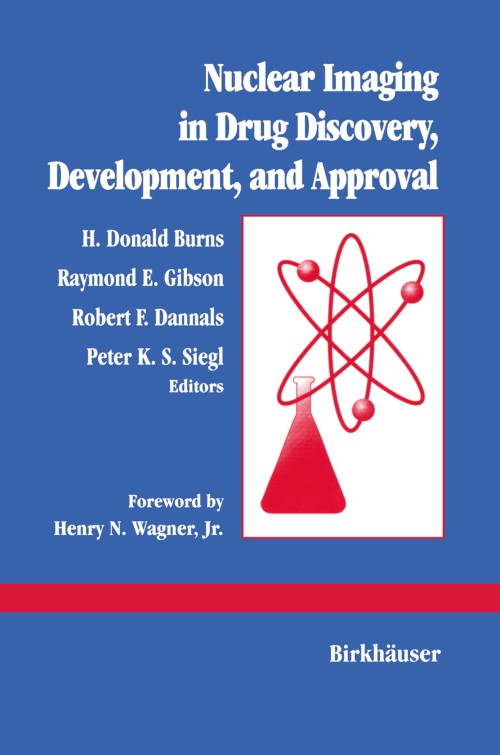
Nuclear Imaging in Drug Discovery, Development, and Approval [electronic resource] / by BURNS.
Erişim Adresi
ISBN
9781468468083
Dil Kodu
İngilizce
Yer Numarası
DK/7560
Yazar
Basım Bildirimi
1st ed. 1993.
Yayın Bilgisi
Boston, MA : Birkhäuser Boston : Imprint: Birkhäuser, 1993.
Fiziksel Niteleme
X, 344 p. online resource.
İçindekiler Notu
1. Nuclear Imaging in Drug Development—Introduction -- 2. Nuclear Medicine Physics, Instrumentation, and Data Processing in Pharmaceutical Research -- 3. Accelerators for Positron Emission Tomography -- 4. Chemistry of Tracers for Positron Emission Tomography -- 5. Single Photon, Gamma Emitting Radiotracers for Use in Imaging -- 6. The Design of Site-Directed Radiopharmaceuticals for Use in Drug Discovery -- 7. Applications of Autoradiography to Drug Discovery -- 8. Quantitative Whole Body Autoradiographic Microimaging for Pharmaceutical Research -- 9. Cerebral Metabolic Rates of 2-[18F]Fluoro-2-Deoxy-D-Glucose in the Presence of Ofloxacin A GABAA Receptor Antagonist -- 10. Positron Emission Tomography, Enzymes and Drug Research and Development -- 11. The Role of Positron Emission Tomography in Assessing and Monitoring Dopamine Active Drugs -- 12. Iodinated Dopamine D1 and D2 Receptor Imaging Agents for SPECT -- 13. Radiolabeled Atrial Natriuretic Peptide and Somatostatin for In Vivo Imaging of Receptors -- 14. Use of Radionuclides in Experimental Vascular Thrombosis -- 15. Application of Nuclear Imaging to Drug Delivery Evaluation and Development: A Review of Radiolabeled, Injectable, Colloidal Systems of Delivery -- 16. The Gastrointestinal Transit and Systemic Absorption of Diltiazem HCL from a Modified Release Dosage Form -- 17. The Potential Uses of Radiopharmaceuticals in the Pharmaceutical Industry.
Özet, vb.
It is the purpose and business of the pharmaceutical industry to dis cover, develop, and make available drugs for the care of the sick. The purpose of universities and national laboratories is to provide people and scientific knowledge that can help in the process. This book presents the combined efforts of scientists from the drug in dustry, academic laboratories and national laboratories to describe advances in radiotracer technology in studies on experimental ani mals and living human beings. The authors believe that the technol ogy is now ready for widespread application in the pharmaceutical industry. The goal of this book is to help bring this about. The field of Nuclear Medicine is based on the concept that, if treatment of disease is chemical, the patient's diagnosis should be chemical. Anatomy and histopathology have been the principle ba sis for making a diagnosis. Histopathologic data suffer from being descriptive, subjective, not quantifiable, and based on the study of dead tissue. The era of histopathology as the dominant concept in medical practice is coming to an end. Histopathologic findings are often heterogeneous and a single biopsy will at times not reveal the true nature of the disease, such as the grading of malignancy. Far greater accuracy of staging of disease and in the planning of treat ment is possible through chemistry, as well as by making possible a more suitable selection of a histological biopsy site.
Konu
Social sciences.
Humanities.
Humanities and Social Sciences.
Humanities.
Humanities and Social Sciences.
Kurum Adı
Eseri Alıntıla
Referansları kullanmadan önce gözden geçirmeniz ve varsa gerekli düzeltmeleri yapmanız önerilir.
Dijital Kaynak
MARC Görünümü
LEADER 05269nam a22005415i 4500
001 806253
003 TR_AnAIT
005 20260127001732
007 cr nn 008mamaa
008 121227s1993 xxu| s |||| 0|eng d
020 |a9781468468083|9978-1-4684-6808-3
024 7 |a10.1007/978-1-4684-6808-3|2doi
041 |aeng
049 |aTürk Tarih Kurumu Kütüphanesi
050 4|aH1-99
050 4|aAZ19.2-999
072 7|aGT|2bicssc
072 7|aNON000000|2bisacsh
072 7|aGT|2thema
082 04|a300|223
082 04|a001.3|223
090 |aDK/7560
100 1 |aBURNS.|eauthor.|4aut|4http://id.loc.gov/vocabulary/relators/aut
245 10|aNuclear Imaging in Drug Discovery, Development, and Approval|h[electronic resource] /|cby BURNS.
250 |a1st ed. 1993.
264 1|aBoston, MA :|bBirkhäuser Boston :|bImprint: Birkhäuser,|c1993.
300 |aX, 344 p.|bonline resource.
336 |atext|btxt|2rdacontent
337 |acomputer|bc|2rdamedia
338 |aonline resource|bcr|2rdacarrier
347 |atext file|bPDF|2rda
505 0 |a1. Nuclear Imaging in Drug Development—Introduction -- 2. Nuclear Medicine Physics, Instrumentation, and Data Processing in Pharmaceutical Research -- 3. Accelerators for Positron Emission Tomography -- 4. Chemistry of Tracers for Positron Emission Tomography -- 5. Single Photon, Gamma Emitting Radiotracers for Use in Imaging -- 6. The Design of Site-Directed Radiopharmaceuticals for Use in Drug Discovery -- 7. Applications of Autoradiography to Drug Discovery -- 8. Quantitative Whole Body Autoradiographic Microimaging for Pharmaceutical Research -- 9. Cerebral Metabolic Rates of 2-[18F]Fluoro-2-Deoxy-D-Glucose in the Presence of Ofloxacin A GABAA Receptor Antagonist -- 10. Positron Emission Tomography, Enzymes and Drug Research and Development -- 11. The Role of Positron Emission Tomography in Assessing and Monitoring Dopamine Active Drugs -- 12. Iodinated Dopamine D1 and D2 Receptor Imaging Agents for SPECT -- 13. Radiolabeled Atrial Natriuretic Peptide and Somatostatin for In Vivo Imaging of Receptors -- 14. Use of Radionuclides in Experimental Vascular Thrombosis -- 15. Application of Nuclear Imaging to Drug Delivery Evaluation and Development: A Review of Radiolabeled, Injectable, Colloidal Systems of Delivery -- 16. The Gastrointestinal Transit and Systemic Absorption of Diltiazem HCL from a Modified Release Dosage Form -- 17. The Potential Uses of Radiopharmaceuticals in the Pharmaceutical Industry.
520 |aIt is the purpose and business of the pharmaceutical industry to dis cover, develop, and make available drugs for the care of the sick. The purpose of universities and national laboratories is to provide people and scientific knowledge that can help in the process. This book presents the combined efforts of scientists from the drug in dustry, academic laboratories and national laboratories to describe advances in radiotracer technology in studies on experimental ani mals and living human beings. The authors believe that the technol ogy is now ready for widespread application in the pharmaceutical industry. The goal of this book is to help bring this about. The field of Nuclear Medicine is based on the concept that, if treatment of disease is chemical, the patient's diagnosis should be chemical. Anatomy and histopathology have been the principle ba sis for making a diagnosis. Histopathologic data suffer from being descriptive, subjective, not quantifiable, and based on the study of dead tissue. The era of histopathology as the dominant concept in medical practice is coming to an end. Histopathologic findings are often heterogeneous and a single biopsy will at times not reveal the true nature of the disease, such as the grading of malignancy. Far greater accuracy of staging of disease and in the planning of treat ment is possible through chemistry, as well as by making possible a more suitable selection of a histological biopsy site.
532 8 |aAccessibility summary: This PDF is not accessible. It is based on scanned pages and does not support features such as screen reader compatibility or described non-text content (images, graphs etc). However, it likely supports searchable and selectable text based on OCR (Optical Character Recognition). Users with accessibility needs may not be able to use this content effectively. Please contact us at accessibilitysupport@springernature.com if you require assistance or an alternative format.
532 8 |aInaccessible, or known limited accessibility
532 8 |aNo reading system accessibility options actively disabled
532 8 |aPublisher contact for further accessibility information: accessibilitysupport@springernature.com
650 0|aSocial sciences.
650 0|aHumanities.
650 14|aHumanities and Social Sciences.
710 2 |aSpringerLink (Online service)
773 0 |tSpringer Nature eBook
776 08|iPrinted edition:|z9780817636012
776 08|iPrinted edition:|z9781468468090
776 08|iPrinted edition:|z9781468468106
856 40|uhttps://doi.org/10.1007/978-1-4684-6808-3
912 |aZDB-2-SHU
912 |aZDB-2-SXH
912 |aZDB-2-BAE
950 |aHumanities, Social Sciences and Law (SpringerNature-11648)
950 |aHistory (R0) (SpringerNature-43722)
001 806253
003 TR_AnAIT
005 20260127001732
007 cr nn 008mamaa
008 121227s1993 xxu| s |||| 0|eng d
020 |a9781468468083|9978-1-4684-6808-3
024 7 |a10.1007/978-1-4684-6808-3|2doi
041 |aeng
049 |aTürk Tarih Kurumu Kütüphanesi
050 4|aH1-99
050 4|aAZ19.2-999
072 7|aGT|2bicssc
072 7|aNON000000|2bisacsh
072 7|aGT|2thema
082 04|a300|223
082 04|a001.3|223
090 |aDK/7560
100 1 |aBURNS.|eauthor.|4aut|4http://id.loc.gov/vocabulary/relators/aut
245 10|aNuclear Imaging in Drug Discovery, Development, and Approval|h[electronic resource] /|cby BURNS.
250 |a1st ed. 1993.
264 1|aBoston, MA :|bBirkhäuser Boston :|bImprint: Birkhäuser,|c1993.
300 |aX, 344 p.|bonline resource.
336 |atext|btxt|2rdacontent
337 |acomputer|bc|2rdamedia
338 |aonline resource|bcr|2rdacarrier
347 |atext file|bPDF|2rda
505 0 |a1. Nuclear Imaging in Drug Development—Introduction -- 2. Nuclear Medicine Physics, Instrumentation, and Data Processing in Pharmaceutical Research -- 3. Accelerators for Positron Emission Tomography -- 4. Chemistry of Tracers for Positron Emission Tomography -- 5. Single Photon, Gamma Emitting Radiotracers for Use in Imaging -- 6. The Design of Site-Directed Radiopharmaceuticals for Use in Drug Discovery -- 7. Applications of Autoradiography to Drug Discovery -- 8. Quantitative Whole Body Autoradiographic Microimaging for Pharmaceutical Research -- 9. Cerebral Metabolic Rates of 2-[18F]Fluoro-2-Deoxy-D-Glucose in the Presence of Ofloxacin A GABAA Receptor Antagonist -- 10. Positron Emission Tomography, Enzymes and Drug Research and Development -- 11. The Role of Positron Emission Tomography in Assessing and Monitoring Dopamine Active Drugs -- 12. Iodinated Dopamine D1 and D2 Receptor Imaging Agents for SPECT -- 13. Radiolabeled Atrial Natriuretic Peptide and Somatostatin for In Vivo Imaging of Receptors -- 14. Use of Radionuclides in Experimental Vascular Thrombosis -- 15. Application of Nuclear Imaging to Drug Delivery Evaluation and Development: A Review of Radiolabeled, Injectable, Colloidal Systems of Delivery -- 16. The Gastrointestinal Transit and Systemic Absorption of Diltiazem HCL from a Modified Release Dosage Form -- 17. The Potential Uses of Radiopharmaceuticals in the Pharmaceutical Industry.
520 |aIt is the purpose and business of the pharmaceutical industry to dis cover, develop, and make available drugs for the care of the sick. The purpose of universities and national laboratories is to provide people and scientific knowledge that can help in the process. This book presents the combined efforts of scientists from the drug in dustry, academic laboratories and national laboratories to describe advances in radiotracer technology in studies on experimental ani mals and living human beings. The authors believe that the technol ogy is now ready for widespread application in the pharmaceutical industry. The goal of this book is to help bring this about. The field of Nuclear Medicine is based on the concept that, if treatment of disease is chemical, the patient's diagnosis should be chemical. Anatomy and histopathology have been the principle ba sis for making a diagnosis. Histopathologic data suffer from being descriptive, subjective, not quantifiable, and based on the study of dead tissue. The era of histopathology as the dominant concept in medical practice is coming to an end. Histopathologic findings are often heterogeneous and a single biopsy will at times not reveal the true nature of the disease, such as the grading of malignancy. Far greater accuracy of staging of disease and in the planning of treat ment is possible through chemistry, as well as by making possible a more suitable selection of a histological biopsy site.
532 8 |aAccessibility summary: This PDF is not accessible. It is based on scanned pages and does not support features such as screen reader compatibility or described non-text content (images, graphs etc). However, it likely supports searchable and selectable text based on OCR (Optical Character Recognition). Users with accessibility needs may not be able to use this content effectively. Please contact us at accessibilitysupport@springernature.com if you require assistance or an alternative format.
532 8 |aInaccessible, or known limited accessibility
532 8 |aNo reading system accessibility options actively disabled
532 8 |aPublisher contact for further accessibility information: accessibilitysupport@springernature.com
650 0|aSocial sciences.
650 0|aHumanities.
650 14|aHumanities and Social Sciences.
710 2 |aSpringerLink (Online service)
773 0 |tSpringer Nature eBook
776 08|iPrinted edition:|z9780817636012
776 08|iPrinted edition:|z9781468468090
776 08|iPrinted edition:|z9781468468106
856 40|uhttps://doi.org/10.1007/978-1-4684-6808-3
912 |aZDB-2-SHU
912 |aZDB-2-SXH
912 |aZDB-2-BAE
950 |aHumanities, Social Sciences and Law (SpringerNature-11648)
950 |aHistory (R0) (SpringerNature-43722)
Materyaller
Depodan talep edilen materyal sadece kütüphane içerisinde kullanılmaktadır.
Materyal dışarıya ödünç verilmemektedir.
Materyal dışarıya ödünç verilmemektedir.
