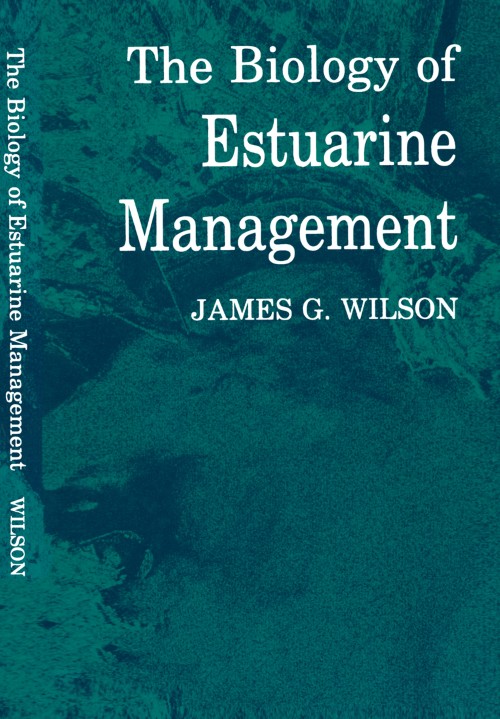
The Biology of Estuarine Management [electronic resource] / by James Wilson.
Erişim Adresi
ISBN
9789401170871
Dil Kodu
İngilizce
Yer Numarası
DK/7630
Yazar
Basım Bildirimi
1st ed. 1988.
Yayın Bilgisi
Dordrecht : Springer Netherlands : Imprint: Springer, 1988.
Fiziksel Niteleme
XIV, 204 p. online resource.
İçindekiler Notu
Importance of estuaries -- Dymanamic role -- Scope of volume -- Suggested reading -- 1 The Estuary as a Resource -- 1.1 History of estuarine usage -- 1.2 Types and values of usage -- 1.3 Shipping -- 1.4 Domestic and industrial wastes -- 1.5 Fishing -- 1.6 Amenity -- 2 The Estuarine System -- 2.1 Estuarine classification -- 2.2 Sediment processes -- 2.3 Geochemical cycles -- 2.4 Primary production -- 2.5 Secondary pruduction -- 2.6 Energy flow -- 2.7 Environmental stresses -- 3 Impacts, Contamination and Pollution -- 3.1 Impacts -- 3.2 Contamination and pollution -- 3.3 Sewage and organic wastes -- 3.4 Heat -- 3.5 Hydrocarbons -- 3.6 Heavy metals -- 3.7 Organochlorines -- 3.8 Radioactivity -- 4 Effects and Detection -- 4.1 Indices -- 4.2 Biological indicators -- 4.3 Dose/response relationship -- 4.4 Community responses -- 4.5 Population responses -- 4.6 Individual responses -- 4.7 Cellular and sub-cellular responses -- 4.8 Overview -- 5 Management -- 5.1 Goals -- 5.2 Uniform Emission Standards and Best Available Technology -- 5.3 Environmental Quality Objective -- 5.4 Discharge Location -- 5.5 Environmental Quality Standards -- 5.6 International legislation -- 5.7 Future developments.
Özet, vb.
Estuaries are the interface between man and the sea. and they are the channels for the impact of man on the marine environment. Because they are to a greater or lesser extent connected to the sea. they have traditionally been regarded as part of that seemingly infinite resource. or at best an open-ended means of access to it. This approach has led to conflicts between the users of the estuary. and with the increase not only in population but more particularly in the developed countries in manufacturing output. these conflicts have become more and more acute . The estuary should always be regarded as a resource. and a finite resource at that. and the problem in management is to optimise the use of that resource. It is clearly wasteful and inefficient not to use it to its full capacity. and this includes both overuse of the system. such that the whole thing collapses. and underuse. in which there is still spare capacity for one use or another. The objective of this book is to explore the uses to which estuaries are put and the means by which the performance of the system under load may be assessed. It seems appropriate here to mention that although this book will be talking about estuaries. the majority of it will be applicable also to lagoons. semi-enclosed bays and other such systems.
Konu
Social sciences.
Humanities.
Humanities and Social Sciences.
Humanities.
Humanities and Social Sciences.
Kurum Adı

Eseri Alıntıla
Referansları kullanmadan önce gözden geçirmeniz ve varsa gerekli düzeltmeleri yapmanız önerilir.
Dijital Kaynak
MARC Görünümü
LEADER 04868nam a22005415i 4500
001 806325
003 TR_AnAIT
005 20260127001856
007 cr nn 008mamaa
008 121227s1988 ne | s |||| 0|eng d
020 |a9789401170871|9978-94-011-7087-1
024 7 |a10.1007/978-94-011-7087-1|2doi
041 |aeng
049 |aTürk Tarih Kurumu Kütüphanesi
050 4|aH1-99
050 4|aAZ19.2-999
072 7|aGT|2bicssc
072 7|aNON000000|2bisacsh
072 7|aGT|2thema
082 04|a300|223
082 04|a001.3|223
090 |aDK/7630
100 1 |aWilson, James.|eauthor.|4aut|4http://id.loc.gov/vocabulary/relators/aut
245 14|aThe Biology of Estuarine Management|h[electronic resource] /|cby James Wilson.
250 |a1st ed. 1988.
264 1|aDordrecht :|bSpringer Netherlands :|bImprint: Springer,|c1988.
300 |aXIV, 204 p.|bonline resource.
336 |atext|btxt|2rdacontent
337 |acomputer|bc|2rdamedia
338 |aonline resource|bcr|2rdacarrier
347 |atext file|bPDF|2rda
505 0 |aImportance of estuaries -- Dymanamic role -- Scope of volume -- Suggested reading -- 1 The Estuary as a Resource -- 1.1 History of estuarine usage -- 1.2 Types and values of usage -- 1.3 Shipping -- 1.4 Domestic and industrial wastes -- 1.5 Fishing -- 1.6 Amenity -- 2 The Estuarine System -- 2.1 Estuarine classification -- 2.2 Sediment processes -- 2.3 Geochemical cycles -- 2.4 Primary production -- 2.5 Secondary pruduction -- 2.6 Energy flow -- 2.7 Environmental stresses -- 3 Impacts, Contamination and Pollution -- 3.1 Impacts -- 3.2 Contamination and pollution -- 3.3 Sewage and organic wastes -- 3.4 Heat -- 3.5 Hydrocarbons -- 3.6 Heavy metals -- 3.7 Organochlorines -- 3.8 Radioactivity -- 4 Effects and Detection -- 4.1 Indices -- 4.2 Biological indicators -- 4.3 Dose/response relationship -- 4.4 Community responses -- 4.5 Population responses -- 4.6 Individual responses -- 4.7 Cellular and sub-cellular responses -- 4.8 Overview -- 5 Management -- 5.1 Goals -- 5.2 Uniform Emission Standards and Best Available Technology -- 5.3 Environmental Quality Objective -- 5.4 Discharge Location -- 5.5 Environmental Quality Standards -- 5.6 International legislation -- 5.7 Future developments.
520 |aEstuaries are the interface between man and the sea. and they are the channels for the impact of man on the marine environment. Because they are to a greater or lesser extent connected to the sea. they have traditionally been regarded as part of that seemingly infinite resource. or at best an open-ended means of access to it. This approach has led to conflicts between the users of the estuary. and with the increase not only in population but more particularly in the developed countries in manufacturing output. these conflicts have become more and more acute . The estuary should always be regarded as a resource. and a finite resource at that. and the problem in management is to optimise the use of that resource. It is clearly wasteful and inefficient not to use it to its full capacity. and this includes both overuse of the system. such that the whole thing collapses. and underuse. in which there is still spare capacity for one use or another. The objective of this book is to explore the uses to which estuaries are put and the means by which the performance of the system under load may be assessed. It seems appropriate here to mention that although this book will be talking about estuaries. the majority of it will be applicable also to lagoons. semi-enclosed bays and other such systems.
532 8 |aAccessibility summary: This PDF is not accessible. It is based on scanned pages and does not support features such as screen reader compatibility or described non-text content (images, graphs etc). However, it likely supports searchable and selectable text based on OCR (Optical Character Recognition). Users with accessibility needs may not be able to use this content effectively. Please contact us at accessibilitysupport@springernature.com if you require assistance or an alternative format.
532 8 |aInaccessible, or known limited accessibility
532 8 |aNo reading system accessibility options actively disabled
532 8 |aPublisher contact for further accessibility information: accessibilitysupport@springernature.com
650 0|aSocial sciences.
650 0|aHumanities.
650 14|aHumanities and Social Sciences.
710 2 |aSpringerLink (Online service)
773 0 |tSpringer Nature eBook
776 08|iPrinted edition:|z9780709952084
776 08|iPrinted edition:|z9789401170888
776 08|iPrinted edition:|z9789401170895
856 40|uhttps://doi.org/10.1007/978-94-011-7087-1
912 |aZDB-2-SHU
912 |aZDB-2-SXH
912 |aZDB-2-BAE
950 |aHumanities, Social Sciences and Law (SpringerNature-11648)
950 |aHistory (R0) (SpringerNature-43722)
001 806325
003 TR_AnAIT
005 20260127001856
007 cr nn 008mamaa
008 121227s1988 ne | s |||| 0|eng d
020 |a9789401170871|9978-94-011-7087-1
024 7 |a10.1007/978-94-011-7087-1|2doi
041 |aeng
049 |aTürk Tarih Kurumu Kütüphanesi
050 4|aH1-99
050 4|aAZ19.2-999
072 7|aGT|2bicssc
072 7|aNON000000|2bisacsh
072 7|aGT|2thema
082 04|a300|223
082 04|a001.3|223
090 |aDK/7630
100 1 |aWilson, James.|eauthor.|4aut|4http://id.loc.gov/vocabulary/relators/aut
245 14|aThe Biology of Estuarine Management|h[electronic resource] /|cby James Wilson.
250 |a1st ed. 1988.
264 1|aDordrecht :|bSpringer Netherlands :|bImprint: Springer,|c1988.
300 |aXIV, 204 p.|bonline resource.
336 |atext|btxt|2rdacontent
337 |acomputer|bc|2rdamedia
338 |aonline resource|bcr|2rdacarrier
347 |atext file|bPDF|2rda
505 0 |aImportance of estuaries -- Dymanamic role -- Scope of volume -- Suggested reading -- 1 The Estuary as a Resource -- 1.1 History of estuarine usage -- 1.2 Types and values of usage -- 1.3 Shipping -- 1.4 Domestic and industrial wastes -- 1.5 Fishing -- 1.6 Amenity -- 2 The Estuarine System -- 2.1 Estuarine classification -- 2.2 Sediment processes -- 2.3 Geochemical cycles -- 2.4 Primary production -- 2.5 Secondary pruduction -- 2.6 Energy flow -- 2.7 Environmental stresses -- 3 Impacts, Contamination and Pollution -- 3.1 Impacts -- 3.2 Contamination and pollution -- 3.3 Sewage and organic wastes -- 3.4 Heat -- 3.5 Hydrocarbons -- 3.6 Heavy metals -- 3.7 Organochlorines -- 3.8 Radioactivity -- 4 Effects and Detection -- 4.1 Indices -- 4.2 Biological indicators -- 4.3 Dose/response relationship -- 4.4 Community responses -- 4.5 Population responses -- 4.6 Individual responses -- 4.7 Cellular and sub-cellular responses -- 4.8 Overview -- 5 Management -- 5.1 Goals -- 5.2 Uniform Emission Standards and Best Available Technology -- 5.3 Environmental Quality Objective -- 5.4 Discharge Location -- 5.5 Environmental Quality Standards -- 5.6 International legislation -- 5.7 Future developments.
520 |aEstuaries are the interface between man and the sea. and they are the channels for the impact of man on the marine environment. Because they are to a greater or lesser extent connected to the sea. they have traditionally been regarded as part of that seemingly infinite resource. or at best an open-ended means of access to it. This approach has led to conflicts between the users of the estuary. and with the increase not only in population but more particularly in the developed countries in manufacturing output. these conflicts have become more and more acute . The estuary should always be regarded as a resource. and a finite resource at that. and the problem in management is to optimise the use of that resource. It is clearly wasteful and inefficient not to use it to its full capacity. and this includes both overuse of the system. such that the whole thing collapses. and underuse. in which there is still spare capacity for one use or another. The objective of this book is to explore the uses to which estuaries are put and the means by which the performance of the system under load may be assessed. It seems appropriate here to mention that although this book will be talking about estuaries. the majority of it will be applicable also to lagoons. semi-enclosed bays and other such systems.
532 8 |aAccessibility summary: This PDF is not accessible. It is based on scanned pages and does not support features such as screen reader compatibility or described non-text content (images, graphs etc). However, it likely supports searchable and selectable text based on OCR (Optical Character Recognition). Users with accessibility needs may not be able to use this content effectively. Please contact us at accessibilitysupport@springernature.com if you require assistance or an alternative format.
532 8 |aInaccessible, or known limited accessibility
532 8 |aNo reading system accessibility options actively disabled
532 8 |aPublisher contact for further accessibility information: accessibilitysupport@springernature.com
650 0|aSocial sciences.
650 0|aHumanities.
650 14|aHumanities and Social Sciences.
710 2 |aSpringerLink (Online service)
773 0 |tSpringer Nature eBook
776 08|iPrinted edition:|z9780709952084
776 08|iPrinted edition:|z9789401170888
776 08|iPrinted edition:|z9789401170895
856 40|uhttps://doi.org/10.1007/978-94-011-7087-1
912 |aZDB-2-SHU
912 |aZDB-2-SXH
912 |aZDB-2-BAE
950 |aHumanities, Social Sciences and Law (SpringerNature-11648)
950 |aHistory (R0) (SpringerNature-43722)
Materyaller
Depodan talep edilen materyal sadece kütüphane içerisinde kullanılmaktadır.
Materyal dışarıya ödünç verilmemektedir.
