

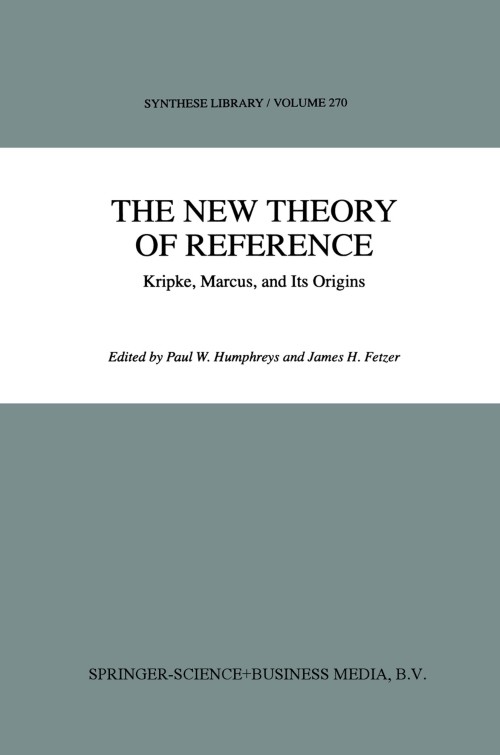
The New Theory of Reference [electronic resource] : Kripke, Marcus, and Its Origins / edited by P. Humphreys, J.H. Fetzer.
Erişim Adresi
ISBN
9789401152501
Dil Kodu
İngilizce
Yer Numarası
DK/7681
Basım Bildirimi
1st ed. 1998.
Yayın Bilgisi
Dordrecht : Springer Netherlands : Imprint: Springer, 1998.
Fiziksel Niteleme
XIII, 290 p. online resource.
Dizi
Synthese Library, Studies in Epistemology, Logic, Methodology, and Philosophy of Science, 2542-8292 ; 270
İçindekiler Notu
I: The APA Exchange -- 1. Marcus, Kripke, and the Origin of the New Theory of Reference -- 2. Revisionism about Reference: A Reply to Smith -- 3. Marcus and the New Theory of Reference: A Reply to Scott Soames -- II: Replies -- 4. More Revisionism about Reference -- 5. Marcus, Kripke, and Names -- 6. How Not to Write History of Philosophy: A Case Study -- 7. Direct, Rigid Designation and A Posteriori Necessity: A History and Critique -- III: Historical Origins -- 8. Referential Opacity and Modal Logic, §§16-19 -- 9. An Exposition and Development of Kanger’s Early Semantics for Modal Logic -- 10. A More Comprehensive History of the New Theory of Reference -- Name Index.
Özet, vb.
On January 20th, 22nd, and 29th, 1970 Saul Kripke delivered three lectures at Princeton University. They produced something of a sensation. In the lectures he argued, amongst other things, that many names in ordinary language referred to objects directly rather than by means of associated descriptions; that causal chains from language user to language user were an important mechanism for preserving reference; that there were necessary a posteriori and contingent a priori truths; that identity relations between rigid designators were necessary; and argued, more tentatively, that materialist identity theories in the philosophy of mind were suspect. Interspersed with this was a consider able amount of material on natural kind terms and essentialism. As a result of these lectures and a related 1971 paper, 'Identity and Necessity' (Kripke [1971]), talk of rigid designators, Hesperus and Phosphorus, meter bars, gold and H 0, and suchlike quickly became commonplace in philosophical circles 2 and when the lectures were published under the title Naming and Necessity in the collection The Semantics of Natural Language (Davidson and Harman l [1972]), that volume became the biggest seller in the Reidel (later Kluwer) list. The cluster of theses surrounding the idea that a relation of direct reference 2 exists between names and their referents is now frequently referred to as 'The 3 New Theory of Reference'.
Konu
Language and languages __ Philosophy.
Knowledge, Theory of.
Logic.
Metaphysics.
Philosophy of Language.
Epistemology.
Logic.
Metaphysics.
Knowledge, Theory of.
Logic.
Metaphysics.
Philosophy of Language.
Epistemology.
Logic.
Metaphysics.
Diğer Yazarlar
Kurum Adı
Eseri Alıntıla
Referansları kullanmadan önce gözden geçirmeniz ve varsa gerekli düzeltmeleri yapmanız önerilir.
Dijital Kaynak
MARC Görünümü
LEADER 04970nam a22006135i 4500
001 806376
003 TR_AnAIT
005 20260127002001
007 cr nn 008mamaa
008 121227s1998 ne | s |||| 0|eng d
020 |a9789401152501|9978-94-011-5250-1
024 7 |a10.1007/978-94-011-5250-1|2doi
041 |aeng
049 |aTürk Tarih Kurumu Kütüphanesi
050 4|aP101-120
072 7|aCFA|2bicssc
072 7|aPHI038000|2bisacsh
072 7|aCFA|2thema
082 04|a149.94|223
090 |aDK/7681
245 14|aThe New Theory of Reference|h[electronic resource] :|bKripke, Marcus, and Its Origins /|cedited by P. Humphreys, J.H. Fetzer.
250 |a1st ed. 1998.
264 1|aDordrecht :|bSpringer Netherlands :|bImprint: Springer,|c1998.
300 |aXIII, 290 p.|bonline resource.
336 |atext|btxt|2rdacontent
337 |acomputer|bc|2rdamedia
338 |aonline resource|bcr|2rdacarrier
347 |atext file|bPDF|2rda
490 1 |aSynthese Library, Studies in Epistemology, Logic, Methodology, and Philosophy of Science,|x2542-8292 ;|v270
505 0 |aI: The APA Exchange -- 1. Marcus, Kripke, and the Origin of the New Theory of Reference -- 2. Revisionism about Reference: A Reply to Smith -- 3. Marcus and the New Theory of Reference: A Reply to Scott Soames -- II: Replies -- 4. More Revisionism about Reference -- 5. Marcus, Kripke, and Names -- 6. How Not to Write History of Philosophy: A Case Study -- 7. Direct, Rigid Designation and A Posteriori Necessity: A History and Critique -- III: Historical Origins -- 8. Referential Opacity and Modal Logic, §§16-19 -- 9. An Exposition and Development of Kanger’s Early Semantics for Modal Logic -- 10. A More Comprehensive History of the New Theory of Reference -- Name Index.
520 |aOn January 20th, 22nd, and 29th, 1970 Saul Kripke delivered three lectures at Princeton University. They produced something of a sensation. In the lectures he argued, amongst other things, that many names in ordinary language referred to objects directly rather than by means of associated descriptions; that causal chains from language user to language user were an important mechanism for preserving reference; that there were necessary a posteriori and contingent a priori truths; that identity relations between rigid designators were necessary; and argued, more tentatively, that materialist identity theories in the philosophy of mind were suspect. Interspersed with this was a consider able amount of material on natural kind terms and essentialism. As a result of these lectures and a related 1971 paper, 'Identity and Necessity' (Kripke [1971]), talk of rigid designators, Hesperus and Phosphorus, meter bars, gold and H 0, and suchlike quickly became commonplace in philosophical circles 2 and when the lectures were published under the title Naming and Necessity in the collection The Semantics of Natural Language (Davidson and Harman l [1972]), that volume became the biggest seller in the Reidel (later Kluwer) list. The cluster of theses surrounding the idea that a relation of direct reference 2 exists between names and their referents is now frequently referred to as 'The 3 New Theory of Reference'.
532 8 |aAccessibility summary: This PDF is not accessible. It is based on scanned pages and does not support features such as screen reader compatibility or described non-text content (images, graphs etc). However, it likely supports searchable and selectable text based on OCR (Optical Character Recognition). Users with accessibility needs may not be able to use this content effectively. Please contact us at accessibilitysupport@springernature.com if you require assistance or an alternative format.
532 8 |aInaccessible, or known limited accessibility
532 8 |aNo reading system accessibility options actively disabled
532 8 |aPublisher contact for further accessibility information: accessibilitysupport@springernature.com
650 0|aLanguage and languages|xPhilosophy.
650 0|aKnowledge, Theory of.
650 0|aLogic.
650 0|aMetaphysics.
650 14|aPhilosophy of Language.
650 24|aEpistemology.
650 24|aLogic.
650 24|aMetaphysics.
700 1 |aHumphreys, P.|eeditor.|4edt|4http://id.loc.gov/vocabulary/relators/edt
700 1 |aFetzer, J.H.|eeditor.|4edt|4http://id.loc.gov/vocabulary/relators/edt
710 2 |aSpringerLink (Online service)
773 0 |tSpringer Nature eBook
776 08|iPrinted edition:|z9780792348986
776 08|iPrinted edition:|z9780792355786
776 08|iPrinted edition:|z9789401152518
830 0|aSynthese Library, Studies in Epistemology, Logic, Methodology, and Philosophy of Science,|x2542-8292 ;|v270
856 40|uhttps://doi.org/10.1007/978-94-011-5250-1
912 |aZDB-2-SHU
912 |aZDB-2-SXPR
912 |aZDB-2-BAE
950 |aHumanities, Social Sciences and Law (SpringerNature-11648)
950 |aPhilosophy and Religion (R0) (SpringerNature-43725)
001 806376
003 TR_AnAIT
005 20260127002001
007 cr nn 008mamaa
008 121227s1998 ne | s |||| 0|eng d
020 |a9789401152501|9978-94-011-5250-1
024 7 |a10.1007/978-94-011-5250-1|2doi
041 |aeng
049 |aTürk Tarih Kurumu Kütüphanesi
050 4|aP101-120
072 7|aCFA|2bicssc
072 7|aPHI038000|2bisacsh
072 7|aCFA|2thema
082 04|a149.94|223
090 |aDK/7681
245 14|aThe New Theory of Reference|h[electronic resource] :|bKripke, Marcus, and Its Origins /|cedited by P. Humphreys, J.H. Fetzer.
250 |a1st ed. 1998.
264 1|aDordrecht :|bSpringer Netherlands :|bImprint: Springer,|c1998.
300 |aXIII, 290 p.|bonline resource.
336 |atext|btxt|2rdacontent
337 |acomputer|bc|2rdamedia
338 |aonline resource|bcr|2rdacarrier
347 |atext file|bPDF|2rda
490 1 |aSynthese Library, Studies in Epistemology, Logic, Methodology, and Philosophy of Science,|x2542-8292 ;|v270
505 0 |aI: The APA Exchange -- 1. Marcus, Kripke, and the Origin of the New Theory of Reference -- 2. Revisionism about Reference: A Reply to Smith -- 3. Marcus and the New Theory of Reference: A Reply to Scott Soames -- II: Replies -- 4. More Revisionism about Reference -- 5. Marcus, Kripke, and Names -- 6. How Not to Write History of Philosophy: A Case Study -- 7. Direct, Rigid Designation and A Posteriori Necessity: A History and Critique -- III: Historical Origins -- 8. Referential Opacity and Modal Logic, §§16-19 -- 9. An Exposition and Development of Kanger’s Early Semantics for Modal Logic -- 10. A More Comprehensive History of the New Theory of Reference -- Name Index.
520 |aOn January 20th, 22nd, and 29th, 1970 Saul Kripke delivered three lectures at Princeton University. They produced something of a sensation. In the lectures he argued, amongst other things, that many names in ordinary language referred to objects directly rather than by means of associated descriptions; that causal chains from language user to language user were an important mechanism for preserving reference; that there were necessary a posteriori and contingent a priori truths; that identity relations between rigid designators were necessary; and argued, more tentatively, that materialist identity theories in the philosophy of mind were suspect. Interspersed with this was a consider able amount of material on natural kind terms and essentialism. As a result of these lectures and a related 1971 paper, 'Identity and Necessity' (Kripke [1971]), talk of rigid designators, Hesperus and Phosphorus, meter bars, gold and H 0, and suchlike quickly became commonplace in philosophical circles 2 and when the lectures were published under the title Naming and Necessity in the collection The Semantics of Natural Language (Davidson and Harman l [1972]), that volume became the biggest seller in the Reidel (later Kluwer) list. The cluster of theses surrounding the idea that a relation of direct reference 2 exists between names and their referents is now frequently referred to as 'The 3 New Theory of Reference'.
532 8 |aAccessibility summary: This PDF is not accessible. It is based on scanned pages and does not support features such as screen reader compatibility or described non-text content (images, graphs etc). However, it likely supports searchable and selectable text based on OCR (Optical Character Recognition). Users with accessibility needs may not be able to use this content effectively. Please contact us at accessibilitysupport@springernature.com if you require assistance or an alternative format.
532 8 |aInaccessible, or known limited accessibility
532 8 |aNo reading system accessibility options actively disabled
532 8 |aPublisher contact for further accessibility information: accessibilitysupport@springernature.com
650 0|aLanguage and languages|xPhilosophy.
650 0|aKnowledge, Theory of.
650 0|aLogic.
650 0|aMetaphysics.
650 14|aPhilosophy of Language.
650 24|aEpistemology.
650 24|aLogic.
650 24|aMetaphysics.
700 1 |aHumphreys, P.|eeditor.|4edt|4http://id.loc.gov/vocabulary/relators/edt
700 1 |aFetzer, J.H.|eeditor.|4edt|4http://id.loc.gov/vocabulary/relators/edt
710 2 |aSpringerLink (Online service)
773 0 |tSpringer Nature eBook
776 08|iPrinted edition:|z9780792348986
776 08|iPrinted edition:|z9780792355786
776 08|iPrinted edition:|z9789401152518
830 0|aSynthese Library, Studies in Epistemology, Logic, Methodology, and Philosophy of Science,|x2542-8292 ;|v270
856 40|uhttps://doi.org/10.1007/978-94-011-5250-1
912 |aZDB-2-SHU
912 |aZDB-2-SXPR
912 |aZDB-2-BAE
950 |aHumanities, Social Sciences and Law (SpringerNature-11648)
950 |aPhilosophy and Religion (R0) (SpringerNature-43725)
Materyaller
Depodan talep edilen materyal sadece kütüphane içerisinde kullanılmaktadır.
Materyal dışarıya ödünç verilmemektedir.
Materyal dışarıya ödünç verilmemektedir.
