

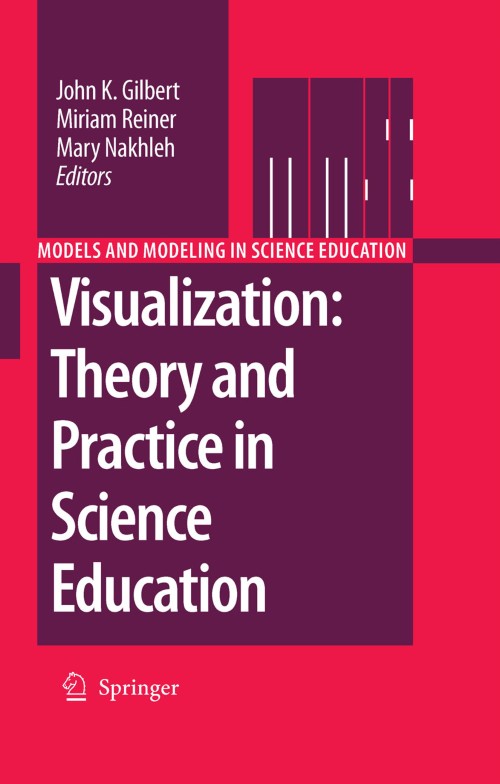
Visualization: Theory and Practice in Science Education [electronic resource] / edited by John K. Gilbert, Miriam Reiner, Mary Nakhleh.
Erişim Adresi
ISBN
9781402052675
Dil Kodu
İngilizce
Yer Numarası
DK/7732
Basım Bildirimi
1st ed. 2008.
Yayın Bilgisi
Dordrecht : Springer Netherlands : Imprint: Springer, 2008.
Fiziksel Niteleme
VIII, 325 p. online resource.
Dizi
Models and Modeling in Science Education, 2213-2260 ; 3
İçindekiler Notu
Visualization: An Emergent Field of Practice and Enquiry in Science Education -- Visualization: An Emergent Field of Practice and Enquiry in Science Education -- The Nature and Development of Visualization: A Review of what is Known -- The ‘Ins’ and ‘Outs’ of Learning: Internal Representations and External Visualizations -- Comprehending and Learning from ‘Visualizations’: A Developmental Perspective -- Seeing Through Touch: The Role of Haptic Information in Visualization -- The Design of Units and Courses Focused on Visualization -- Using External Visualizations to Extend and Integrate Learning in Mobile and Classroom Settings -- Visualizing the Molecular World – Design, Evaluation, and Use of Animations -- Engineering Instructional Metaphors Within Virtual Environments to Enhance Visualization -- Teaching Chemistry with and Without External Representations in Professional Environments with Limited Resources -- Learning with External Representations -- The Educational Value of Multiple-representations when Learning Complex Scientific Concepts -- Learning Chemistry Using Multiple External Representations -- Representational Resources for Constructing Shared Understandings in the High School Chemistry Classroom -- Visualization Without Vision: Students with Visual -- When an Image Turns into Knowledge: The Role of Visualization in Thought Experimentation.
Özet, vb.
External representations (pictures, diagrams, graphs, concrete models) have always been valuable tools for the science teacher. The formation of personal, internal, representations – visualizations – from them plays a key role in all learning, especially in that of science. The use of personal computers and sophisticated software has expanded into the areas of simulation, virtual reality, and animation, and students now engage in the creation of models, a key aspect of scientific methodology. Several academic disciplines underlie these developments, yet act independently of each other, to the detriment of an attainment of what is possible. This book brings together the insights of practicing scientists, science education researchers, computer specialists, and cognitive scientists, to produce a coherent overview. It links presentations about the cognitive theory of representation and visualization, its implications for science curriculum design, and for learning and teaching in classrooms and laboratories.
Konu
Education.
Science __ Study and teaching.
Learning, Psychology of.
Education.
Science Education.
Instructional Psychology.
Science __ Study and teaching.
Learning, Psychology of.
Education.
Science Education.
Instructional Psychology.
Diğer Yazarlar
Kurum Adı
Eseri Alıntıla
Referansları kullanmadan önce gözden geçirmeniz ve varsa gerekli düzeltmeleri yapmanız önerilir.
Dijital Kaynak
MARC Görünümü
LEADER 04435nam a22005415i 4500
001 806432
003 TR_AnAIT
005 20260127002108
007 cr nn 008mamaa
008 100301s2008 ne | s |||| 0|eng d
020 |a9781402052675|9978-1-4020-5267-5
024 7 |a10.1007/978-1-4020-5267-5|2doi
041 |aeng
049 |aTürk Tarih Kurumu Kütüphanesi
050 4|aL1-991
072 7|aJN|2bicssc
072 7|aEDU000000|2bisacsh
072 7|aJN|2thema
082 04|a370|223
090 |aDK/7732
245 10|aVisualization: Theory and Practice in Science Education|h[electronic resource] /|cedited by John K. Gilbert, Miriam Reiner, Mary Nakhleh.
250 |a1st ed. 2008.
264 1|aDordrecht :|bSpringer Netherlands :|bImprint: Springer,|c2008.
300 |aVIII, 325 p.|bonline resource.
336 |atext|btxt|2rdacontent
337 |acomputer|bc|2rdamedia
338 |aonline resource|bcr|2rdacarrier
347 |atext file|bPDF|2rda
490 1 |aModels and Modeling in Science Education,|x2213-2260 ;|v3
505 0 |aVisualization: An Emergent Field of Practice and Enquiry in Science Education -- Visualization: An Emergent Field of Practice and Enquiry in Science Education -- The Nature and Development of Visualization: A Review of what is Known -- The ‘Ins’ and ‘Outs’ of Learning: Internal Representations and External Visualizations -- Comprehending and Learning from ‘Visualizations’: A Developmental Perspective -- Seeing Through Touch: The Role of Haptic Information in Visualization -- The Design of Units and Courses Focused on Visualization -- Using External Visualizations to Extend and Integrate Learning in Mobile and Classroom Settings -- Visualizing the Molecular World – Design, Evaluation, and Use of Animations -- Engineering Instructional Metaphors Within Virtual Environments to Enhance Visualization -- Teaching Chemistry with and Without External Representations in Professional Environments with Limited Resources -- Learning with External Representations -- The Educational Value of Multiple-representations when Learning Complex Scientific Concepts -- Learning Chemistry Using Multiple External Representations -- Representational Resources for Constructing Shared Understandings in the High School Chemistry Classroom -- Visualization Without Vision: Students with Visual -- When an Image Turns into Knowledge: The Role of Visualization in Thought Experimentation.
520 |aExternal representations (pictures, diagrams, graphs, concrete models) have always been valuable tools for the science teacher. The formation of personal, internal, representations – visualizations – from them plays a key role in all learning, especially in that of science. The use of personal computers and sophisticated software has expanded into the areas of simulation, virtual reality, and animation, and students now engage in the creation of models, a key aspect of scientific methodology. Several academic disciplines underlie these developments, yet act independently of each other, to the detriment of an attainment of what is possible. This book brings together the insights of practicing scientists, science education researchers, computer specialists, and cognitive scientists, to produce a coherent overview. It links presentations about the cognitive theory of representation and visualization, its implications for science curriculum design, and for learning and teaching in classrooms and laboratories.
650 0|aEducation.
650 0|aScience|xStudy and teaching.
650 0|aLearning, Psychology of.
650 14|aEducation.
650 24|aScience Education.
650 24|aInstructional Psychology.
700 1 |aGilbert, John K.|eeditor.|4edt|4http://id.loc.gov/vocabulary/relators/edt
700 1 |aReiner, Miriam.|eeditor.|4edt|4http://id.loc.gov/vocabulary/relators/edt
700 1 |aNakhleh, Mary.|eeditor.|4edt|4http://id.loc.gov/vocabulary/relators/edt
710 2 |aSpringerLink (Online service)
773 0 |tSpringer Nature eBook
776 08|iPrinted edition:|z9781402052668
776 08|iPrinted edition:|z9789048110506
776 08|iPrinted edition:|z9789048173266
830 0|aModels and Modeling in Science Education,|x2213-2260 ;|v3
856 40|uhttps://doi.org/10.1007/978-1-4020-5267-5
912 |aZDB-2-SHU
912 |aZDB-2-SXED
950 |aHumanities, Social Sciences and Law (SpringerNature-11648)
950 |aEducation (R0) (SpringerNature-43721)
001 806432
003 TR_AnAIT
005 20260127002108
007 cr nn 008mamaa
008 100301s2008 ne | s |||| 0|eng d
020 |a9781402052675|9978-1-4020-5267-5
024 7 |a10.1007/978-1-4020-5267-5|2doi
041 |aeng
049 |aTürk Tarih Kurumu Kütüphanesi
050 4|aL1-991
072 7|aJN|2bicssc
072 7|aEDU000000|2bisacsh
072 7|aJN|2thema
082 04|a370|223
090 |aDK/7732
245 10|aVisualization: Theory and Practice in Science Education|h[electronic resource] /|cedited by John K. Gilbert, Miriam Reiner, Mary Nakhleh.
250 |a1st ed. 2008.
264 1|aDordrecht :|bSpringer Netherlands :|bImprint: Springer,|c2008.
300 |aVIII, 325 p.|bonline resource.
336 |atext|btxt|2rdacontent
337 |acomputer|bc|2rdamedia
338 |aonline resource|bcr|2rdacarrier
347 |atext file|bPDF|2rda
490 1 |aModels and Modeling in Science Education,|x2213-2260 ;|v3
505 0 |aVisualization: An Emergent Field of Practice and Enquiry in Science Education -- Visualization: An Emergent Field of Practice and Enquiry in Science Education -- The Nature and Development of Visualization: A Review of what is Known -- The ‘Ins’ and ‘Outs’ of Learning: Internal Representations and External Visualizations -- Comprehending and Learning from ‘Visualizations’: A Developmental Perspective -- Seeing Through Touch: The Role of Haptic Information in Visualization -- The Design of Units and Courses Focused on Visualization -- Using External Visualizations to Extend and Integrate Learning in Mobile and Classroom Settings -- Visualizing the Molecular World – Design, Evaluation, and Use of Animations -- Engineering Instructional Metaphors Within Virtual Environments to Enhance Visualization -- Teaching Chemistry with and Without External Representations in Professional Environments with Limited Resources -- Learning with External Representations -- The Educational Value of Multiple-representations when Learning Complex Scientific Concepts -- Learning Chemistry Using Multiple External Representations -- Representational Resources for Constructing Shared Understandings in the High School Chemistry Classroom -- Visualization Without Vision: Students with Visual -- When an Image Turns into Knowledge: The Role of Visualization in Thought Experimentation.
520 |aExternal representations (pictures, diagrams, graphs, concrete models) have always been valuable tools for the science teacher. The formation of personal, internal, representations – visualizations – from them plays a key role in all learning, especially in that of science. The use of personal computers and sophisticated software has expanded into the areas of simulation, virtual reality, and animation, and students now engage in the creation of models, a key aspect of scientific methodology. Several academic disciplines underlie these developments, yet act independently of each other, to the detriment of an attainment of what is possible. This book brings together the insights of practicing scientists, science education researchers, computer specialists, and cognitive scientists, to produce a coherent overview. It links presentations about the cognitive theory of representation and visualization, its implications for science curriculum design, and for learning and teaching in classrooms and laboratories.
650 0|aEducation.
650 0|aScience|xStudy and teaching.
650 0|aLearning, Psychology of.
650 14|aEducation.
650 24|aScience Education.
650 24|aInstructional Psychology.
700 1 |aGilbert, John K.|eeditor.|4edt|4http://id.loc.gov/vocabulary/relators/edt
700 1 |aReiner, Miriam.|eeditor.|4edt|4http://id.loc.gov/vocabulary/relators/edt
700 1 |aNakhleh, Mary.|eeditor.|4edt|4http://id.loc.gov/vocabulary/relators/edt
710 2 |aSpringerLink (Online service)
773 0 |tSpringer Nature eBook
776 08|iPrinted edition:|z9781402052668
776 08|iPrinted edition:|z9789048110506
776 08|iPrinted edition:|z9789048173266
830 0|aModels and Modeling in Science Education,|x2213-2260 ;|v3
856 40|uhttps://doi.org/10.1007/978-1-4020-5267-5
912 |aZDB-2-SHU
912 |aZDB-2-SXED
950 |aHumanities, Social Sciences and Law (SpringerNature-11648)
950 |aEducation (R0) (SpringerNature-43721)
Materyaller
Depodan talep edilen materyal sadece kütüphane içerisinde kullanılmaktadır.
Materyal dışarıya ödünç verilmemektedir.
Materyal dışarıya ödünç verilmemektedir.
