LEADER 03607nam a22005895i 4500
001 806442
003 TR_AnAIT
005 20260127002121
007 cr nn 008mamaa
008 100301s2009 ne | s |||| 0|eng d
020 |a9781402097591|9978-1-4020-9759-1
024 7 |a10.1007/978-1-4020-9759-1|2doi
041 |aeng
049 |aTürk Tarih Kurumu Kütüphanesi
050 4|aLC189-214.53
072 7|aJN|2bicssc
072 7|aJHB|2bicssc
072 7|aEDU040000|2bisacsh
072 7|aJN|2thema
072 7|aJHB|2thema
082 04|a306.43|223
090 |aDK/7742
100 1 |aEvans, Karen.|eauthor.|4aut|4http://id.loc.gov/vocabulary/relators/aut
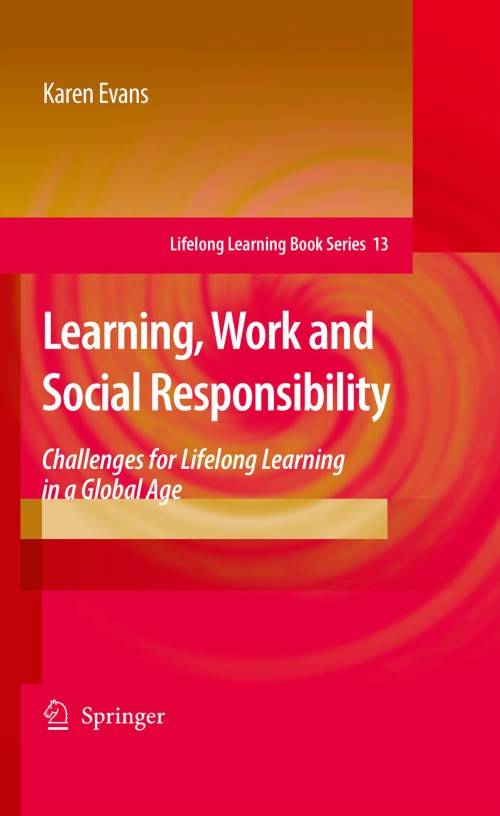
245 10|aLearning, Work and Social Responsibility|h[electronic resource] :|bChallenges for Lifelong Learning in a Global Age /|cby Karen Evans.
250 |a1st ed. 2009.
264 1|aDordrecht :|bSpringer Netherlands :|bImprint: Springer,|c2009.
300 |aXVI, 274 p.|bonline resource.
336 |atext|btxt|2rdacontent
337 |acomputer|bc|2rdamedia
338 |aonline resource|bcr|2rdacarrier
347 |atext file|bPDF|2rda
490 1 |aLifelong Learning Book Series,|x2730-5325 ;|v13
505 0 |aLearning for a Living: The Powerful, the Dispossessed and the Learning Revolution -- Taking Control?: Early Adult Life in Contrasting Social Landscapes -- Students Anticipating the Future -- Workers in Control of the Present? -- Living at the Margins and Finding Ways toWork -- Gender, Work and Learning -- Participation, Social Life and Politics -- Beyond Individualisation: Human Strivings for Control of Their Lives -- Systems and Societies in Transition: Challenging Inequalities, Choosing Inclusion.
520 |aThe political consensus on lifelong learning which marked the end of the 20th century fundamentally reshaped discourses on the role of lifelong learning. In ‘knowledge-based’ economies, we are engaged in a lifelong competition for livelihoods; learning for a living as part of a global learning revolution. The argument (of the author), put simply, revolves around social justice, and active and engaged citizenry. Policies to encourage lifelong learning are based on the view that individuals must learn new things primarily to secure employment in an ever-changing world. The result of these policies has been to open up unsustainable inequalities which ordinary people are unlikely to tolerate for much longer. For politicians, bringing politics closer to the world and aspirations of ordinary people will mean seeking solutions based on broader and fairer forms of meritocracy and bringing work and the pursuit of broader social purposes into a better balance at all levels of the social world.
650 0|aEducational sociology.
650 0|aInternational education .
650 0|aComparative education.
650 0|aProfessional education.
650 0|aVocational education.
650 0|aEducation and state.
650 14|aSociology of Education.
650 24|aInternational and Comparative Education.
650 24|aProfessional and Vocational Education.
650 24|aEducational Policy and Politics.
710 2 |aSpringerLink (Online service)
773 0 |tSpringer Nature eBook
776 08|iPrinted edition:|z9781402097584
776 08|iPrinted edition:|z9781402098147
776 08|iPrinted edition:|z9789048182015
830 0|aLifelong Learning Book Series,|x2730-5325 ;|v13
856 40|uhttps://doi.org/10.1007/978-1-4020-9759-1
912 |aZDB-2-SHU
912 |aZDB-2-SXED
950 |aHumanities, Social Sciences and Law (SpringerNature-11648)
950 |aEducation (R0) (SpringerNature-43721)