

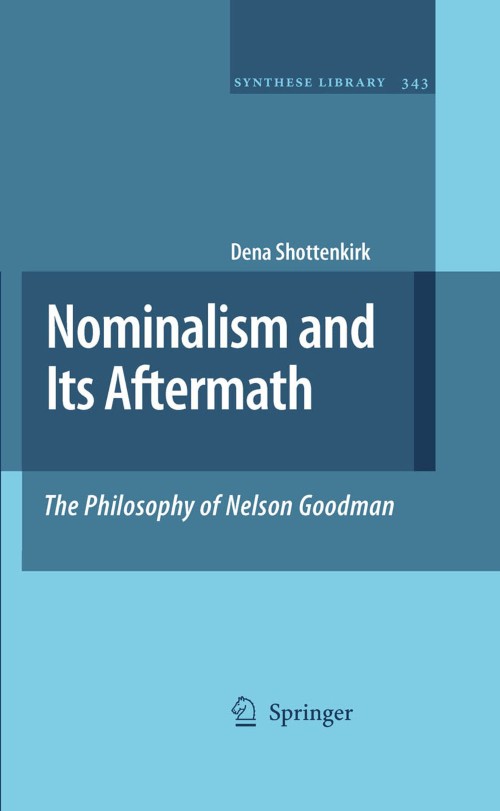
Nominalism and Its Aftermath: The Philosophy of Nelson Goodman [electronic resource] / by Dena Shottenkirk.
Erişim Adresi
ISBN
9781402099311
Dil Kodu
İngilizce
Yer Numarası
DK/7743
Yazar
Basım Bildirimi
1st ed. 2009.
Yayın Bilgisi
Dordrecht : Springer Netherlands : Imprint: Springer, 2009.
Fiziksel Niteleme
XIV, 174 p. online resource.
Dizi
Synthese Library, Studies in Epistemology, Logic, Methodology, and Philosophy of Science, 2542-8292 ; 343
İçindekiler Notu
The Metaphysics -- The Basic Problem -- Goodman’s Nominalism -- The Consequences of Goodman’s Nominalism for his Terminology -- The Epistemology -- Twentieth Century Epistemology -- Constructionalism -- The Effects of Goodman’s Nominalist Constructionalism on his Epistemology -- Influences on Goodman’s Philosophy -- The Effects of Goodman’s Epistemology on his Terminology/Concepts -- The Aesthetics -- Goodman’s Expression as Reference -- Goodman’s Metaphorical Exemplification -- Aesthetics as a Branch of Epistemology -- The Effects of Goodman’s Nominalism and Worldmaking on his Aesthetics.
Özet, vb.
Nelson Goodman’s disparate writings are often written about only within their own particular discipline, such that the epistemology is discussed in contrast to others’ epistemology, the aesthetics is contrasted with more traditional aesthetics, and the ontology and logic is viewed in contrast to both other contemporary philosophers and to Goodman’s historical predecessors. This book argues that that is not an adequate way to view Goodman. The separate disciplines of ontology, epistemology, and aesthetics should be viewed as sequential steps within his thought, such that each provides the ground rules for the next section and, furthermore, providing the reasons for limitations on the terms available to the subsequent writing(s). This is true not merely because this is the general chronology of his writing, but more importantly because within his metaphysics lies Goodman’s basic nominalist ontology and logic, and it is upon those principles that he builds his epistemology and, furthermore, it is the sum of both the metaphysics and the epistemology, with the nominalist principle as the guiding force, which constructs the aesthetics. At the end of each section of this book, the consequent limitations imposed on his terms and concepts available to him are explicated, such that, by the end of the book, the book delineates the constraints imposed upon the aesthetics by both the metaphysics and the epistemology. "The author has given us the needed scholarly reference work on Goodman. Goodman sought to replace psychology with semantics, and showed us how far we could travel in that direction. The trip was admirably designed and guided by his genius. In end, it was genius, and not the lack of it, that showed us that the philosophy of language and languages of art will lead us back to the hardest questions in the philosophy of mind." Keith Lehrer, Regents Professor of Philosophy, The University of Arizona.
Konu
Aesthetics.
Philosophy.
Metaphysics.
Knowledge, Theory of.
Philosophy of mind.
Aesthetics.
Philosophy.
Metaphysics.
Epistemology.
Philosophy of Mind.
Philosophy.
Metaphysics.
Knowledge, Theory of.
Philosophy of mind.
Aesthetics.
Philosophy.
Metaphysics.
Epistemology.
Philosophy of Mind.
Kurum Adı
Eseri Alıntıla
Referansları kullanmadan önce gözden geçirmeniz ve varsa gerekli düzeltmeleri yapmanız önerilir.
Dijital Kaynak
MARC Görünümü
LEADER 04579nam a22005655i 4500
001 806443
003 TR_AnAIT
005 20260127002122
007 cr nn 008mamaa
008 100301s2009 ne | s |||| 0|eng d
020 |a9781402099311|9978-1-4020-9931-1
024 7 |a10.1007/978-1-4020-9931-1|2doi
041 |aeng
049 |aTürk Tarih Kurumu Kütüphanesi
050 4|aBH1-301
072 7|aHPN|2bicssc
072 7|aPHI001000|2bisacsh
072 7|aQDTN|2thema
082 04|a111.85|223
090 |aDK/7743
100 1 |aShottenkirk, Dena.|eauthor.|4aut|4http://id.loc.gov/vocabulary/relators/aut
245 10|aNominalism and Its Aftermath: The Philosophy of Nelson Goodman|h[electronic resource] /|cby Dena Shottenkirk.
250 |a1st ed. 2009.
264 1|aDordrecht :|bSpringer Netherlands :|bImprint: Springer,|c2009.
300 |aXIV, 174 p.|bonline resource.
336 |atext|btxt|2rdacontent
337 |acomputer|bc|2rdamedia
338 |aonline resource|bcr|2rdacarrier
347 |atext file|bPDF|2rda
490 1 |aSynthese Library, Studies in Epistemology, Logic, Methodology, and Philosophy of Science,|x2542-8292 ;|v343
505 0 |aThe Metaphysics -- The Basic Problem -- Goodman’s Nominalism -- The Consequences of Goodman’s Nominalism for his Terminology -- The Epistemology -- Twentieth Century Epistemology -- Constructionalism -- The Effects of Goodman’s Nominalist Constructionalism on his Epistemology -- Influences on Goodman’s Philosophy -- The Effects of Goodman’s Epistemology on his Terminology/Concepts -- The Aesthetics -- Goodman’s Expression as Reference -- Goodman’s Metaphorical Exemplification -- Aesthetics as a Branch of Epistemology -- The Effects of Goodman’s Nominalism and Worldmaking on his Aesthetics.
520 |aNelson Goodman’s disparate writings are often written about only within their own particular discipline, such that the epistemology is discussed in contrast to others’ epistemology, the aesthetics is contrasted with more traditional aesthetics, and the ontology and logic is viewed in contrast to both other contemporary philosophers and to Goodman’s historical predecessors. This book argues that that is not an adequate way to view Goodman. The separate disciplines of ontology, epistemology, and aesthetics should be viewed as sequential steps within his thought, such that each provides the ground rules for the next section and, furthermore, providing the reasons for limitations on the terms available to the subsequent writing(s). This is true not merely because this is the general chronology of his writing, but more importantly because within his metaphysics lies Goodman’s basic nominalist ontology and logic, and it is upon those principles that he builds his epistemology and, furthermore, it is the sum of both the metaphysics and the epistemology, with the nominalist principle as the guiding force, which constructs the aesthetics. At the end of each section of this book, the consequent limitations imposed on his terms and concepts available to him are explicated, such that, by the end of the book, the book delineates the constraints imposed upon the aesthetics by both the metaphysics and the epistemology. "The author has given us the needed scholarly reference work on Goodman. Goodman sought to replace psychology with semantics, and showed us how far we could travel in that direction. The trip was admirably designed and guided by his genius. In end, it was genius, and not the lack of it, that showed us that the philosophy of language and languages of art will lead us back to the hardest questions in the philosophy of mind." Keith Lehrer, Regents Professor of Philosophy, The University of Arizona.
650 0|aAesthetics.
650 0|aPhilosophy.
650 0|aMetaphysics.
650 0|aKnowledge, Theory of.
650 0|aPhilosophy of mind.
650 14|aAesthetics.
650 24|aPhilosophy.
650 24|aMetaphysics.
650 24|aEpistemology.
650 24|aPhilosophy of Mind.
710 2 |aSpringerLink (Online service)
773 0 |tSpringer Nature eBook
776 08|iPrinted edition:|z9781402099304
776 08|iPrinted edition:|z9781402099984
776 08|iPrinted edition:|z9789048182237
830 0|aSynthese Library, Studies in Epistemology, Logic, Methodology, and Philosophy of Science,|x2542-8292 ;|v343
856 40|uhttps://doi.org/10.1007/978-1-4020-9931-1
912 |aZDB-2-SHU
912 |aZDB-2-SXPR
950 |aHumanities, Social Sciences and Law (SpringerNature-11648)
950 |aPhilosophy and Religion (R0) (SpringerNature-43725)
001 806443
003 TR_AnAIT
005 20260127002122
007 cr nn 008mamaa
008 100301s2009 ne | s |||| 0|eng d
020 |a9781402099311|9978-1-4020-9931-1
024 7 |a10.1007/978-1-4020-9931-1|2doi
041 |aeng
049 |aTürk Tarih Kurumu Kütüphanesi
050 4|aBH1-301
072 7|aHPN|2bicssc
072 7|aPHI001000|2bisacsh
072 7|aQDTN|2thema
082 04|a111.85|223
090 |aDK/7743
100 1 |aShottenkirk, Dena.|eauthor.|4aut|4http://id.loc.gov/vocabulary/relators/aut
245 10|aNominalism and Its Aftermath: The Philosophy of Nelson Goodman|h[electronic resource] /|cby Dena Shottenkirk.
250 |a1st ed. 2009.
264 1|aDordrecht :|bSpringer Netherlands :|bImprint: Springer,|c2009.
300 |aXIV, 174 p.|bonline resource.
336 |atext|btxt|2rdacontent
337 |acomputer|bc|2rdamedia
338 |aonline resource|bcr|2rdacarrier
347 |atext file|bPDF|2rda
490 1 |aSynthese Library, Studies in Epistemology, Logic, Methodology, and Philosophy of Science,|x2542-8292 ;|v343
505 0 |aThe Metaphysics -- The Basic Problem -- Goodman’s Nominalism -- The Consequences of Goodman’s Nominalism for his Terminology -- The Epistemology -- Twentieth Century Epistemology -- Constructionalism -- The Effects of Goodman’s Nominalist Constructionalism on his Epistemology -- Influences on Goodman’s Philosophy -- The Effects of Goodman’s Epistemology on his Terminology/Concepts -- The Aesthetics -- Goodman’s Expression as Reference -- Goodman’s Metaphorical Exemplification -- Aesthetics as a Branch of Epistemology -- The Effects of Goodman’s Nominalism and Worldmaking on his Aesthetics.
520 |aNelson Goodman’s disparate writings are often written about only within their own particular discipline, such that the epistemology is discussed in contrast to others’ epistemology, the aesthetics is contrasted with more traditional aesthetics, and the ontology and logic is viewed in contrast to both other contemporary philosophers and to Goodman’s historical predecessors. This book argues that that is not an adequate way to view Goodman. The separate disciplines of ontology, epistemology, and aesthetics should be viewed as sequential steps within his thought, such that each provides the ground rules for the next section and, furthermore, providing the reasons for limitations on the terms available to the subsequent writing(s). This is true not merely because this is the general chronology of his writing, but more importantly because within his metaphysics lies Goodman’s basic nominalist ontology and logic, and it is upon those principles that he builds his epistemology and, furthermore, it is the sum of both the metaphysics and the epistemology, with the nominalist principle as the guiding force, which constructs the aesthetics. At the end of each section of this book, the consequent limitations imposed on his terms and concepts available to him are explicated, such that, by the end of the book, the book delineates the constraints imposed upon the aesthetics by both the metaphysics and the epistemology. "The author has given us the needed scholarly reference work on Goodman. Goodman sought to replace psychology with semantics, and showed us how far we could travel in that direction. The trip was admirably designed and guided by his genius. In end, it was genius, and not the lack of it, that showed us that the philosophy of language and languages of art will lead us back to the hardest questions in the philosophy of mind." Keith Lehrer, Regents Professor of Philosophy, The University of Arizona.
650 0|aAesthetics.
650 0|aPhilosophy.
650 0|aMetaphysics.
650 0|aKnowledge, Theory of.
650 0|aPhilosophy of mind.
650 14|aAesthetics.
650 24|aPhilosophy.
650 24|aMetaphysics.
650 24|aEpistemology.
650 24|aPhilosophy of Mind.
710 2 |aSpringerLink (Online service)
773 0 |tSpringer Nature eBook
776 08|iPrinted edition:|z9781402099304
776 08|iPrinted edition:|z9781402099984
776 08|iPrinted edition:|z9789048182237
830 0|aSynthese Library, Studies in Epistemology, Logic, Methodology, and Philosophy of Science,|x2542-8292 ;|v343
856 40|uhttps://doi.org/10.1007/978-1-4020-9931-1
912 |aZDB-2-SHU
912 |aZDB-2-SXPR
950 |aHumanities, Social Sciences and Law (SpringerNature-11648)
950 |aPhilosophy and Religion (R0) (SpringerNature-43725)
Materyaller
Depodan talep edilen materyal sadece kütüphane içerisinde kullanılmaktadır.
Materyal dışarıya ödünç verilmemektedir.
Materyal dışarıya ödünç verilmemektedir.
