

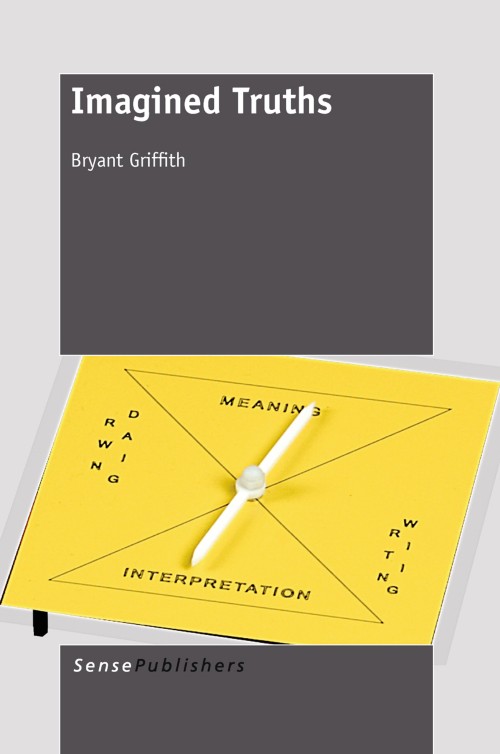
Imagined Truths [electronic resource] / by Bryant Griffith.
Erişim Adresi
ISBN
9789460916632
Dil Kodu
İngilizce
Yer Numarası
DK/7804
Yazar
Basım Bildirimi
1st ed. 2011.
Yayın Bilgisi
Rotterdam : SensePublishers : Imprint: SensePublishers, 2011.
Fiziksel Niteleme
V, 95 p. online resource.
Özet, vb.
Education is often envisioned as a linear, one-way, cause-and-effect process, with teaching as the cause, learning as the effect. But the relationships are less tidy, less passive, and more cyclical than that. There is a continuous cycle of inquiry, discovery, and integration, leading to further inquiry. Technology facilitates the exchange of information, not just teacher to student, but student to teacher, and student to student. The result is that the nature of the development of learning, knowledge, and even wisdom becomes more transparent. This presents challenges of method and identity for the teacher, but more importantly, it enforces a sense among students of their critical investment in their own education. Teachers and learners need to contemplate why and how they construct knowledge. An essential part of this reflection is questioning the premises that govern our views of the world, as well as the premises of what is presented as knowledge. This demands a new epistemology, and requires that teachers change their conceptual structures and recognize that all theories of knowledge are not founded solely on formal logic using uninterpreted experience as data. Moreover, it demands that new models be considered as ways of making sense and of understanding. As teachers, we realize that learning how to cope with changes of this magnitude requires leadership where relationships are crucial. The rapidly emerging significance of social networks is reshaping our world, a world that isn’t flat but where spiky concentrations of people work together to make things happen creatively. It is more the case that the education we need to provide is to solve problems we can’t conceive. Our cultural narratives, when freed of the bounds of instrumental learning, become powerful tools for an emerging world where questions and answers are not simple, cause and effect equations. Yes, the teacher is a facilitator, but one with the mastery of sufficient material to be able topaint numerous contexts for the learner. We need to be open, attentive, and anticipatory to that which may surprise us, to that which we will not expect. The shape of past knowledge can be discovered by reflecting on the ways in which we make decisions and by asking why questions. These questions frame intentions and focus on the specific process of knowing why and how ideas have changed from the past to the present. By placing the self in the middle, this process becomes a trialectic of relational thought which in turns becomes the dialectic of learning.
Konu
Teachers __ Training of.
Teaching and Teacher Education.
Teaching and Teacher Education.
Kurum Adı
Eseri Alıntıla
Referansları kullanmadan önce gözden geçirmeniz ve varsa gerekli düzeltmeleri yapmanız önerilir.
Dijital Kaynak
MARC Görünümü
LEADER 04647nam a22004215i 4500
001 806506
003 TR_AnAIT
005 20260127002235
007 cr nn 008mamaa
008 120118s2011 ne | s |||| 0|eng d
020 |a9789460916632|9978-94-6091-663-2
024 7 |a10.1007/978-94-6091-663-2|2doi
041 |aeng
049 |aTürk Tarih Kurumu Kütüphanesi
050 4|aLB1705-2286
072 7|aJNMT|2bicssc
072 7|aEDU053000|2bisacsh
072 7|aJNMT|2thema
082 04|a370.711|223
090 |aDK/7804
100 1 |aGriffith, Bryant.|eauthor.|4aut|4http://id.loc.gov/vocabulary/relators/aut
245 10|aImagined Truths|h[electronic resource] /|cby Bryant Griffith.
250 |a1st ed. 2011.
264 1|aRotterdam :|bSensePublishers :|bImprint: SensePublishers,|c2011.
300 |aV, 95 p.|bonline resource.
336 |atext|btxt|2rdacontent
337 |acomputer|bc|2rdamedia
338 |aonline resource|bcr|2rdacarrier
347 |atext file|bPDF|2rda
520 |aEducation is often envisioned as a linear, one-way, cause-and-effect process, with teaching as the cause, learning as the effect. But the relationships are less tidy, less passive, and more cyclical than that. There is a continuous cycle of inquiry, discovery, and integration, leading to further inquiry. Technology facilitates the exchange of information, not just teacher to student, but student to teacher, and student to student. The result is that the nature of the development of learning, knowledge, and even wisdom becomes more transparent. This presents challenges of method and identity for the teacher, but more importantly, it enforces a sense among students of their critical investment in their own education. Teachers and learners need to contemplate why and how they construct knowledge. An essential part of this reflection is questioning the premises that govern our views of the world, as well as the premises of what is presented as knowledge. This demands a new epistemology, and requires that teachers change their conceptual structures and recognize that all theories of knowledge are not founded solely on formal logic using uninterpreted experience as data. Moreover, it demands that new models be considered as ways of making sense and of understanding. As teachers, we realize that learning how to cope with changes of this magnitude requires leadership where relationships are crucial. The rapidly emerging significance of social networks is reshaping our world, a world that isn’t flat but where spiky concentrations of people work together to make things happen creatively. It is more the case that the education we need to provide is to solve problems we can’t conceive. Our cultural narratives, when freed of the bounds of instrumental learning, become powerful tools for an emerging world where questions and answers are not simple, cause and effect equations. Yes, the teacher is a facilitator, but one with the mastery of sufficient material to be able topaint numerous contexts for the learner. We need to be open, attentive, and anticipatory to that which may surprise us, to that which we will not expect. The shape of past knowledge can be discovered by reflecting on the ways in which we make decisions and by asking why questions. These questions frame intentions and focus on the specific process of knowing why and how ideas have changed from the past to the present. By placing the self in the middle, this process becomes a trialectic of relational thought which in turns becomes the dialectic of learning.
532 8 |aAccessibility summary: This PDF eBook is produced by a third-party. We have requested that the file be made accessible and compliant with the European Accessibility Act (EAA). However, we have not been able to fully verify its compliance with recognized accessibility standards (such as PDF/UA or WCAG). For detailed accessibility information, please refer to the original publisher’s website. If you require an accessible version of this content, please contact accessibilitysupport@springernature.com. We are committed to improving accessibility and will work with the publisher to meet your needs wherever possible.
532 8 |aPublisher contact for further accessibility information: accessibilitysupport@springernature.com
650 0|aTeachers|xTraining of.
650 14|aTeaching and Teacher Education.
710 2 |aSpringerLink (Online service)
773 0 |tSpringer Nature eBook
856 40|uhttps://doi.org/10.1007/978-94-6091-663-2
912 |aZDB-2-SHU
912 |aZDB-2-SXED
950 |aHumanities, Social Sciences and Law (SpringerNature-11648)
950 |aEducation (R0) (SpringerNature-43721)
001 806506
003 TR_AnAIT
005 20260127002235
007 cr nn 008mamaa
008 120118s2011 ne | s |||| 0|eng d
020 |a9789460916632|9978-94-6091-663-2
024 7 |a10.1007/978-94-6091-663-2|2doi
041 |aeng
049 |aTürk Tarih Kurumu Kütüphanesi
050 4|aLB1705-2286
072 7|aJNMT|2bicssc
072 7|aEDU053000|2bisacsh
072 7|aJNMT|2thema
082 04|a370.711|223
090 |aDK/7804
100 1 |aGriffith, Bryant.|eauthor.|4aut|4http://id.loc.gov/vocabulary/relators/aut
245 10|aImagined Truths|h[electronic resource] /|cby Bryant Griffith.
250 |a1st ed. 2011.
264 1|aRotterdam :|bSensePublishers :|bImprint: SensePublishers,|c2011.
300 |aV, 95 p.|bonline resource.
336 |atext|btxt|2rdacontent
337 |acomputer|bc|2rdamedia
338 |aonline resource|bcr|2rdacarrier
347 |atext file|bPDF|2rda
520 |aEducation is often envisioned as a linear, one-way, cause-and-effect process, with teaching as the cause, learning as the effect. But the relationships are less tidy, less passive, and more cyclical than that. There is a continuous cycle of inquiry, discovery, and integration, leading to further inquiry. Technology facilitates the exchange of information, not just teacher to student, but student to teacher, and student to student. The result is that the nature of the development of learning, knowledge, and even wisdom becomes more transparent. This presents challenges of method and identity for the teacher, but more importantly, it enforces a sense among students of their critical investment in their own education. Teachers and learners need to contemplate why and how they construct knowledge. An essential part of this reflection is questioning the premises that govern our views of the world, as well as the premises of what is presented as knowledge. This demands a new epistemology, and requires that teachers change their conceptual structures and recognize that all theories of knowledge are not founded solely on formal logic using uninterpreted experience as data. Moreover, it demands that new models be considered as ways of making sense and of understanding. As teachers, we realize that learning how to cope with changes of this magnitude requires leadership where relationships are crucial. The rapidly emerging significance of social networks is reshaping our world, a world that isn’t flat but where spiky concentrations of people work together to make things happen creatively. It is more the case that the education we need to provide is to solve problems we can’t conceive. Our cultural narratives, when freed of the bounds of instrumental learning, become powerful tools for an emerging world where questions and answers are not simple, cause and effect equations. Yes, the teacher is a facilitator, but one with the mastery of sufficient material to be able topaint numerous contexts for the learner. We need to be open, attentive, and anticipatory to that which may surprise us, to that which we will not expect. The shape of past knowledge can be discovered by reflecting on the ways in which we make decisions and by asking why questions. These questions frame intentions and focus on the specific process of knowing why and how ideas have changed from the past to the present. By placing the self in the middle, this process becomes a trialectic of relational thought which in turns becomes the dialectic of learning.
532 8 |aAccessibility summary: This PDF eBook is produced by a third-party. We have requested that the file be made accessible and compliant with the European Accessibility Act (EAA). However, we have not been able to fully verify its compliance with recognized accessibility standards (such as PDF/UA or WCAG). For detailed accessibility information, please refer to the original publisher’s website. If you require an accessible version of this content, please contact accessibilitysupport@springernature.com. We are committed to improving accessibility and will work with the publisher to meet your needs wherever possible.
532 8 |aPublisher contact for further accessibility information: accessibilitysupport@springernature.com
650 0|aTeachers|xTraining of.
650 14|aTeaching and Teacher Education.
710 2 |aSpringerLink (Online service)
773 0 |tSpringer Nature eBook
856 40|uhttps://doi.org/10.1007/978-94-6091-663-2
912 |aZDB-2-SHU
912 |aZDB-2-SXED
950 |aHumanities, Social Sciences and Law (SpringerNature-11648)
950 |aEducation (R0) (SpringerNature-43721)
Materyaller
Depodan talep edilen materyal sadece kütüphane içerisinde kullanılmaktadır.
Materyal dışarıya ödünç verilmemektedir.
Materyal dışarıya ödünç verilmemektedir.
