

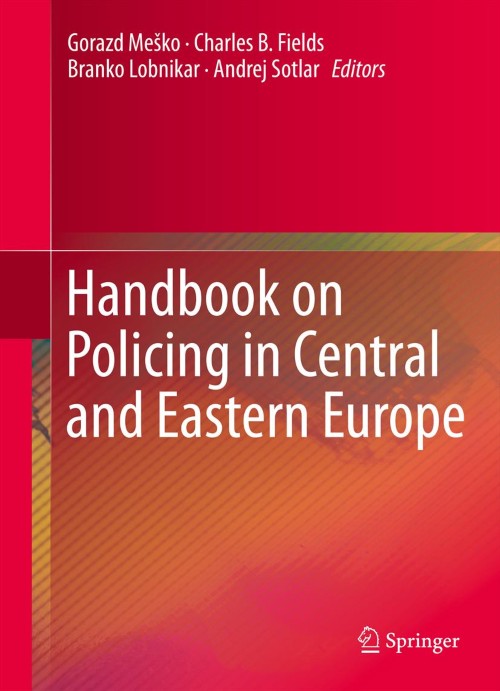
Handbook on Policing in Central and Eastern Europe [electronic resource] / edited by Gorazd Meško, Charles B. Fields, Branko Lobnikar, Andrej Sotlar.
Erişim Adresi
ISBN
9781461467205
Dil Kodu
İngilizce
Yer Numarası
DK/7964
Basım Bildirimi
1st ed. 2013.
Yayın Bilgisi
New York, NY : Springer New York : Imprint: Springer, 2013.
Fiziksel Niteleme
XVI, 316 p. online resource.
İçindekiler Notu
Introduction: Historical Background, Developments, and Challenges of Policing in Central and Eastern Europe -- Country Studies: Policing in Austria, Policing in Bosnia & Herzegovina, Policing in Croatia, Policing in Czech Republic, Policing in Estonia, Policing in Macedonia, Policing in Germany, Policing in Hungary, Policing in Kosovo, Policing in Montenegro, Policing in Russia, Policing in Serbia, Policing in the Slovak Republic, Policing in Slovenia, Policing in the Republic of Srpska -- Conclusion: Trends and Areas for Further Research.
Özet, vb.
Policing in Central and Eastern Europe has changed greatly since the fall of the Berlin Wall. Some Central and Eastern European countries are constituent members of the European Union, while others have been trying to harmonize with the EU and international requirements for a more democratic policing and developments in accordance with Western European and international policing standards, especially in regard to issues of legality and legitimacy. Changes in the police training system (basic and advanced), internationalization of policing due to transnationalization of crime and deviance, and new police organizational structures and agencies have impacted new cultures of policing (from exclusively state to plural policing). This timely volume examines developments in the last two decades to learn the nature of these changes within Central and Eastern Europe, and their impact on police culture, as well as on society as a whole. The development of police research has varied widely throughout Central and Eastern Europe: in some countries, it has developed significantly, while in others it is still in its infancy. This work allows for a transfer of ideas and models of police organization and policing, with an aim to provide consistent and comparable data across all of the countries discussed. For the twenty countries covered, this systematic work provides: short country-based information on police organization and social control; crime and disorder trends in the last 20 years with an emphasis on policing, police training and police educational systems; changes in policing in the last 20 years; police and the media; present trends in policing (public and private, multilateral, plural policing); policing urban and rural communities; recent research trends in research on policing; and future developments.
Konu
Criminology.
Private international law.
Conflict of laws.
International law.
Comparative law.
Criminology.
Private International Law, International and Foreign Law, Comparative Law.
Private international law.
Conflict of laws.
International law.
Comparative law.
Criminology.
Private International Law, International and Foreign Law, Comparative Law.
Kurum Adı
Eseri Alıntıla
Referansları kullanmadan önce gözden geçirmeniz ve varsa gerekli düzeltmeleri yapmanız önerilir.
Dijital Kaynak
MARC Görünümü
LEADER 04450nam a22005415i 4500
001 806670
003 TR_AnAIT
005 20260127002555
007 cr nn 008mamaa
008 130417s2013 xxu| s |||| 0|eng d
020 |a9781461467205|9978-1-4614-6720-5
024 7 |a10.1007/978-1-4614-6720-5|2doi
041 |aeng
049 |aTürk Tarih Kurumu Kütüphanesi
050 4|aHV6001-7220.5
072 7|aJKV|2bicssc
072 7|aSOC004000|2bisacsh
072 7|aJKV|2thema
082 04|a364|223
090 |aDK/7964
245 10|aHandbook on Policing in Central and Eastern Europe|h[electronic resource] /|cedited by Gorazd Meško, Charles B. Fields, Branko Lobnikar, Andrej Sotlar.
250 |a1st ed. 2013.
264 1|aNew York, NY :|bSpringer New York :|bImprint: Springer,|c2013.
300 |aXVI, 316 p.|bonline resource.
336 |atext|btxt|2rdacontent
337 |acomputer|bc|2rdamedia
338 |aonline resource|bcr|2rdacarrier
347 |atext file|bPDF|2rda
505 0 |aIntroduction: Historical Background, Developments, and Challenges of Policing in Central and Eastern Europe -- Country Studies: Policing in Austria, Policing in Bosnia & Herzegovina, Policing in Croatia, Policing in Czech Republic, Policing in Estonia, Policing in Macedonia, Policing in Germany, Policing in Hungary, Policing in Kosovo, Policing in Montenegro, Policing in Russia, Policing in Serbia, Policing in the Slovak Republic, Policing in Slovenia, Policing in the Republic of Srpska -- Conclusion: Trends and Areas for Further Research.
520 |aPolicing in Central and Eastern Europe has changed greatly since the fall of the Berlin Wall. Some Central and Eastern European countries are constituent members of the European Union, while others have been trying to harmonize with the EU and international requirements for a more democratic policing and developments in accordance with Western European and international policing standards, especially in regard to issues of legality and legitimacy. Changes in the police training system (basic and advanced), internationalization of policing due to transnationalization of crime and deviance, and new police organizational structures and agencies have impacted new cultures of policing (from exclusively state to plural policing). This timely volume examines developments in the last two decades to learn the nature of these changes within Central and Eastern Europe, and their impact on police culture, as well as on society as a whole. The development of police research has varied widely throughout Central and Eastern Europe: in some countries, it has developed significantly, while in others it is still in its infancy. This work allows for a transfer of ideas and models of police organization and policing, with an aim to provide consistent and comparable data across all of the countries discussed. For the twenty countries covered, this systematic work provides: short country-based information on police organization and social control; crime and disorder trends in the last 20 years with an emphasis on policing, police training and police educational systems; changes in policing in the last 20 years; police and the media; present trends in policing (public and private, multilateral, plural policing); policing urban and rural communities; recent research trends in research on policing; and future developments.
650 0|aCriminology.
650 0|aPrivate international law.
650 0|aConflict of laws.
650 0|aInternational law.
650 0|aComparative law.
650 14|aCriminology.
650 24|aPrivate International Law, International and Foreign Law, Comparative Law.
700 1 |aMeško, Gorazd.|eeditor.|4edt|4http://id.loc.gov/vocabulary/relators/edt
700 1 |aFields, Charles B.|eeditor.|4edt|4http://id.loc.gov/vocabulary/relators/edt
700 1 |aLobnikar, Branko.|eeditor.|4edt|4http://id.loc.gov/vocabulary/relators/edt
700 1 |aSotlar, Andrej.|eeditor.|4edt|4http://id.loc.gov/vocabulary/relators/edt
710 2 |aSpringerLink (Online service)
773 0 |tSpringer Nature eBook
776 08|iPrinted edition:|z9781461467199
776 08|iPrinted edition:|z9781461467212
776 08|iPrinted edition:|z9781493942619
856 40|uhttps://doi.org/10.1007/978-1-4614-6720-5
912 |aZDB-2-SHU
912 |aZDB-2-SXS
950 |aHumanities, Social Sciences and Law (SpringerNature-11648)
950 |aSocial Sciences (R0) (SpringerNature-43726)
001 806670
003 TR_AnAIT
005 20260127002555
007 cr nn 008mamaa
008 130417s2013 xxu| s |||| 0|eng d
020 |a9781461467205|9978-1-4614-6720-5
024 7 |a10.1007/978-1-4614-6720-5|2doi
041 |aeng
049 |aTürk Tarih Kurumu Kütüphanesi
050 4|aHV6001-7220.5
072 7|aJKV|2bicssc
072 7|aSOC004000|2bisacsh
072 7|aJKV|2thema
082 04|a364|223
090 |aDK/7964
245 10|aHandbook on Policing in Central and Eastern Europe|h[electronic resource] /|cedited by Gorazd Meško, Charles B. Fields, Branko Lobnikar, Andrej Sotlar.
250 |a1st ed. 2013.
264 1|aNew York, NY :|bSpringer New York :|bImprint: Springer,|c2013.
300 |aXVI, 316 p.|bonline resource.
336 |atext|btxt|2rdacontent
337 |acomputer|bc|2rdamedia
338 |aonline resource|bcr|2rdacarrier
347 |atext file|bPDF|2rda
505 0 |aIntroduction: Historical Background, Developments, and Challenges of Policing in Central and Eastern Europe -- Country Studies: Policing in Austria, Policing in Bosnia & Herzegovina, Policing in Croatia, Policing in Czech Republic, Policing in Estonia, Policing in Macedonia, Policing in Germany, Policing in Hungary, Policing in Kosovo, Policing in Montenegro, Policing in Russia, Policing in Serbia, Policing in the Slovak Republic, Policing in Slovenia, Policing in the Republic of Srpska -- Conclusion: Trends and Areas for Further Research.
520 |aPolicing in Central and Eastern Europe has changed greatly since the fall of the Berlin Wall. Some Central and Eastern European countries are constituent members of the European Union, while others have been trying to harmonize with the EU and international requirements for a more democratic policing and developments in accordance with Western European and international policing standards, especially in regard to issues of legality and legitimacy. Changes in the police training system (basic and advanced), internationalization of policing due to transnationalization of crime and deviance, and new police organizational structures and agencies have impacted new cultures of policing (from exclusively state to plural policing). This timely volume examines developments in the last two decades to learn the nature of these changes within Central and Eastern Europe, and their impact on police culture, as well as on society as a whole. The development of police research has varied widely throughout Central and Eastern Europe: in some countries, it has developed significantly, while in others it is still in its infancy. This work allows for a transfer of ideas and models of police organization and policing, with an aim to provide consistent and comparable data across all of the countries discussed. For the twenty countries covered, this systematic work provides: short country-based information on police organization and social control; crime and disorder trends in the last 20 years with an emphasis on policing, police training and police educational systems; changes in policing in the last 20 years; police and the media; present trends in policing (public and private, multilateral, plural policing); policing urban and rural communities; recent research trends in research on policing; and future developments.
650 0|aCriminology.
650 0|aPrivate international law.
650 0|aConflict of laws.
650 0|aInternational law.
650 0|aComparative law.
650 14|aCriminology.
650 24|aPrivate International Law, International and Foreign Law, Comparative Law.
700 1 |aMeško, Gorazd.|eeditor.|4edt|4http://id.loc.gov/vocabulary/relators/edt
700 1 |aFields, Charles B.|eeditor.|4edt|4http://id.loc.gov/vocabulary/relators/edt
700 1 |aLobnikar, Branko.|eeditor.|4edt|4http://id.loc.gov/vocabulary/relators/edt
700 1 |aSotlar, Andrej.|eeditor.|4edt|4http://id.loc.gov/vocabulary/relators/edt
710 2 |aSpringerLink (Online service)
773 0 |tSpringer Nature eBook
776 08|iPrinted edition:|z9781461467199
776 08|iPrinted edition:|z9781461467212
776 08|iPrinted edition:|z9781493942619
856 40|uhttps://doi.org/10.1007/978-1-4614-6720-5
912 |aZDB-2-SHU
912 |aZDB-2-SXS
950 |aHumanities, Social Sciences and Law (SpringerNature-11648)
950 |aSocial Sciences (R0) (SpringerNature-43726)
Materyaller
Depodan talep edilen materyal sadece kütüphane içerisinde kullanılmaktadır.
Materyal dışarıya ödünç verilmemektedir.
Materyal dışarıya ödünç verilmemektedir.
