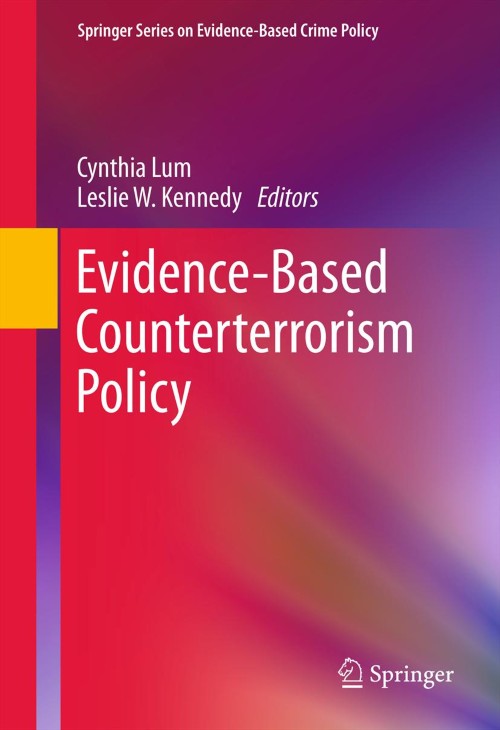
Evidence-Based Counterterrorism Policy [electronic resource] / edited by Cynthia Lum, Leslie W. Kennedy.
Erişim Adresi
ISBN
9781461409533
Dil Kodu
İngilizce
Yer Numarası
DK/7994
Basım Bildirimi
1st ed. 2012.
Yayın Bilgisi
New York, NY : Springer New York : Imprint: Springer, 2012.
Fiziksel Niteleme
VIII, 388 p. online resource.
Dizi
Springer Series on Evidence-Based Crime Policy, 2197-5817
İçindekiler Notu
Preface: Evidence-based policy movement -- A. Introduction -- 1. Evidence Based Counter Terrorism Policy: Issues and Prospects -- B. Obtaining Data for Counterterrorism Evaluations -- 2. Generating Evidence – A Review of Projects from the START Center -- 3. Data Archives for Terrorism Research -- 4. The Role of Fusion Centers as Sources of Information -- 5. Data from courts and prisons -- 6. Dynamic Data Analysis and Data Mining -- C. Methodological Concerns in Evaluating Counterterrorism Policy -- 7. Methodological Challenges of Evaluation: The Qualitative Critique of the Campbell Review -- 8. Quantitative Methods in Evaluating Counterterrorism policy -- 9. Longitudinal Methods of Evaluation: Hazard Modeling and Trajectory Analysis -- 10. Alternative Methods of Evaluation – Advanced Events Data Analysis and Simulations.
Özet, vb.
Since the 9/11 terror attacks, the development and implementation of counterterrorism strategies has been a top priority in national security policies in many countries. Yet as the number and scope of these programs grow—with spending to match—few studies have determined whether they are productive, ineffectual, or even detrimental to security. For too many counterterrorism programs, serious steps toward evaluation have yet to be made. Evidence-Based Counterterrorism Policy emphasizes the use of science, evaluation, and knowledge building to inspire improvements in our what we know about counterterrorism interventions. Focusing on three key areas—identifying and accessing relevant data, using innovative methodologies for generating new interventions, and examining various perspectives to evaluation counterterrorism—the book combines a framework for using scientific findings to inform security policy with a best-practices approach to implementing programs. Strategies such as risk terrain modeling and validity testing for security screening instruments are shown as fostering improvements in threat assessment and in anticipating and responding to future events. The editors also argue for a broader research infrastructure to encourage ongoing development. Among the topics covered: · Assessment and comparison of terrorism data sources · Information sharing and Fusion Centers · Various longitudinal models for assessing counterterrorism policies and terrorism trends · Evidence-based evaluations and validity testing of airport security measures · Public opinion and criminological research application to counterinsurgency and counterterrorism · Police practices for understanding and managing terror risk · Counterterrorism finance and trade regulations · Legal challenges and evaluation of counterterrorism policy Evidence-Based Counterterrorism Policy is an invaluable resource for researchers in criminology and political science, and for policymakers involved with counterterrorism programs. .
Konu
Criminology.
Political science.
Criminology.
Political Science.
Political science.
Criminology.
Political Science.
Diğer Yazarlar
Kurum Adı

Eseri Alıntıla
Referansları kullanmadan önce gözden geçirmeniz ve varsa gerekli düzeltmeleri yapmanız önerilir.
Dijital Kaynak
MARC Görünümü
LEADER 04699nam a22005055i 4500
001 806700
003 TR_AnAIT
005 20260127002630
007 cr nn 008mamaa
008 111104s2012 xxu| s |||| 0|eng d
020 |a9781461409533|9978-1-4614-0953-3
024 7 |a10.1007/978-1-4614-0953-3|2doi
041 |aeng
049 |aTürk Tarih Kurumu Kütüphanesi
050 4|aHV6001-7220.5
072 7|aJKV|2bicssc
072 7|aSOC004000|2bisacsh
072 7|aJKV|2thema
082 04|a364|223
090 |aDK/7994
245 10|aEvidence-Based Counterterrorism Policy|h[electronic resource] /|cedited by Cynthia Lum, Leslie W. Kennedy.
250 |a1st ed. 2012.
264 1|aNew York, NY :|bSpringer New York :|bImprint: Springer,|c2012.
300 |aVIII, 388 p.|bonline resource.
336 |atext|btxt|2rdacontent
337 |acomputer|bc|2rdamedia
338 |aonline resource|bcr|2rdacarrier
347 |atext file|bPDF|2rda
490 1 |aSpringer Series on Evidence-Based Crime Policy,|x2197-5817
505 0 |aPreface: Evidence-based policy movement -- A. Introduction -- 1. Evidence Based Counter Terrorism Policy: Issues and Prospects -- B. Obtaining Data for Counterterrorism Evaluations -- 2. Generating Evidence – A Review of Projects from the START Center -- 3. Data Archives for Terrorism Research -- 4. The Role of Fusion Centers as Sources of Information -- 5. Data from courts and prisons -- 6. Dynamic Data Analysis and Data Mining -- C. Methodological Concerns in Evaluating Counterterrorism Policy -- 7. Methodological Challenges of Evaluation: The Qualitative Critique of the Campbell Review -- 8. Quantitative Methods in Evaluating Counterterrorism policy -- 9. Longitudinal Methods of Evaluation: Hazard Modeling and Trajectory Analysis -- 10. Alternative Methods of Evaluation – Advanced Events Data Analysis and Simulations.
520 |aSince the 9/11 terror attacks, the development and implementation of counterterrorism strategies has been a top priority in national security policies in many countries. Yet as the number and scope of these programs grow—with spending to match—few studies have determined whether they are productive, ineffectual, or even detrimental to security. For too many counterterrorism programs, serious steps toward evaluation have yet to be made. Evidence-Based Counterterrorism Policy emphasizes the use of science, evaluation, and knowledge building to inspire improvements in our what we know about counterterrorism interventions. Focusing on three key areas—identifying and accessing relevant data, using innovative methodologies for generating new interventions, and examining various perspectives to evaluation counterterrorism—the book combines a framework for using scientific findings to inform security policy with a best-practices approach to implementing programs. Strategies such as risk terrain modeling and validity testing for security screening instruments are shown as fostering improvements in threat assessment and in anticipating and responding to future events. The editors also argue for a broader research infrastructure to encourage ongoing development. Among the topics covered: · Assessment and comparison of terrorism data sources · Information sharing and Fusion Centers · Various longitudinal models for assessing counterterrorism policies and terrorism trends · Evidence-based evaluations and validity testing of airport security measures · Public opinion and criminological research application to counterinsurgency and counterterrorism · Police practices for understanding and managing terror risk · Counterterrorism finance and trade regulations · Legal challenges and evaluation of counterterrorism policy Evidence-Based Counterterrorism Policy is an invaluable resource for researchers in criminology and political science, and for policymakers involved with counterterrorism programs. .
650 0|aCriminology.
650 0|aPolitical science.
650 14|aCriminology.
650 24|aPolitical Science.
700 1 |aLum, Cynthia.|eeditor.|4edt|4http://id.loc.gov/vocabulary/relators/edt
700 1 |aKennedy, Leslie W.|eeditor.|4edt|4http://id.loc.gov/vocabulary/relators/edt
710 2 |aSpringerLink (Online service)
773 0 |tSpringer Nature eBook
776 08|iPrinted edition:|z9781461409526
776 08|iPrinted edition:|z9781461409540
776 08|iPrinted edition:|z9781493901111
830 0|aSpringer Series on Evidence-Based Crime Policy,|x2197-5817
856 40|uhttps://doi.org/10.1007/978-1-4614-0953-3
912 |aZDB-2-SHU
912 |aZDB-2-SXS
950 |aHumanities, Social Sciences and Law (SpringerNature-11648)
950 |aSocial Sciences (R0) (SpringerNature-43726)
001 806700
003 TR_AnAIT
005 20260127002630
007 cr nn 008mamaa
008 111104s2012 xxu| s |||| 0|eng d
020 |a9781461409533|9978-1-4614-0953-3
024 7 |a10.1007/978-1-4614-0953-3|2doi
041 |aeng
049 |aTürk Tarih Kurumu Kütüphanesi
050 4|aHV6001-7220.5
072 7|aJKV|2bicssc
072 7|aSOC004000|2bisacsh
072 7|aJKV|2thema
082 04|a364|223
090 |aDK/7994
245 10|aEvidence-Based Counterterrorism Policy|h[electronic resource] /|cedited by Cynthia Lum, Leslie W. Kennedy.
250 |a1st ed. 2012.
264 1|aNew York, NY :|bSpringer New York :|bImprint: Springer,|c2012.
300 |aVIII, 388 p.|bonline resource.
336 |atext|btxt|2rdacontent
337 |acomputer|bc|2rdamedia
338 |aonline resource|bcr|2rdacarrier
347 |atext file|bPDF|2rda
490 1 |aSpringer Series on Evidence-Based Crime Policy,|x2197-5817
505 0 |aPreface: Evidence-based policy movement -- A. Introduction -- 1. Evidence Based Counter Terrorism Policy: Issues and Prospects -- B. Obtaining Data for Counterterrorism Evaluations -- 2. Generating Evidence – A Review of Projects from the START Center -- 3. Data Archives for Terrorism Research -- 4. The Role of Fusion Centers as Sources of Information -- 5. Data from courts and prisons -- 6. Dynamic Data Analysis and Data Mining -- C. Methodological Concerns in Evaluating Counterterrorism Policy -- 7. Methodological Challenges of Evaluation: The Qualitative Critique of the Campbell Review -- 8. Quantitative Methods in Evaluating Counterterrorism policy -- 9. Longitudinal Methods of Evaluation: Hazard Modeling and Trajectory Analysis -- 10. Alternative Methods of Evaluation – Advanced Events Data Analysis and Simulations.
520 |aSince the 9/11 terror attacks, the development and implementation of counterterrorism strategies has been a top priority in national security policies in many countries. Yet as the number and scope of these programs grow—with spending to match—few studies have determined whether they are productive, ineffectual, or even detrimental to security. For too many counterterrorism programs, serious steps toward evaluation have yet to be made. Evidence-Based Counterterrorism Policy emphasizes the use of science, evaluation, and knowledge building to inspire improvements in our what we know about counterterrorism interventions. Focusing on three key areas—identifying and accessing relevant data, using innovative methodologies for generating new interventions, and examining various perspectives to evaluation counterterrorism—the book combines a framework for using scientific findings to inform security policy with a best-practices approach to implementing programs. Strategies such as risk terrain modeling and validity testing for security screening instruments are shown as fostering improvements in threat assessment and in anticipating and responding to future events. The editors also argue for a broader research infrastructure to encourage ongoing development. Among the topics covered: · Assessment and comparison of terrorism data sources · Information sharing and Fusion Centers · Various longitudinal models for assessing counterterrorism policies and terrorism trends · Evidence-based evaluations and validity testing of airport security measures · Public opinion and criminological research application to counterinsurgency and counterterrorism · Police practices for understanding and managing terror risk · Counterterrorism finance and trade regulations · Legal challenges and evaluation of counterterrorism policy Evidence-Based Counterterrorism Policy is an invaluable resource for researchers in criminology and political science, and for policymakers involved with counterterrorism programs. .
650 0|aCriminology.
650 0|aPolitical science.
650 14|aCriminology.
650 24|aPolitical Science.
700 1 |aLum, Cynthia.|eeditor.|4edt|4http://id.loc.gov/vocabulary/relators/edt
700 1 |aKennedy, Leslie W.|eeditor.|4edt|4http://id.loc.gov/vocabulary/relators/edt
710 2 |aSpringerLink (Online service)
773 0 |tSpringer Nature eBook
776 08|iPrinted edition:|z9781461409526
776 08|iPrinted edition:|z9781461409540
776 08|iPrinted edition:|z9781493901111
830 0|aSpringer Series on Evidence-Based Crime Policy,|x2197-5817
856 40|uhttps://doi.org/10.1007/978-1-4614-0953-3
912 |aZDB-2-SHU
912 |aZDB-2-SXS
950 |aHumanities, Social Sciences and Law (SpringerNature-11648)
950 |aSocial Sciences (R0) (SpringerNature-43726)
Materyaller
Depodan talep edilen materyal sadece kütüphane içerisinde kullanılmaktadır.
Materyal dışarıya ödünç verilmemektedir.
