

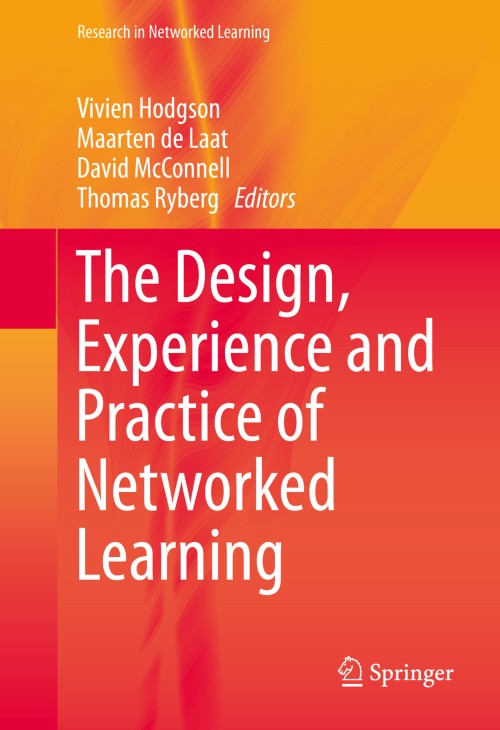
The Design, Experience and Practice of Networked Learning [electronic resource] / edited by Vivien Hodgson, Maarten de Laat, David McConnell, Thomas Ryberg.
Erişim Adresi
ISBN
9783319019406
Dil Kodu
İngilizce
Yer Numarası
DK/8012
Basım Bildirimi
1st ed. 2014.
Yayın Bilgisi
Cham : Springer International Publishing : Imprint: Springer, 2014.
Fiziksel Niteleme
VIII, 281 p. 27 illus., 13 illus. in color. online resource.
Dizi
Research in Networked Learning, 2570-4532
İçindekiler Notu
-- Introduction - Researching Design, Experience and Practice of Networked Learning: an Overview -- Implications for Networked Learning of the ‘Practice’ Side of Social Practice Theories - a Tacit-knowledge Perspective -- Designing for Learning in Coupled Contexts -- Making the Right Connections: Implementing the Objects of Practice into a Network for Learning -- Teachers’ Use of Learning Technology in a South-Asian context -- Here be Dragons: Approaching Difficult Group Issues in Networked Learning -- Understanding Emerging Knowledge Spillovers in Small-group Learning Settings; a Networked Learning Perspective -- Changing the Rules of the Game – Using Blogs for Online Discussions in Higher Education -- Blended Problem-Based Learning: Designing Collaboration Opportunities for Unguided Group Research Through the Use of Web 2.0 tools -- Online Learning Communities for Teachers' Continuous Professional Development: An Action Research Study of eTwinning Learning Events -- Analysing Learning Ties toStimulate Continuous Professional Development in the Workplace -- Learning Through Network Interaction: The Potential of Ego-Networks -- Mobile Learning and Immutable Mobiles: Using iPhones to Support Informal Learning in Craft Brewing.
Özet, vb.
The Design, Experience and Practice of Networked Learning Edited by: Vivien Hodgson, Maarten de Laat, David McConnell and Thomas Ryberg This book brings together a wealth of new research that opens up the meaning of connectivity as embodied and promised in the term ‘networked learning’. Chapters explore how contexts, groups and environments can be connected rather than just learners; how messy, unexpected and emergent connections can be made rather than structured and predefined ones; and how technology connects us to learning and each other, but also shapes our identity. These exciting new perspectives ask us to look again at what we are connecting and to revel in new and emergent possibilities arising from the interplay of social actors, contexts, technologies, and learning. Caroline Haythornthwaite, University of British Columbia Despite creating fundamentally new educational economics and greatly increasing access - teaching and learningin networks is a tricky business. These chapters illuminate the complex interactions amongst tools, pedagogy, educational institutions and personal net presences – helping us design and redesign our own networks. In the process, they take (or extract) network theory from the practice of real teaching and learning contexts, making this collection an important contribution to Networked Learning. Terry Anderson, Athabasca University What kinds of learning can social networking platforms really enable? Digging well beneath the hype, this book provides a timely, incisive analysis of why and how learning emerges (or fails to) in networked spaces. The editors do a fine job in guiding the reader through the rich array of theories and methods for tackling this question, and the diverse contexts in which networked learning is now being studied. This is a book for reflective practitioners as well as academics: the book's close attention to the political, pedagogical andorganisational complexity of effective practice, and the lived experience of educators and learners, helps explain why networked learning has such disruptive potential — but equally, why it draws resistance from the establishment. Simon Buckingham Shum, The Open University The chapters in this volume explore new and innovative ways of thinking about the nature of networked learning and its pedagogical values and beliefs. They pose a challenge to us to reflect on what we thought networked learning was 15 year ago, where it is today and where it is likely to be headed. The Design, Experience and Practice of Networked Learning will prove indispensable reading for researchers, teachers, consultants, and instructional designers in higher and continuing education; for those involved in staff and educational development, and for those studying post graduate qualifications in learning and teaching. This, the second volume in the Springer Book Series on Researching Networked Learning, is based on a selection of papers presented at the 2012 Networked Learning Conference held in Maastricht, The Netherlands. .
Konu
Educational technology.
Digital Education and Educational Technology.
Digital Education and Educational Technology.
Kurum Adı
Eseri Alıntıla
Referansları kullanmadan önce gözden geçirmeniz ve varsa gerekli düzeltmeleri yapmanız önerilir.
Dijital Kaynak
MARC Görünümü
LEADER 06344nam a22005055i 4500
001 806718
003 TR_AnAIT
005 20260127002653
007 cr nn 008mamaa
008 140117s2014 sz | s |||| 0|eng d
020 |a9783319019406|9978-3-319-01940-6
024 7 |a10.1007/978-3-319-01940-6|2doi
041 |aeng
049 |aTürk Tarih Kurumu Kütüphanesi
050 4|aLB1028.3
072 7|aJNV|2bicssc
072 7|aEDU000000|2bisacsh
072 7|aJNV|2thema
082 04|a371.33|223
090 |aDK/8012
245 14|aThe Design, Experience and Practice of Networked Learning|h[electronic resource] /|cedited by Vivien Hodgson, Maarten de Laat, David McConnell, Thomas Ryberg.
250 |a1st ed. 2014.
264 1|aCham :|bSpringer International Publishing :|bImprint: Springer,|c2014.
300 |aVIII, 281 p. 27 illus., 13 illus. in color.|bonline resource.
336 |atext|btxt|2rdacontent
337 |acomputer|bc|2rdamedia
338 |aonline resource|bcr|2rdacarrier
347 |atext file|bPDF|2rda
490 1 |aResearch in Networked Learning,|x2570-4532
505 0 |a -- Introduction - Researching Design, Experience and Practice of Networked Learning: an Overview -- Implications for Networked Learning of the ‘Practice’ Side of Social Practice Theories - a Tacit-knowledge Perspective -- Designing for Learning in Coupled Contexts -- Making the Right Connections: Implementing the Objects of Practice into a Network for Learning -- Teachers’ Use of Learning Technology in a South-Asian context -- Here be Dragons: Approaching Difficult Group Issues in Networked Learning -- Understanding Emerging Knowledge Spillovers in Small-group Learning Settings; a Networked Learning Perspective -- Changing the Rules of the Game – Using Blogs for Online Discussions in Higher Education -- Blended Problem-Based Learning: Designing Collaboration Opportunities for Unguided Group Research Through the Use of Web 2.0 tools -- Online Learning Communities for Teachers' Continuous Professional Development: An Action Research Study of eTwinning Learning Events -- Analysing Learning Ties toStimulate Continuous Professional Development in the Workplace -- Learning Through Network Interaction: The Potential of Ego-Networks -- Mobile Learning and Immutable Mobiles: Using iPhones to Support Informal Learning in Craft Brewing.
520 |aThe Design, Experience and Practice of Networked Learning Edited by: Vivien Hodgson, Maarten de Laat, David McConnell and Thomas Ryberg This book brings together a wealth of new research that opens up the meaning of connectivity as embodied and promised in the term ‘networked learning’. Chapters explore how contexts, groups and environments can be connected rather than just learners; how messy, unexpected and emergent connections can be made rather than structured and predefined ones; and how technology connects us to learning and each other, but also shapes our identity. These exciting new perspectives ask us to look again at what we are connecting and to revel in new and emergent possibilities arising from the interplay of social actors, contexts, technologies, and learning. Caroline Haythornthwaite, University of British Columbia Despite creating fundamentally new educational economics and greatly increasing access - teaching and learningin networks is a tricky business. These chapters illuminate the complex interactions amongst tools, pedagogy, educational institutions and personal net presences – helping us design and redesign our own networks. In the process, they take (or extract) network theory from the practice of real teaching and learning contexts, making this collection an important contribution to Networked Learning. Terry Anderson, Athabasca University What kinds of learning can social networking platforms really enable? Digging well beneath the hype, this book provides a timely, incisive analysis of why and how learning emerges (or fails to) in networked spaces. The editors do a fine job in guiding the reader through the rich array of theories and methods for tackling this question, and the diverse contexts in which networked learning is now being studied. This is a book for reflective practitioners as well as academics: the book's close attention to the political, pedagogical andorganisational complexity of effective practice, and the lived experience of educators and learners, helps explain why networked learning has such disruptive potential — but equally, why it draws resistance from the establishment. Simon Buckingham Shum, The Open University The chapters in this volume explore new and innovative ways of thinking about the nature of networked learning and its pedagogical values and beliefs. They pose a challenge to us to reflect on what we thought networked learning was 15 year ago, where it is today and where it is likely to be headed. The Design, Experience and Practice of Networked Learning will prove indispensable reading for researchers, teachers, consultants, and instructional designers in higher and continuing education; for those involved in staff and educational development, and for those studying post graduate qualifications in learning and teaching. This, the second volume in the Springer Book Series on Researching Networked Learning, is based on a selection of papers presented at the 2012 Networked Learning Conference held in Maastricht, The Netherlands. .
650 0|aEducational technology.
650 14|aDigital Education and Educational Technology.
700 1 |aHodgson, Vivien.|eeditor.|4edt|4http://id.loc.gov/vocabulary/relators/edt
700 1 |ade Laat, Maarten.|eeditor.|4edt|4http://id.loc.gov/vocabulary/relators/edt
700 1 |aMcConnell, David.|eeditor.|4edt|4http://id.loc.gov/vocabulary/relators/edt
700 1 |aRyberg, Thomas.|eeditor.|4edt|4http://id.loc.gov/vocabulary/relators/edt
710 2 |aSpringerLink (Online service)
773 0 |tSpringer Nature eBook
776 08|iPrinted edition:|z9783319019390
776 08|iPrinted edition:|z9783319019413
776 08|iPrinted edition:|z9783319347646
830 0|aResearch in Networked Learning,|x2570-4532
856 40|uhttps://doi.org/10.1007/978-3-319-01940-6
912 |aZDB-2-SHU
912 |aZDB-2-SXED
950 |aHumanities, Social Sciences and Law (SpringerNature-11648)
950 |aEducation (R0) (SpringerNature-43721)
Materyaller
Depodan talep edilen materyal sadece kütüphane içerisinde kullanılmaktadır.
Materyal dışarıya ödünç verilmemektedir.
Materyal dışarıya ödünç verilmemektedir.
