LEADER 03954nam a22005655i 4500
001 806834
003 TR_AnAIT
005 20260127002919
007 cr nn 008mamaa
008 100301s2002 ne | s |||| 0|eng d
020 |a9780306472091|9978-0-306-47209-1
024 7 |a10.1007/0-306-47209-0|2doi
041 |aeng
049 |aTürk Tarih Kurumu Kütüphanesi
050 4|aLB43
050 4|aLC1090
072 7|aJN|2bicssc
072 7|aEDU043000|2bisacsh
072 7|aJND|2thema
082 04|a370.116|223
082 04|a370.9|223
090 |aDK/8128
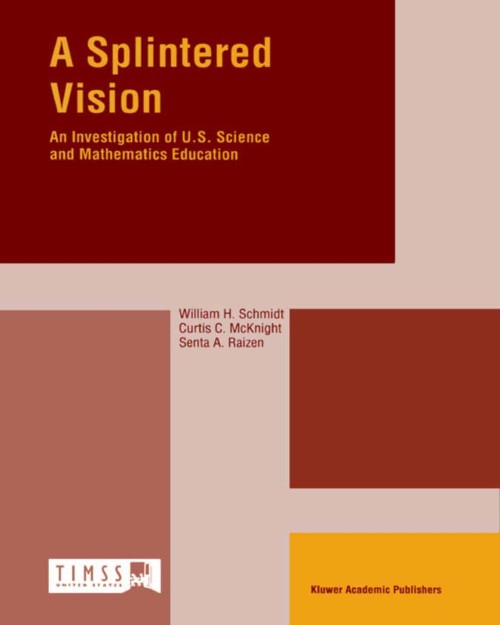
245 12|aA Splintered Vision|h[electronic resource] :|bAn Investigation of U.S. Science and Mathematics Education /|cedited by W.H. Schmidt, Curtis C. McKnight, S. Raizen.
250 |a1st ed. 2002.
264 1|aDordrecht :|bSpringer Netherlands :|bImprint: Springer,|c2002.
300 |aX, 164 p.|bonline resource.
336 |atext|btxt|2rdacontent
337 |acomputer|bc|2rdamedia
338 |aonline resource|bcr|2rdacarrier
347 |atext file|bPDF|2rda
505 0 |aUnfocused Curricula -- U.S. Textbooks: Conflicting Demands, Cautious Visions -- U.S. Teachers: Responding to Splintered Visions -- How Has Our Vision Become So Splintered? -- So What Can We Expect from U.S. Students? -- Open Questions: How Do We Get Where We Want to Go?.
520 |aA Splintered Vision: An Investigation of U.S. Science and Mathematics Education is the US report on the curriculum analysis component of the Third International Mathematics and Science Study (TIMSS) which was sponsored by the International Association for the Evaluation of Educational Achievement (IEA). The report summarizes data from the TIMSS curriculum analysis and integrates it with teacher questionnaire data from the US, Japan, and Germany on science and mathematics topic coverage and instructional practices. The authors of A Splintered Vision discuss and provide evidence of the unfocused nature of US mathematics and science curricular intentions, textbooks, and teacher practices. They offer the premise that producers of US textbooks and curriculum guides have attempted to answer calls for curricular reform by adding new content to already existing materials instead of devoting time to restructuring the materials. The authors also suggest that US teachers, inundated with a myriad of competing visions, are attempting to cover all the topics they confront in their resource documents and to meet all the instructional demands placed on them by those with a stake in education. In keeping with the `incremental assembly line' philosophy in American society, US teachers also tend to lean toward a piecemeal approach to education. The authors speculate on what such practices may mean for the mathematics and science achievement of US students. The work is sure to spur discussion among educational researchers, policy makers, and others concerned about the future of mathematics and science education in the US.
650 0|aInternational education .
650 0|aComparative education.
650 0|aMathematics|xStudy and teaching .
650 0|aScience|xStudy and teaching.
650 14|aInternational and Comparative Education.
650 24|aMathematics Education.
650 24|aScience Education.
700 1 |aSchmidt, W.H.|eeditor.|4edt|4http://id.loc.gov/vocabulary/relators/edt
700 1 |aMcKnight, Curtis C.|eeditor.|4edt|4http://id.loc.gov/vocabulary/relators/edt
700 1 |aRaizen, S.|eeditor.|4edt|4http://id.loc.gov/vocabulary/relators/edt
710 2 |aSpringerLink (Online service)
773 0 |tSpringer Nature eBook
776 08|iPrinted edition:|z9780792344407
776 08|iPrinted edition:|z9780792344414
776 08|iPrinted edition:|z9789401737791
856 40|uhttps://doi.org/10.1007/0-306-47209-0
912 |aZDB-2-SHU
912 |aZDB-2-SXED
912 |aZDB-2-BAE
950 |aHumanities, Social Sciences and Law (SpringerNature-11648)
950 |aEducation (R0) (SpringerNature-43721)