

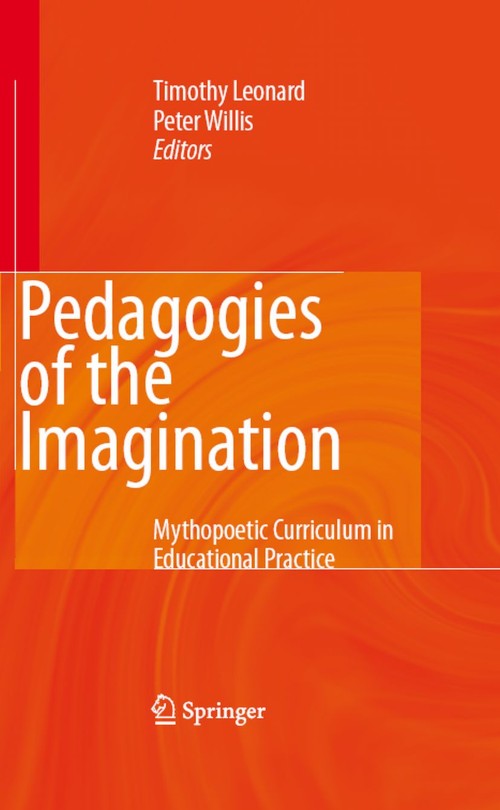
Pedagogies of the Imagination [electronic resource] : Mythopoetic Curriculum in Educational Practice / edited by Timothy Leonard, Peter Willis.
Erişim Adresi
ISBN
9781402083501
Dil Kodu
İngilizce
Yer Numarası
DK/8162
Basım Bildirimi
1st ed. 2008.
Yayın Bilgisi
Dordrecht : Springer Netherlands : Imprint: Springer, 2008.
Fiziksel Niteleme
XVIII, 270 p. online resource.
İçindekiler Notu
Mythopoesis and Curriculum Theorizing -- Watching with Two Eyes: The Place of the Mythopoetic in Curriculum Inquiry -- The Shadow of Hope: Reconciliation and Imaginal Pedagogies -- Myth in the Practice of Reason: The Production of Education and Productive Confusion -- Care of the Self: Mythopoetic Dimensions of Professional Preparation and Development -- Imagination and Mythopoesis in the Science Curriculum -- The Mythopoetic Body: Learning Through Creativity -- Autobiography and Poetry -- The Resilience of Soul -- Mythopoesis in Educational Practice -- Imaginal Transformation and Schooling -- Idealism and Materialism in the Culture of Teacher Education: The Mythopoetic Significance of Things -- Spiritual Grounding and Adult Education -- Ignatian Spirituality as Mythopoesis -- Mythopoetic Spaces in the (Trans)formation of Counselors and Therapists -- Critical Pedagogy and the Mythopoetic: A Case Study from Adelaide’s Northern Urban Fringe -- Capacity and Currere -- Thinking, Feeling, and Willing: How Waldorf Schools Provide a Creative Pedagogy That Nurtures and Develops Imagination -- Getting a Feel for the Work: Mythopoetic Pedagogy for Adult Educators Through Phenomenological Evocation -- Conclusion: The Mythopoetic Challenge.
Özet, vb.
This book is about the practice of Imaginal Knowing in education. Imaginal knowing is not fantasy, but is linked to the way humans imagine the real world. Imaginal knowing moves the heart, holds the imagination, finds the fit between self-stories, public myths, and the content of cultural knowledge. It is deeply personal, yet open to the universe. The curriculum, as conceptualized here, is the medium through which imaginal knowing is evoked in both teachers and students. Educators from United States, Australia, the United Kingdom and Canada offer a vision of educational practice seasoned in years of reflective pedagogic engagement. They speak here of a genuine and practical alternative to overly bureaucratic educational processes that can crush learners through a closed system of arbitrary standards and mindless testing. There is hope that education at all levels from elementary to professional, graduate and post compulsory education has the capacity to break out of these artificial constraints. These authors show us ways to make this possible.
Konu
Education __ Curricula.
Education __ Philosophy.
Learning, Psychology of.
Teachers __ Training of.
Professional education.
Vocational education.
Curriculum Studies.
Educational Philosophy.
Instructional Psychology.
Teaching and Teacher Education.
Professional and Vocational Education.
Education __ Philosophy.
Learning, Psychology of.
Teachers __ Training of.
Professional education.
Vocational education.
Curriculum Studies.
Educational Philosophy.
Instructional Psychology.
Teaching and Teacher Education.
Professional and Vocational Education.
Diğer Yazarlar
Kurum Adı
Eseri Alıntıla
Referansları kullanmadan önce gözden geçirmeniz ve varsa gerekli düzeltmeleri yapmanız önerilir.
Dijital Kaynak
MARC Görünümü
LEADER 04351nam a22005655i 4500
001 806868
003 TR_AnAIT
005 20260127003006
007 cr nn 008mamaa
008 100301s2008 ne | s |||| 0|eng d
020 |a9781402083501|9978-1-4020-8350-1
024 7 |a10.1007/978-1-4020-8350-1|2doi
041 |aeng
049 |aTürk Tarih Kurumu Kütüphanesi
050 4|aLB2806.15
072 7|aJNKC|2bicssc
072 7|aEDU007000|2bisacsh
072 7|aJNDG|2thema
082 04|a375|223
090 |aDK/8162
245 10|aPedagogies of the Imagination|h[electronic resource] :|bMythopoetic Curriculum in Educational Practice /|cedited by Timothy Leonard, Peter Willis.
250 |a1st ed. 2008.
264 1|aDordrecht :|bSpringer Netherlands :|bImprint: Springer,|c2008.
300 |aXVIII, 270 p.|bonline resource.
336 |atext|btxt|2rdacontent
337 |acomputer|bc|2rdamedia
338 |aonline resource|bcr|2rdacarrier
347 |atext file|bPDF|2rda
505 0 |aMythopoesis and Curriculum Theorizing -- Watching with Two Eyes: The Place of the Mythopoetic in Curriculum Inquiry -- The Shadow of Hope: Reconciliation and Imaginal Pedagogies -- Myth in the Practice of Reason: The Production of Education and Productive Confusion -- Care of the Self: Mythopoetic Dimensions of Professional Preparation and Development -- Imagination and Mythopoesis in the Science Curriculum -- The Mythopoetic Body: Learning Through Creativity -- Autobiography and Poetry -- The Resilience of Soul -- Mythopoesis in Educational Practice -- Imaginal Transformation and Schooling -- Idealism and Materialism in the Culture of Teacher Education: The Mythopoetic Significance of Things -- Spiritual Grounding and Adult Education -- Ignatian Spirituality as Mythopoesis -- Mythopoetic Spaces in the (Trans)formation of Counselors and Therapists -- Critical Pedagogy and the Mythopoetic: A Case Study from Adelaide’s Northern Urban Fringe -- Capacity and Currere -- Thinking, Feeling, and Willing: How Waldorf Schools Provide a Creative Pedagogy That Nurtures and Develops Imagination -- Getting a Feel for the Work: Mythopoetic Pedagogy for Adult Educators Through Phenomenological Evocation -- Conclusion: The Mythopoetic Challenge.
520 |aThis book is about the practice of Imaginal Knowing in education. Imaginal knowing is not fantasy, but is linked to the way humans imagine the real world. Imaginal knowing moves the heart, holds the imagination, finds the fit between self-stories, public myths, and the content of cultural knowledge. It is deeply personal, yet open to the universe. The curriculum, as conceptualized here, is the medium through which imaginal knowing is evoked in both teachers and students. Educators from United States, Australia, the United Kingdom and Canada offer a vision of educational practice seasoned in years of reflective pedagogic engagement. They speak here of a genuine and practical alternative to overly bureaucratic educational processes that can crush learners through a closed system of arbitrary standards and mindless testing. There is hope that education at all levels from elementary to professional, graduate and post compulsory education has the capacity to break out of these artificial constraints. These authors show us ways to make this possible.
650 0|aEducation|xCurricula.
650 0|aEducation|xPhilosophy.
650 0|aLearning, Psychology of.
650 0|aTeachers|xTraining of.
650 0|aProfessional education.
650 0|aVocational education.
650 14|aCurriculum Studies.
650 24|aEducational Philosophy.
650 24|aInstructional Psychology.
650 24|aTeaching and Teacher Education.
650 24|aProfessional and Vocational Education.
700 1 |aLeonard, Timothy.|eeditor.|4edt|4http://id.loc.gov/vocabulary/relators/edt
700 1 |aWillis, Peter.|eeditor.|4edt|4http://id.loc.gov/vocabulary/relators/edt
710 2 |aSpringerLink (Online service)
773 0 |tSpringer Nature eBook
776 08|iPrinted edition:|z9781402082818
776 08|iPrinted edition:|z9789048119554
776 08|iPrinted edition:|z9789048178308
856 40|uhttps://doi.org/10.1007/978-1-4020-8350-1
912 |aZDB-2-SHU
912 |aZDB-2-SXED
950 |aHumanities, Social Sciences and Law (SpringerNature-11648)
950 |aEducation (R0) (SpringerNature-43721)
001 806868
003 TR_AnAIT
005 20260127003006
007 cr nn 008mamaa
008 100301s2008 ne | s |||| 0|eng d
020 |a9781402083501|9978-1-4020-8350-1
024 7 |a10.1007/978-1-4020-8350-1|2doi
041 |aeng
049 |aTürk Tarih Kurumu Kütüphanesi
050 4|aLB2806.15
072 7|aJNKC|2bicssc
072 7|aEDU007000|2bisacsh
072 7|aJNDG|2thema
082 04|a375|223
090 |aDK/8162
245 10|aPedagogies of the Imagination|h[electronic resource] :|bMythopoetic Curriculum in Educational Practice /|cedited by Timothy Leonard, Peter Willis.
250 |a1st ed. 2008.
264 1|aDordrecht :|bSpringer Netherlands :|bImprint: Springer,|c2008.
300 |aXVIII, 270 p.|bonline resource.
336 |atext|btxt|2rdacontent
337 |acomputer|bc|2rdamedia
338 |aonline resource|bcr|2rdacarrier
347 |atext file|bPDF|2rda
505 0 |aMythopoesis and Curriculum Theorizing -- Watching with Two Eyes: The Place of the Mythopoetic in Curriculum Inquiry -- The Shadow of Hope: Reconciliation and Imaginal Pedagogies -- Myth in the Practice of Reason: The Production of Education and Productive Confusion -- Care of the Self: Mythopoetic Dimensions of Professional Preparation and Development -- Imagination and Mythopoesis in the Science Curriculum -- The Mythopoetic Body: Learning Through Creativity -- Autobiography and Poetry -- The Resilience of Soul -- Mythopoesis in Educational Practice -- Imaginal Transformation and Schooling -- Idealism and Materialism in the Culture of Teacher Education: The Mythopoetic Significance of Things -- Spiritual Grounding and Adult Education -- Ignatian Spirituality as Mythopoesis -- Mythopoetic Spaces in the (Trans)formation of Counselors and Therapists -- Critical Pedagogy and the Mythopoetic: A Case Study from Adelaide’s Northern Urban Fringe -- Capacity and Currere -- Thinking, Feeling, and Willing: How Waldorf Schools Provide a Creative Pedagogy That Nurtures and Develops Imagination -- Getting a Feel for the Work: Mythopoetic Pedagogy for Adult Educators Through Phenomenological Evocation -- Conclusion: The Mythopoetic Challenge.
520 |aThis book is about the practice of Imaginal Knowing in education. Imaginal knowing is not fantasy, but is linked to the way humans imagine the real world. Imaginal knowing moves the heart, holds the imagination, finds the fit between self-stories, public myths, and the content of cultural knowledge. It is deeply personal, yet open to the universe. The curriculum, as conceptualized here, is the medium through which imaginal knowing is evoked in both teachers and students. Educators from United States, Australia, the United Kingdom and Canada offer a vision of educational practice seasoned in years of reflective pedagogic engagement. They speak here of a genuine and practical alternative to overly bureaucratic educational processes that can crush learners through a closed system of arbitrary standards and mindless testing. There is hope that education at all levels from elementary to professional, graduate and post compulsory education has the capacity to break out of these artificial constraints. These authors show us ways to make this possible.
650 0|aEducation|xCurricula.
650 0|aEducation|xPhilosophy.
650 0|aLearning, Psychology of.
650 0|aTeachers|xTraining of.
650 0|aProfessional education.
650 0|aVocational education.
650 14|aCurriculum Studies.
650 24|aEducational Philosophy.
650 24|aInstructional Psychology.
650 24|aTeaching and Teacher Education.
650 24|aProfessional and Vocational Education.
700 1 |aLeonard, Timothy.|eeditor.|4edt|4http://id.loc.gov/vocabulary/relators/edt
700 1 |aWillis, Peter.|eeditor.|4edt|4http://id.loc.gov/vocabulary/relators/edt
710 2 |aSpringerLink (Online service)
773 0 |tSpringer Nature eBook
776 08|iPrinted edition:|z9781402082818
776 08|iPrinted edition:|z9789048119554
776 08|iPrinted edition:|z9789048178308
856 40|uhttps://doi.org/10.1007/978-1-4020-8350-1
912 |aZDB-2-SHU
912 |aZDB-2-SXED
950 |aHumanities, Social Sciences and Law (SpringerNature-11648)
950 |aEducation (R0) (SpringerNature-43721)
Materyaller
Depodan talep edilen materyal sadece kütüphane içerisinde kullanılmaktadır.
Materyal dışarıya ödünç verilmemektedir.
Materyal dışarıya ödünç verilmemektedir.
