

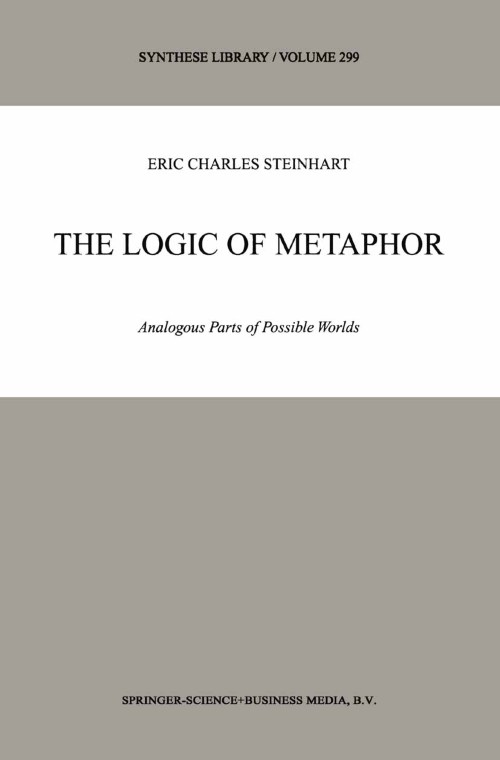
The Logic of Metaphor [electronic resource] : Analogous Parts of Possible Worlds / by Eric Steinhart.
Erişim Adresi
ISBN
9789401596541
Dil Kodu
İngilizce
Yer Numarası
DK/8255
Yazar
Basım Bildirimi
1st ed. 2001.
Yayın Bilgisi
Dordrecht : Springer Netherlands : Imprint: Springer, 2001.
Fiziksel Niteleme
VII, 256 p. online resource.
Dizi
Synthese Library, Studies in Epistemology, Logic, Methodology, and Philosophy of Science, 2542-8292 ; 299
İçindekiler Notu
1. Introduction -- 2. Language -- 3. Conceptual Structures -- 4. Analogy -- 5. Analogical Transference -- 6. Metaphorical Communication -- 7. Analogy and Truth -- 8. Metaphor and Inference -- 9. Lexical Meanings -- 10. Conclusion -- References.
Özet, vb.
1. Metaphors and Logic Metaphors are among the most vigorous offspring of the creative mind; but their vitality springs from the fact that they are logical organisms in the ecology of l- guage. I aim to use logical techniques to analyze the meanings of metaphors. My goal here is to show how contemporary formal semantics can be extended to handle metaphorical utterances. What distinguishes this work is that it focuses intensely on the logical aspects of metaphors. I stress the role of logic in the generation and int- pretation of metaphors. While I don't presuppose any formal training in logic, some familiarity with philosophical logic (the propositional calculus and the predicate c- culus) is helpful. Since my theory makes great use of the notion of structure, I refer to it as the structural theory of m etaphor (STM). STM is a semant ic theory of m etaphor : if STM is correct, then metaphors are cognitively meaningful and are n- trivially logically linked with truth. I aim to extend possible worlds semantics to handle metaphors. I'll argue that some sentences in natural languages like English have multiple meanings: "Juliet is the sun" has (at least) two meanings: the literal meaning "(Juliet is the sunkIT" and the metaphorical meaning "(Juliet is the sun)MET". Each meaning is a function from (possible) worlds to truth-values. I deny that these functions are identical; I deny that the metaphorical function is necessarily false or necessarily true.
Konu
Language and languages __ Philosophy.
Logic.
Semiotics.
Computational linguistics.
Artificial intelligence.
Philosophy of Language.
Logic.
Semiotics.
Computational Linguistics.
Artificial Intelligence.
Logic.
Semiotics.
Computational linguistics.
Artificial intelligence.
Philosophy of Language.
Logic.
Semiotics.
Computational Linguistics.
Artificial Intelligence.
Kurum Adı
Eseri Alıntıla
Referansları kullanmadan önce gözden geçirmeniz ve varsa gerekli düzeltmeleri yapmanız önerilir.
Dijital Kaynak
MARC Görünümü
LEADER 04575nam a22006255i 4500
001 806961
003 TR_AnAIT
005 20260127003153
007 cr nn 008mamaa
008 130508s2001 ne | s |||| 0|eng d
020 |a9789401596541|9978-94-015-9654-1
024 7 |a10.1007/978-94-015-9654-1|2doi
041 |aeng
049 |aTürk Tarih Kurumu Kütüphanesi
050 4|aP101-120
072 7|aCFA|2bicssc
072 7|aPHI038000|2bisacsh
072 7|aCFA|2thema
082 04|a149.94|223
090 |aDK/8255
100 1 |aSteinhart, Eric.|eauthor.|4aut|4http://id.loc.gov/vocabulary/relators/aut
245 14|aThe Logic of Metaphor|h[electronic resource] :|bAnalogous Parts of Possible Worlds /|cby Eric Steinhart.
250 |a1st ed. 2001.
264 1|aDordrecht :|bSpringer Netherlands :|bImprint: Springer,|c2001.
300 |aVII, 256 p.|bonline resource.
336 |atext|btxt|2rdacontent
337 |acomputer|bc|2rdamedia
338 |aonline resource|bcr|2rdacarrier
347 |atext file|bPDF|2rda
490 1 |aSynthese Library, Studies in Epistemology, Logic, Methodology, and Philosophy of Science,|x2542-8292 ;|v299
505 0 |a1. Introduction -- 2. Language -- 3. Conceptual Structures -- 4. Analogy -- 5. Analogical Transference -- 6. Metaphorical Communication -- 7. Analogy and Truth -- 8. Metaphor and Inference -- 9. Lexical Meanings -- 10. Conclusion -- References.
520 |a1. Metaphors and Logic Metaphors are among the most vigorous offspring of the creative mind; but their vitality springs from the fact that they are logical organisms in the ecology of l- guage. I aim to use logical techniques to analyze the meanings of metaphors. My goal here is to show how contemporary formal semantics can be extended to handle metaphorical utterances. What distinguishes this work is that it focuses intensely on the logical aspects of metaphors. I stress the role of logic in the generation and int- pretation of metaphors. While I don't presuppose any formal training in logic, some familiarity with philosophical logic (the propositional calculus and the predicate c- culus) is helpful. Since my theory makes great use of the notion of structure, I refer to it as the structural theory of m etaphor (STM). STM is a semant ic theory of m etaphor : if STM is correct, then metaphors are cognitively meaningful and are n- trivially logically linked with truth. I aim to extend possible worlds semantics to handle metaphors. I'll argue that some sentences in natural languages like English have multiple meanings: "Juliet is the sun" has (at least) two meanings: the literal meaning "(Juliet is the sunkIT" and the metaphorical meaning "(Juliet is the sun)MET". Each meaning is a function from (possible) worlds to truth-values. I deny that these functions are identical; I deny that the metaphorical function is necessarily false or necessarily true.
532 8 |aAccessibility summary: This PDF is not accessible. It is based on scanned pages and does not support features such as screen reader compatibility or described non-text content (images, graphs etc). However, it likely supports searchable and selectable text based on OCR (Optical Character Recognition). Users with accessibility needs may not be able to use this content effectively. Please contact us at accessibilitysupport@springernature.com if you require assistance or an alternative format.
532 8 |aInaccessible, or known limited accessibility
532 8 |aNo reading system accessibility options actively disabled
532 8 |aPublisher contact for further accessibility information: accessibilitysupport@springernature.com
650 0|aLanguage and languages|xPhilosophy.
650 0|aLogic.
650 0|aSemiotics.
650 0|aComputational linguistics.
650 0|aArtificial intelligence.
650 14|aPhilosophy of Language.
650 24|aLogic.
650 24|aSemiotics.
650 24|aComputational Linguistics.
650 24|aArtificial Intelligence.
710 2 |aSpringerLink (Online service)
773 0 |tSpringer Nature eBook
776 08|iPrinted edition:|z9780792370048
776 08|iPrinted edition:|z9789048157129
776 08|iPrinted edition:|z9789401596558
830 0|aSynthese Library, Studies in Epistemology, Logic, Methodology, and Philosophy of Science,|x2542-8292 ;|v299
856 40|uhttps://doi.org/10.1007/978-94-015-9654-1
912 |aZDB-2-SHU
912 |aZDB-2-SXPR
912 |aZDB-2-BAE
950 |aHumanities, Social Sciences and Law (SpringerNature-11648)
950 |aPhilosophy and Religion (R0) (SpringerNature-43725)
001 806961
003 TR_AnAIT
005 20260127003153
007 cr nn 008mamaa
008 130508s2001 ne | s |||| 0|eng d
020 |a9789401596541|9978-94-015-9654-1
024 7 |a10.1007/978-94-015-9654-1|2doi
041 |aeng
049 |aTürk Tarih Kurumu Kütüphanesi
050 4|aP101-120
072 7|aCFA|2bicssc
072 7|aPHI038000|2bisacsh
072 7|aCFA|2thema
082 04|a149.94|223
090 |aDK/8255
100 1 |aSteinhart, Eric.|eauthor.|4aut|4http://id.loc.gov/vocabulary/relators/aut
245 14|aThe Logic of Metaphor|h[electronic resource] :|bAnalogous Parts of Possible Worlds /|cby Eric Steinhart.
250 |a1st ed. 2001.
264 1|aDordrecht :|bSpringer Netherlands :|bImprint: Springer,|c2001.
300 |aVII, 256 p.|bonline resource.
336 |atext|btxt|2rdacontent
337 |acomputer|bc|2rdamedia
338 |aonline resource|bcr|2rdacarrier
347 |atext file|bPDF|2rda
490 1 |aSynthese Library, Studies in Epistemology, Logic, Methodology, and Philosophy of Science,|x2542-8292 ;|v299
505 0 |a1. Introduction -- 2. Language -- 3. Conceptual Structures -- 4. Analogy -- 5. Analogical Transference -- 6. Metaphorical Communication -- 7. Analogy and Truth -- 8. Metaphor and Inference -- 9. Lexical Meanings -- 10. Conclusion -- References.
520 |a1. Metaphors and Logic Metaphors are among the most vigorous offspring of the creative mind; but their vitality springs from the fact that they are logical organisms in the ecology of l- guage. I aim to use logical techniques to analyze the meanings of metaphors. My goal here is to show how contemporary formal semantics can be extended to handle metaphorical utterances. What distinguishes this work is that it focuses intensely on the logical aspects of metaphors. I stress the role of logic in the generation and int- pretation of metaphors. While I don't presuppose any formal training in logic, some familiarity with philosophical logic (the propositional calculus and the predicate c- culus) is helpful. Since my theory makes great use of the notion of structure, I refer to it as the structural theory of m etaphor (STM). STM is a semant ic theory of m etaphor : if STM is correct, then metaphors are cognitively meaningful and are n- trivially logically linked with truth. I aim to extend possible worlds semantics to handle metaphors. I'll argue that some sentences in natural languages like English have multiple meanings: "Juliet is the sun" has (at least) two meanings: the literal meaning "(Juliet is the sunkIT" and the metaphorical meaning "(Juliet is the sun)MET". Each meaning is a function from (possible) worlds to truth-values. I deny that these functions are identical; I deny that the metaphorical function is necessarily false or necessarily true.
532 8 |aAccessibility summary: This PDF is not accessible. It is based on scanned pages and does not support features such as screen reader compatibility or described non-text content (images, graphs etc). However, it likely supports searchable and selectable text based on OCR (Optical Character Recognition). Users with accessibility needs may not be able to use this content effectively. Please contact us at accessibilitysupport@springernature.com if you require assistance or an alternative format.
532 8 |aInaccessible, or known limited accessibility
532 8 |aNo reading system accessibility options actively disabled
532 8 |aPublisher contact for further accessibility information: accessibilitysupport@springernature.com
650 0|aLanguage and languages|xPhilosophy.
650 0|aLogic.
650 0|aSemiotics.
650 0|aComputational linguistics.
650 0|aArtificial intelligence.
650 14|aPhilosophy of Language.
650 24|aLogic.
650 24|aSemiotics.
650 24|aComputational Linguistics.
650 24|aArtificial Intelligence.
710 2 |aSpringerLink (Online service)
773 0 |tSpringer Nature eBook
776 08|iPrinted edition:|z9780792370048
776 08|iPrinted edition:|z9789048157129
776 08|iPrinted edition:|z9789401596558
830 0|aSynthese Library, Studies in Epistemology, Logic, Methodology, and Philosophy of Science,|x2542-8292 ;|v299
856 40|uhttps://doi.org/10.1007/978-94-015-9654-1
912 |aZDB-2-SHU
912 |aZDB-2-SXPR
912 |aZDB-2-BAE
950 |aHumanities, Social Sciences and Law (SpringerNature-11648)
950 |aPhilosophy and Religion (R0) (SpringerNature-43725)
Materyaller
Depodan talep edilen materyal sadece kütüphane içerisinde kullanılmaktadır.
Materyal dışarıya ödünç verilmemektedir.
Materyal dışarıya ödünç verilmemektedir.
