

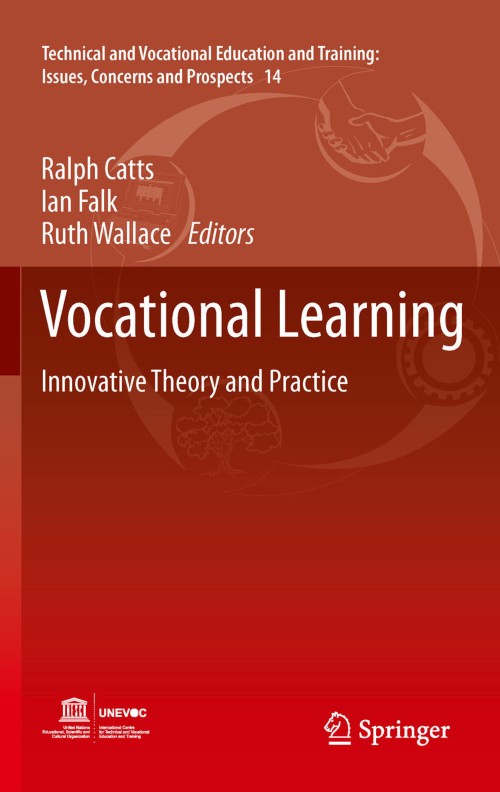
Vocational Learning [electronic resource] : Innovative Theory and Practice / edited by Ralph Catts, Ian Falk, Ruth Wallace.
Erişim Adresi
ISBN
9789400715394
Dil Kodu
İngilizce
Yer Numarası
DK/8267
Basım Bildirimi
1st ed. 2011.
Yayın Bilgisi
Dordrecht : Springer Netherlands : Imprint: Springer, 2011.
Fiziksel Niteleme
XX, 280 p. online resource.
Dizi
Technical and Vocational Education and Training: Issues, Concerns and Prospects, 2213-221X ; 14
İçindekiler Notu
Preface -- Introduction -- Editors -- Authors/Contributors -- PART A – THEORETICAL ASPECTS OF VOCATIONAL LEARNING -- Chapter 1: Innovations in Theory and Practice -- Chapter 2: Social Partnerships in Learning: Connecting to the Learner Identities of Disenfranchised Regional Learners -- Chapter 3: Where the VET System meets the Performativity of Vocational Learning: Borderlands of Innovation and Future Directions -- Chapter 4: Constructing Learners as Members of Networks -- Chapter 5: Competence as Collective Process -- PART B – CROSS-CULTURAL PERSPECTIVES OF VOCATIONAL LEARNING -- Chapter 6: Indigenous.com -- Chapter 7: Vocational Learning by Native Americans in the USA -- Chapter 8: VET Identities in Knowledge Work: Gender and Learning in a Globalised Industry -- PART C – VOCATIONAL LEARNING PRACTICE -- Chapter 9: New Forms of Learning in German VET – Theoretical Remarks and Empirical Results -- Chapter 10: Good practice models for using VET to Address Skill Shortages:A Case Study from Health -- Chapter 11: Vocational Education Pedagogy and the Situated Practices of Teaching Core Skills -- Chapter 12: Literacy in the Learning Careers of Students -- PART D – LOOKING AHEAD -- Chapter 13: Vocational Learning in the Frame of a Developing Identity -- Chapter 14: Mature Adult Learning and Employment -- Chapter 15: Learning in Working Life: Identity and Workplace Learning -- Chapter 16: The Impact of Self-Perception and Vocational Learning -- Chapter 17: Vocational Learning Futures.
Özet, vb.
Effective knowing and learning for vocational purposes must take account of the wide range of variables that impact on knowledge formation and that promote learning. In light of those many variables, the formal sector of technical and vocational education and training (TVET) must constantly ask itself what it could and should do to better provide vocational learning for those people likely to pursue learning via the informal sector. This book addresses that question. Vocational Learning: Innovative Theory and Practice discusses four theoretical aspects of vocational learning that support understanding of vocational learning processes and practices: the situations of vocational learning; the power and roles of social networks and identity in vocational learning; knowing and knowledge management processes; and the implications for pedagogic practices in both informal and formal TVET systems. The book provides an overview of a series of international examples of innovative approaches to vocational educational theory and practice, and it draws on empirical research to analyze the effects of those approaches. It includes unique insights into aspects of TVET for Indigenous peoples. With a discussion of policy implications for Europe, North America and Australia, this book is an instrumental tool to understand the underlying factors that generate effective educational and workforce outcomes through effective formal and informal learning.
Konu
Professional education.
Vocational education.
Continuing education.
Professional and Vocational Education.
Lifelong Learning.
Vocational education.
Continuing education.
Professional and Vocational Education.
Lifelong Learning.
Diğer Yazarlar
Kurum Adı
Eseri Alıntıla
Referansları kullanmadan önce gözden geçirmeniz ve varsa gerekli düzeltmeleri yapmanız önerilir.
Dijital Kaynak
MARC Görünümü
LEADER 05076nam a22005415i 4500
001 806973
003 TR_AnAIT
005 20260127003205
007 cr nn 008mamaa
008 110810s2011 ne | s |||| 0|eng d
020 |a9789400715394|9978-94-007-1539-4
024 7 |a10.1007/978-94-007-1539-4|2doi
041 |aeng
049 |aTürk Tarih Kurumu Kütüphanesi
050 4|aLC1051-1072
050 4|aLC1041-1048
072 7|aJNRV|2bicssc
072 7|aEDU046000|2bisacsh
072 7|aJNRV|2thema
082 04|a370.113|223
090 |aDK/8267
245 10|aVocational Learning|h[electronic resource] :|bInnovative Theory and Practice /|cedited by Ralph Catts, Ian Falk, Ruth Wallace.
250 |a1st ed. 2011.
264 1|aDordrecht :|bSpringer Netherlands :|bImprint: Springer,|c2011.
300 |aXX, 280 p.|bonline resource.
336 |atext|btxt|2rdacontent
337 |acomputer|bc|2rdamedia
338 |aonline resource|bcr|2rdacarrier
347 |atext file|bPDF|2rda
490 1 |aTechnical and Vocational Education and Training: Issues, Concerns and Prospects,|x2213-221X ;|v14
505 0 |aPreface -- Introduction -- Editors -- Authors/Contributors -- PART A – THEORETICAL ASPECTS OF VOCATIONAL LEARNING -- Chapter 1: Innovations in Theory and Practice -- Chapter 2: Social Partnerships in Learning: Connecting to the Learner Identities of Disenfranchised Regional Learners -- Chapter 3: Where the VET System meets the Performativity of Vocational Learning: Borderlands of Innovation and Future Directions -- Chapter 4: Constructing Learners as Members of Networks -- Chapter 5: Competence as Collective Process -- PART B – CROSS-CULTURAL PERSPECTIVES OF VOCATIONAL LEARNING -- Chapter 6: Indigenous.com -- Chapter 7: Vocational Learning by Native Americans in the USA -- Chapter 8: VET Identities in Knowledge Work: Gender and Learning in a Globalised Industry -- PART C – VOCATIONAL LEARNING PRACTICE -- Chapter 9: New Forms of Learning in German VET – Theoretical Remarks and Empirical Results -- Chapter 10: Good practice models for using VET to Address Skill Shortages:A Case Study from Health -- Chapter 11: Vocational Education Pedagogy and the Situated Practices of Teaching Core Skills -- Chapter 12: Literacy in the Learning Careers of Students -- PART D – LOOKING AHEAD -- Chapter 13: Vocational Learning in the Frame of a Developing Identity -- Chapter 14: Mature Adult Learning and Employment -- Chapter 15: Learning in Working Life: Identity and Workplace Learning -- Chapter 16: The Impact of Self-Perception and Vocational Learning -- Chapter 17: Vocational Learning Futures.
520 |aEffective knowing and learning for vocational purposes must take account of the wide range of variables that impact on knowledge formation and that promote learning. In light of those many variables, the formal sector of technical and vocational education and training (TVET) must constantly ask itself what it could and should do to better provide vocational learning for those people likely to pursue learning via the informal sector. This book addresses that question. Vocational Learning: Innovative Theory and Practice discusses four theoretical aspects of vocational learning that support understanding of vocational learning processes and practices: the situations of vocational learning; the power and roles of social networks and identity in vocational learning; knowing and knowledge management processes; and the implications for pedagogic practices in both informal and formal TVET systems. The book provides an overview of a series of international examples of innovative approaches to vocational educational theory and practice, and it draws on empirical research to analyze the effects of those approaches. It includes unique insights into aspects of TVET for Indigenous peoples. With a discussion of policy implications for Europe, North America and Australia, this book is an instrumental tool to understand the underlying factors that generate effective educational and workforce outcomes through effective formal and informal learning.
650 0|aProfessional education.
650 0|aVocational education.
650 0|aContinuing education.
650 14|aProfessional and Vocational Education.
650 24|aLifelong Learning.
700 1 |aCatts, Ralph.|eeditor.|4edt|4http://id.loc.gov/vocabulary/relators/edt
700 1 |aFalk, Ian.|eeditor.|4edt|4http://id.loc.gov/vocabulary/relators/edt
700 1 |aWallace, Ruth.|eeditor.|4edt|4http://id.loc.gov/vocabulary/relators/edt
710 2 |aSpringerLink (Online service)
773 0 |tSpringer Nature eBook
776 08|iPrinted edition:|z9789400715387
776 08|iPrinted edition:|z9789400715400
776 08|iPrinted edition:|z9789400738089
830 0|aTechnical and Vocational Education and Training: Issues, Concerns and Prospects,|x2213-221X ;|v14
856 40|uhttps://doi.org/10.1007/978-94-007-1539-4
912 |aZDB-2-SHU
912 |aZDB-2-SXED
950 |aHumanities, Social Sciences and Law (SpringerNature-11648)
950 |aEducation (R0) (SpringerNature-43721)
001 806973
003 TR_AnAIT
005 20260127003205
007 cr nn 008mamaa
008 110810s2011 ne | s |||| 0|eng d
020 |a9789400715394|9978-94-007-1539-4
024 7 |a10.1007/978-94-007-1539-4|2doi
041 |aeng
049 |aTürk Tarih Kurumu Kütüphanesi
050 4|aLC1051-1072
050 4|aLC1041-1048
072 7|aJNRV|2bicssc
072 7|aEDU046000|2bisacsh
072 7|aJNRV|2thema
082 04|a370.113|223
090 |aDK/8267
245 10|aVocational Learning|h[electronic resource] :|bInnovative Theory and Practice /|cedited by Ralph Catts, Ian Falk, Ruth Wallace.
250 |a1st ed. 2011.
264 1|aDordrecht :|bSpringer Netherlands :|bImprint: Springer,|c2011.
300 |aXX, 280 p.|bonline resource.
336 |atext|btxt|2rdacontent
337 |acomputer|bc|2rdamedia
338 |aonline resource|bcr|2rdacarrier
347 |atext file|bPDF|2rda
490 1 |aTechnical and Vocational Education and Training: Issues, Concerns and Prospects,|x2213-221X ;|v14
505 0 |aPreface -- Introduction -- Editors -- Authors/Contributors -- PART A – THEORETICAL ASPECTS OF VOCATIONAL LEARNING -- Chapter 1: Innovations in Theory and Practice -- Chapter 2: Social Partnerships in Learning: Connecting to the Learner Identities of Disenfranchised Regional Learners -- Chapter 3: Where the VET System meets the Performativity of Vocational Learning: Borderlands of Innovation and Future Directions -- Chapter 4: Constructing Learners as Members of Networks -- Chapter 5: Competence as Collective Process -- PART B – CROSS-CULTURAL PERSPECTIVES OF VOCATIONAL LEARNING -- Chapter 6: Indigenous.com -- Chapter 7: Vocational Learning by Native Americans in the USA -- Chapter 8: VET Identities in Knowledge Work: Gender and Learning in a Globalised Industry -- PART C – VOCATIONAL LEARNING PRACTICE -- Chapter 9: New Forms of Learning in German VET – Theoretical Remarks and Empirical Results -- Chapter 10: Good practice models for using VET to Address Skill Shortages:A Case Study from Health -- Chapter 11: Vocational Education Pedagogy and the Situated Practices of Teaching Core Skills -- Chapter 12: Literacy in the Learning Careers of Students -- PART D – LOOKING AHEAD -- Chapter 13: Vocational Learning in the Frame of a Developing Identity -- Chapter 14: Mature Adult Learning and Employment -- Chapter 15: Learning in Working Life: Identity and Workplace Learning -- Chapter 16: The Impact of Self-Perception and Vocational Learning -- Chapter 17: Vocational Learning Futures.
520 |aEffective knowing and learning for vocational purposes must take account of the wide range of variables that impact on knowledge formation and that promote learning. In light of those many variables, the formal sector of technical and vocational education and training (TVET) must constantly ask itself what it could and should do to better provide vocational learning for those people likely to pursue learning via the informal sector. This book addresses that question. Vocational Learning: Innovative Theory and Practice discusses four theoretical aspects of vocational learning that support understanding of vocational learning processes and practices: the situations of vocational learning; the power and roles of social networks and identity in vocational learning; knowing and knowledge management processes; and the implications for pedagogic practices in both informal and formal TVET systems. The book provides an overview of a series of international examples of innovative approaches to vocational educational theory and practice, and it draws on empirical research to analyze the effects of those approaches. It includes unique insights into aspects of TVET for Indigenous peoples. With a discussion of policy implications for Europe, North America and Australia, this book is an instrumental tool to understand the underlying factors that generate effective educational and workforce outcomes through effective formal and informal learning.
650 0|aProfessional education.
650 0|aVocational education.
650 0|aContinuing education.
650 14|aProfessional and Vocational Education.
650 24|aLifelong Learning.
700 1 |aCatts, Ralph.|eeditor.|4edt|4http://id.loc.gov/vocabulary/relators/edt
700 1 |aFalk, Ian.|eeditor.|4edt|4http://id.loc.gov/vocabulary/relators/edt
700 1 |aWallace, Ruth.|eeditor.|4edt|4http://id.loc.gov/vocabulary/relators/edt
710 2 |aSpringerLink (Online service)
773 0 |tSpringer Nature eBook
776 08|iPrinted edition:|z9789400715387
776 08|iPrinted edition:|z9789400715400
776 08|iPrinted edition:|z9789400738089
830 0|aTechnical and Vocational Education and Training: Issues, Concerns and Prospects,|x2213-221X ;|v14
856 40|uhttps://doi.org/10.1007/978-94-007-1539-4
912 |aZDB-2-SHU
912 |aZDB-2-SXED
950 |aHumanities, Social Sciences and Law (SpringerNature-11648)
950 |aEducation (R0) (SpringerNature-43721)
Materyaller
Depodan talep edilen materyal sadece kütüphane içerisinde kullanılmaktadır.
Materyal dışarıya ödünç verilmemektedir.
Materyal dışarıya ödünç verilmemektedir.
