

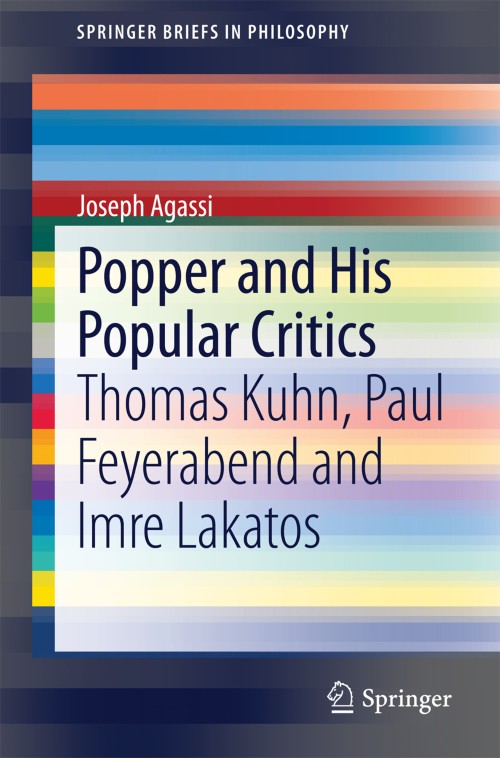
Popper and His Popular Critics [electronic resource] : Thomas Kuhn, Paul Feyerabend and Imre Lakatos / by Joseph Agassi.
Erişim Adresi
ISBN
9783319065878
Dil Kodu
İngilizce
Yer Numarası
DK/8285
Yazar
Basım Bildirimi
1st ed. 2014.
Yayın Bilgisi
Cham : Springer International Publishing : Imprint: Springer, 2014.
Fiziksel Niteleme
XX, 158 p. online resource.
Dizi
SpringerBriefs in Philosophy, 2211-4556
İçindekiler Notu
Introduction -- Preface -- Acknowledgement -- A. Prelims -- A1. On Human Rules about God’s World A2. In search for Rules -- A3. Rules against Mock-Criticism -- A4. Rules against excessive defensiveness -- A5. Against the Bouncers in the Gates of Science.- A5. Duhem, Quine and Kuhn -- B. Popper and his Popular Critics.- B1. Karl Raimund Popper B2. Kuhn’s Way -- B3. Feyerabend’s Proposal B4. Imre Lakatos -- B5. A Touch of Malice -- C. In a Nutshell -- C1. The Essential Popper -- C2. Kuhn on Pluralism and Incommensurability -- C3. Paul Feyerabend and Rational Pluralism -- C4. Lakatos on the Methodology of Scientific Research Programs -- C5. Epilogue: Civilization and its Self-Defense -- D. References -- D1. Appendix 1: The Biological Base of Dogmatism.- D2. Appendix 2: Popper on Explanation -- D3. Bibliography -- D4. Index of names -- D5. Index of Subjects. .
Özet, vb.
This volume examines Popper’s philosophy by analyzing the criticism of his most popular critics: Thomas Kuhn, Paul Feyerabend and Imre Lakatos. They all followed his rejection of the traditional view of science as inductive. Starting from the assumption that Hume’s criticism of induction is valid, the book explores the central criticism and objections that these three critics have raised. Their objections have met with great success, are significant and deserve paraphrase. One also may consider them reasonable protests against Popper’s high standards rather than fundamental criticisms of his philosophy. The book starts out with a preliminary discussion of some central background material and essentials of Popper’s philosophy. It ends with nutshell representations of the philosophies of Popper. Kuhn, Feyerabend and Lakatos. The middle section of the book presents the connection between these philosophers and explains what their central ideas consists of, what the critical arguments are, how they presented them, and how valid they are. In the process, the author claims that Popper's popular critics used against him arguments that he had invented (and answered) without saying so. They differ from him mainly in that they demanded of all criticism that it should be constructive: do not stop believing a refuted theory unless there is a better alternative to it. Popper hardly ever discussed belief, delegating its study to psychology proper; he usually discussed only objective knowledge, knowledge that is public and thus open to public scrutiny.
Konu
Philosophy.
Science __ Philosophy.
Philosophy.
Philosophy of Science.
Science __ Philosophy.
Philosophy.
Philosophy of Science.
Kurum Adı
Eseri Alıntıla
Referansları kullanmadan önce gözden geçirmeniz ve varsa gerekli düzeltmeleri yapmanız önerilir.
Dijital Kaynak
MARC Görünümü
LEADER 04149nam a22004815i 4500
001 806991
003 TR_AnAIT
005 20260127003225
007 cr nn 008mamaa
008 140514s2014 sz | s |||| 0|eng d
020 |a9783319065878|9978-3-319-06587-8
024 7 |a10.1007/978-3-319-06587-8|2doi
041 |aeng
049 |aTürk Tarih Kurumu Kütüphanesi
050 4|aB1-5802
072 7|aHP|2bicssc
072 7|aPHI000000|2bisacsh
072 7|aQD|2thema
082 04|a100|223
090 |aDK/8285
100 1 |aAgassi, Joseph.|eauthor.|4aut|4http://id.loc.gov/vocabulary/relators/aut
245 10|aPopper and His Popular Critics|h[electronic resource] :|bThomas Kuhn, Paul Feyerabend and Imre Lakatos /|cby Joseph Agassi.
250 |a1st ed. 2014.
264 1|aCham :|bSpringer International Publishing :|bImprint: Springer,|c2014.
300 |aXX, 158 p.|bonline resource.
336 |atext|btxt|2rdacontent
337 |acomputer|bc|2rdamedia
338 |aonline resource|bcr|2rdacarrier
347 |atext file|bPDF|2rda
490 1 |aSpringerBriefs in Philosophy,|x2211-4556
505 0 |aIntroduction -- Preface -- Acknowledgement -- A. Prelims -- A1. On Human Rules about God’s World A2. In search for Rules -- A3. Rules against Mock-Criticism -- A4. Rules against excessive defensiveness -- A5. Against the Bouncers in the Gates of Science.- A5. Duhem, Quine and Kuhn -- B. Popper and his Popular Critics.- B1. Karl Raimund Popper B2. Kuhn’s Way -- B3. Feyerabend’s Proposal B4. Imre Lakatos -- B5. A Touch of Malice -- C. In a Nutshell -- C1. The Essential Popper -- C2. Kuhn on Pluralism and Incommensurability -- C3. Paul Feyerabend and Rational Pluralism -- C4. Lakatos on the Methodology of Scientific Research Programs -- C5. Epilogue: Civilization and its Self-Defense -- D. References -- D1. Appendix 1: The Biological Base of Dogmatism.- D2. Appendix 2: Popper on Explanation -- D3. Bibliography -- D4. Index of names -- D5. Index of Subjects. .
520 |aThis volume examines Popper’s philosophy by analyzing the criticism of his most popular critics: Thomas Kuhn, Paul Feyerabend and Imre Lakatos. They all followed his rejection of the traditional view of science as inductive. Starting from the assumption that Hume’s criticism of induction is valid, the book explores the central criticism and objections that these three critics have raised. Their objections have met with great success, are significant and deserve paraphrase. One also may consider them reasonable protests against Popper’s high standards rather than fundamental criticisms of his philosophy. The book starts out with a preliminary discussion of some central background material and essentials of Popper’s philosophy. It ends with nutshell representations of the philosophies of Popper. Kuhn, Feyerabend and Lakatos. The middle section of the book presents the connection between these philosophers and explains what their central ideas consists of, what the critical arguments are, how they presented them, and how valid they are. In the process, the author claims that Popper's popular critics used against him arguments that he had invented (and answered) without saying so. They differ from him mainly in that they demanded of all criticism that it should be constructive: do not stop believing a refuted theory unless there is a better alternative to it. Popper hardly ever discussed belief, delegating its study to psychology proper; he usually discussed only objective knowledge, knowledge that is public and thus open to public scrutiny.
650 0|aPhilosophy.
650 0|aScience|xPhilosophy.
650 14|aPhilosophy.
650 24|aPhilosophy of Science.
710 2 |aSpringerLink (Online service)
773 0 |tSpringer Nature eBook
776 08|iPrinted edition:|z9783319065861
776 08|iPrinted edition:|z9783319065885
830 0|aSpringerBriefs in Philosophy,|x2211-4556
856 40|uhttps://doi.org/10.1007/978-3-319-06587-8
912 |aZDB-2-SHU
912 |aZDB-2-SXPR
950 |aHumanities, Social Sciences and Law (SpringerNature-11648)
950 |aPhilosophy and Religion (R0) (SpringerNature-43725)
001 806991
003 TR_AnAIT
005 20260127003225
007 cr nn 008mamaa
008 140514s2014 sz | s |||| 0|eng d
020 |a9783319065878|9978-3-319-06587-8
024 7 |a10.1007/978-3-319-06587-8|2doi
041 |aeng
049 |aTürk Tarih Kurumu Kütüphanesi
050 4|aB1-5802
072 7|aHP|2bicssc
072 7|aPHI000000|2bisacsh
072 7|aQD|2thema
082 04|a100|223
090 |aDK/8285
100 1 |aAgassi, Joseph.|eauthor.|4aut|4http://id.loc.gov/vocabulary/relators/aut
245 10|aPopper and His Popular Critics|h[electronic resource] :|bThomas Kuhn, Paul Feyerabend and Imre Lakatos /|cby Joseph Agassi.
250 |a1st ed. 2014.
264 1|aCham :|bSpringer International Publishing :|bImprint: Springer,|c2014.
300 |aXX, 158 p.|bonline resource.
336 |atext|btxt|2rdacontent
337 |acomputer|bc|2rdamedia
338 |aonline resource|bcr|2rdacarrier
347 |atext file|bPDF|2rda
490 1 |aSpringerBriefs in Philosophy,|x2211-4556
505 0 |aIntroduction -- Preface -- Acknowledgement -- A. Prelims -- A1. On Human Rules about God’s World A2. In search for Rules -- A3. Rules against Mock-Criticism -- A4. Rules against excessive defensiveness -- A5. Against the Bouncers in the Gates of Science.- A5. Duhem, Quine and Kuhn -- B. Popper and his Popular Critics.- B1. Karl Raimund Popper B2. Kuhn’s Way -- B3. Feyerabend’s Proposal B4. Imre Lakatos -- B5. A Touch of Malice -- C. In a Nutshell -- C1. The Essential Popper -- C2. Kuhn on Pluralism and Incommensurability -- C3. Paul Feyerabend and Rational Pluralism -- C4. Lakatos on the Methodology of Scientific Research Programs -- C5. Epilogue: Civilization and its Self-Defense -- D. References -- D1. Appendix 1: The Biological Base of Dogmatism.- D2. Appendix 2: Popper on Explanation -- D3. Bibliography -- D4. Index of names -- D5. Index of Subjects. .
520 |aThis volume examines Popper’s philosophy by analyzing the criticism of his most popular critics: Thomas Kuhn, Paul Feyerabend and Imre Lakatos. They all followed his rejection of the traditional view of science as inductive. Starting from the assumption that Hume’s criticism of induction is valid, the book explores the central criticism and objections that these three critics have raised. Their objections have met with great success, are significant and deserve paraphrase. One also may consider them reasonable protests against Popper’s high standards rather than fundamental criticisms of his philosophy. The book starts out with a preliminary discussion of some central background material and essentials of Popper’s philosophy. It ends with nutshell representations of the philosophies of Popper. Kuhn, Feyerabend and Lakatos. The middle section of the book presents the connection between these philosophers and explains what their central ideas consists of, what the critical arguments are, how they presented them, and how valid they are. In the process, the author claims that Popper's popular critics used against him arguments that he had invented (and answered) without saying so. They differ from him mainly in that they demanded of all criticism that it should be constructive: do not stop believing a refuted theory unless there is a better alternative to it. Popper hardly ever discussed belief, delegating its study to psychology proper; he usually discussed only objective knowledge, knowledge that is public and thus open to public scrutiny.
650 0|aPhilosophy.
650 0|aScience|xPhilosophy.
650 14|aPhilosophy.
650 24|aPhilosophy of Science.
710 2 |aSpringerLink (Online service)
773 0 |tSpringer Nature eBook
776 08|iPrinted edition:|z9783319065861
776 08|iPrinted edition:|z9783319065885
830 0|aSpringerBriefs in Philosophy,|x2211-4556
856 40|uhttps://doi.org/10.1007/978-3-319-06587-8
912 |aZDB-2-SHU
912 |aZDB-2-SXPR
950 |aHumanities, Social Sciences and Law (SpringerNature-11648)
950 |aPhilosophy and Religion (R0) (SpringerNature-43725)
Materyaller
Depodan talep edilen materyal sadece kütüphane içerisinde kullanılmaktadır.
Materyal dışarıya ödünç verilmemektedir.
Materyal dışarıya ödünç verilmemektedir.
