LEADER 03777nam a22004455i 4500
001 806996
003 TR_AnAIT
005 20260127003230
007 cr nn 008mamaa
008 131030s2013 ne | s |||| 0|eng d
020 |a9789462094161|9978-94-6209-416-1
024 7 |a10.1007/978-94-6209-416-1|2doi
041 |aeng
049 |aTürk Tarih Kurumu Kütüphanesi
050 4|aL1-991
072 7|aJN|2bicssc
072 7|aEDU000000|2bisacsh
072 7|aJN|2thema
082 04|a370|223
090 |aDK/8290
100 1 |aErica Smith, Sue.|eauthor.|4aut|4http://id.loc.gov/vocabulary/relators/aut
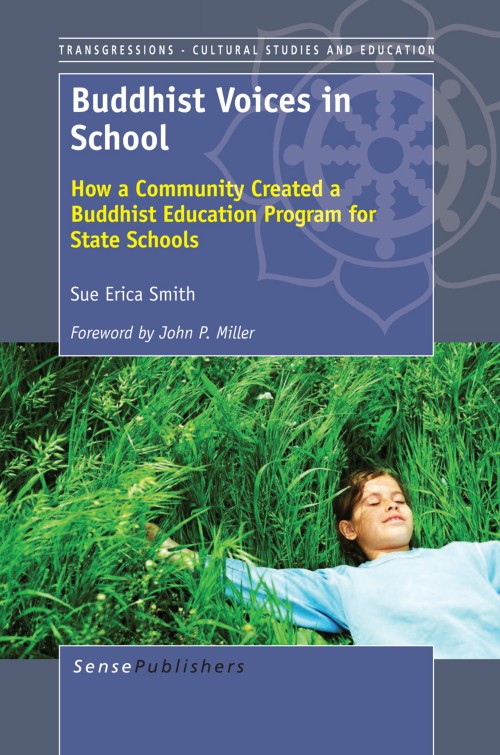
245 10|aBuddhist Voices in School|h[electronic resource] :|bHow a Community Created a Buddhist Education Program for State Schools /|cby Sue Erica Smith.
250 |a1st ed. 2013.
264 1|aRotterdam :|bSensePublishers :|bImprint: SensePublishers,|c2013.
300 |aX, 185 p.|bonline resource.
336 |atext|btxt|2rdacontent
337 |acomputer|bc|2rdamedia
338 |aonline resource|bcr|2rdacarrier
347 |atext file|bPDF|2rda
490 1 |aTransgressions, Cultural Studies and Education ,|x2214-9740
520 |aTCSE-Smith, blurb (final 9 August 2013) There are 400 million Buddhists in the world. Buddhists in Australia make up 3% of the population. So why have Buddhists had so little to say about educating youth? And, can Buddhism survive in Australia without educating youth? Sue Smith in Buddhist Voices in School answers why Buddhists are reluctant to ‘go public’ on education, and how Buddhism has much to offer the critical area of enhancing the wellbeing of young people. Here she distinguishes spiritual education from religion. Using case studies of Buddhist classes in primary schools Smith shows how a community adapted Buddha-Dharma to fit with contemporary education. The book describes how Social and Emotional Learning, inquiry and experiential approaches to education fit well with the intentions of Buddhism. In these classes students learned to meditate and explored ethics through a lively selection of Jataka tales. Voices from a Buddhist community, state school teachers, parents and also students inform the narrative of this book. It is the students themselves that reveal over time how they have developed calm, focus, kindness, resilience and better ability to make choices through their participation. The author concludes that the principles and techniques used in this program make potent contributions to current pedagogy. This book will be of great value to educators, academics and all those who have interest in Buddhism and who care about how children are educated.
532 8 |aAccessibility summary: This PDF eBook is produced by a third-party. We have requested that the file be made accessible and compliant with the European Accessibility Act (EAA). However, we have not been able to fully verify its compliance with recognized accessibility standards (such as PDF/UA or WCAG). For detailed accessibility information, please refer to the original publisher’s website. If you require an accessible version of this content, please contact accessibilitysupport@springernature.com. We are committed to improving accessibility and will work with the publisher to meet your needs wherever possible.
532 8 |aPublisher contact for further accessibility information: accessibilitysupport@springernature.com
650 0|aEducation.
650 14|aEducation.
710 2 |aSpringerLink (Online service)
773 0 |tSpringer Nature eBook
830 0|aTransgressions, Cultural Studies and Education ,|x2214-9740
856 40|uhttps://doi.org/10.1007/978-94-6209-416-1
912 |aZDB-2-SHU
912 |aZDB-2-SXED
950 |aHumanities, Social Sciences and Law (SpringerNature-11648)
950 |aEducation (R0) (SpringerNature-43721)