LEADER 03815nam a22005055i 4500
001 807052
003 TR_AnAIT
005 20260127003336
007 cr nn 008mamaa
008 120613s2012 xxu| s |||| 0|eng d
020 |a9781461435464|9978-1-4614-3546-4
024 7 |a10.1007/978-1-4614-3546-4|2doi
041 |aeng
049 |aTürk Tarih Kurumu Kütüphanesi
050 4|aLB1028.3
072 7|aJNV|2bicssc
072 7|aEDU000000|2bisacsh
072 7|aJNV|2thema
082 04|a371.33|223
090 |aDK/8345
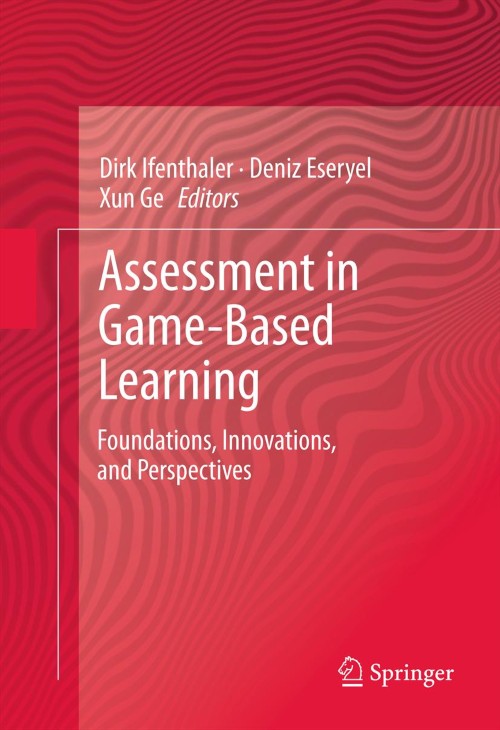
245 10|aAssessment in Game-Based Learning|h[electronic resource] :|bFoundations, Innovations, and Perspectives /|cedited by Dirk Ifenthaler, Deniz Eseryel, Xun Ge.
250 |a1st ed. 2012.
264 1|aNew York, NY :|bSpringer New York :|bImprint: Springer,|c2012.
300 |aXXVIII, 464 p.|bonline resource.
336 |atext|btxt|2rdacontent
337 |acomputer|bc|2rdamedia
338 |aonline resource|bcr|2rdacarrier
347 |atext file|bPDF|2rda
520 |aThe capabilities and possibilities of emerging game-based learning technologies bring about a new perspective of learning and instruction. This, in turn, necessitates alternative ways to assess the kinds of learning taking place in the virtual worlds or informal settings. Aligning learning and assessment is at the core of creating a favorable and effective learning environment, one that is learner-centered, knowledge-centered, and assessment-centered. However, how do we know students have learned in games? What do we assess, and how do we assess students’ learning outcomes in a game-based learning environment? After a critical literature review, the authors discovered that there is a missing link between game-based learning and game-based assessment, particularly in assessing complex problem solving processes and outcomes in a digital game-based learning environment. This edited volume bridges the gap by providing that missing link. It covers the current state of research, methodology, assessment, and technology of game-based learning. The contributions from international distinguished researchers present innovative work in the areas of educational psychology, educational diagnostics, educational technology, and learning sciences. Included chapters are organized into three major parts: (1) Foundations of game-based assessment, (2) technological and methodological innovations for assessing game-based learning, and (3) realizing assessment in game-based learning. It provides theoretical research, translational resaerch, and guided practice---all in one volume. This book will prove invaluable to anyone who is performing research or working the the field--it provides a springboard from theory to practice, offering a map for anyone hoping to implement game-based assessment into their institution as well as to primary researchers and developers.
650 0|aEducational technology.
650 0|aEducation|xData processing.
650 0|aDevelopmental psychology.
650 14|aDigital Education and Educational Technology.
650 24|aComputers and Education.
650 24|aDevelopmental Psychology.
700 1 |aIfenthaler, Dirk.|eeditor.|4edt|4http://id.loc.gov/vocabulary/relators/edt
700 1 |aEseryel, Deniz.|eeditor.|4edt|4http://id.loc.gov/vocabulary/relators/edt
700 1 |aGe, Xun.|eeditor.|4edt|4http://id.loc.gov/vocabulary/relators/edt
710 2 |aSpringerLink (Online service)
773 0 |tSpringer Nature eBook
776 08|iPrinted edition:|z9781461435457
776 08|iPrinted edition:|z9781461435471
776 08|iPrinted edition:|z9781489996015
856 40|uhttps://doi.org/10.1007/978-1-4614-3546-4
912 |aZDB-2-SHU
912 |aZDB-2-SXED
950 |aHumanities, Social Sciences and Law (SpringerNature-11648)
950 |aEducation (R0) (SpringerNature-43721)