

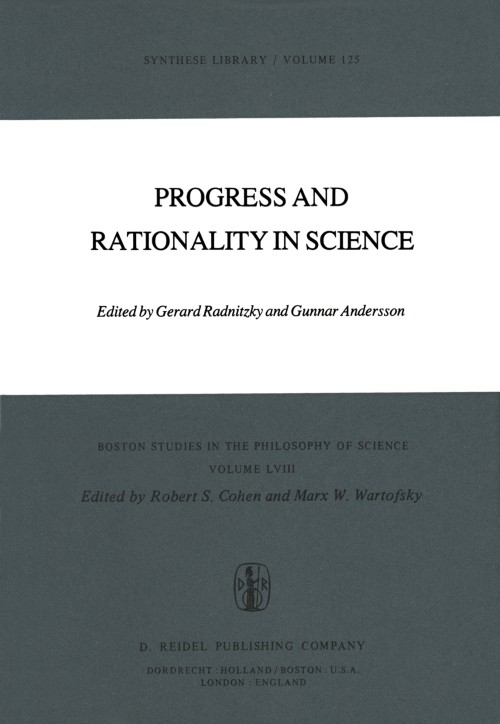
Progress and Rationality in Science [electronic resource] / edited by G. Radnitzky, G. Andersson, Robert S. Cohen, Marx W. Wartofsky.
Erişim Adresi
ISBN
9789400998667
Dil Kodu
İngilizce
Yer Numarası
DK/8492
Basım Bildirimi
1st ed. 1978.
Yayın Bilgisi
Dordrecht : Springer Netherlands : Imprint: Springer, 1978.
Fiziksel Niteleme
426 p. online resource.
Dizi
Boston Studies in the Philosophy and History of Science, 2214-7942 ; 58
İçindekiler Notu
Objective Criteria of Scientific Progress? Inductivism, Falsificationism, and Relativism -- I: The LSE Position -- The Popperian Approach to Scientific Knowledge -- The Ways in Which the Methodology of Scientific Research Programmes Improves on Popper’s Methodology -- ‘Crucial’ Experiments: A Case Study -- The Objective Promise of a Research Programme -- II: Reflections on the LSE Position -- Popper vs Inductivism -- In Defence of Aristotle: Comments on the Condition of Content Increase -- Evidential Support, Falsification, Heuristics, and Anarchism -- Science and the Search for Truth -- Philosophy of Science and Its Rational Reconstructions -- Towards a New Theory of Scientific Inquiry -- Some Critical Comments on Current Popperianism on the Basis of a Theory of System Sets -- The Problem of Verisimilitude -- Objectivism vs Sociologism -- III: The LSE Reply -- Research Programmes, Empirical Support, and the Duhem Problem: Replies to Criticism -- Corroboration and the Problem of Content-Comparison -- Unified Bibliography for Parts I And III -- IV: Two Brief Rejoinders -- The Gong Show — Popperian Style -- Reply to Watkins -- Biographical Notes -- Author Index.
Özet, vb.
This collection of essays has evolved through the co-operative efforts, which began in the fall of 1974, of the participants in a workshop sponsored by the Fritz Thyssen Foundation. The idea of holding one or more small colloquia devoted to the topics of rational choice in science and scientific progress originated in a conversation in the summer of 1973 between one of the editors (GR) and the late Imre Lakatos. Unfortunately Lakatos himself was never able to see this project through, but his thought-provoking methodology of scientific research programmes was ably expounded and defended by his successors. Indeed, this volume continues and deepens the debate inaugurated in Criticism and the Growth of Knowledge (edited by Imre Lakatos and Alan Musgrave), a book which grew out of a conference held in 1965. That debate has continued during the years that have passed since that conference. The group of discussions about the place of rationality in science which have been held between those who emphasize the history of science (with Feyerabend and Kuhn as the most prominent exponents) and the critical rationalists (Popper and his followers), with Imre Lakatos defending a middle ground, these discussions were seen by almost all commentators as the most important event in the philosophy of science in the last decade. This problem area constituted the central theme of our Thyssen workshop. The workshop operated in the following manner.
Konu
Science __ Philosophy.
History.
Philosophy of Science.
History.
History.
Philosophy of Science.
History.
Diğer Yazarlar
Kurum Adı
Eseri Alıntıla
Referansları kullanmadan önce gözden geçirmeniz ve varsa gerekli düzeltmeleri yapmanız önerilir.
Dijital Kaynak
MARC Görünümü
LEADER 05505nam a22006015i 4500
001 807199
003 TR_AnAIT
005 20260127003630
007 cr nn 008mamaa
008 121227s1978 ne | s |||| 0|eng d
020 |a9789400998667|9978-94-009-9866-7
024 7 |a10.1007/978-94-009-9866-7|2doi
041 |aeng
049 |aTürk Tarih Kurumu Kütüphanesi
050 4|aQ174-175.3
050 4|aB67
072 7|aPDA|2bicssc
072 7|aSCI075000|2bisacsh
072 7|aPDA|2thema
082 04|a501|223
090 |aDK/8492
245 10|aProgress and Rationality in Science|h[electronic resource] /|cedited by G. Radnitzky, G. Andersson, Robert S. Cohen, Marx W. Wartofsky.
250 |a1st ed. 1978.
264 1|aDordrecht :|bSpringer Netherlands :|bImprint: Springer,|c1978.
300 |a426 p.|bonline resource.
336 |atext|btxt|2rdacontent
337 |acomputer|bc|2rdamedia
338 |aonline resource|bcr|2rdacarrier
347 |atext file|bPDF|2rda
490 1 |aBoston Studies in the Philosophy and History of Science,|x2214-7942 ;|v58
505 0 |aObjective Criteria of Scientific Progress? Inductivism, Falsificationism, and Relativism -- I: The LSE Position -- The Popperian Approach to Scientific Knowledge -- The Ways in Which the Methodology of Scientific Research Programmes Improves on Popper’s Methodology -- ‘Crucial’ Experiments: A Case Study -- The Objective Promise of a Research Programme -- II: Reflections on the LSE Position -- Popper vs Inductivism -- In Defence of Aristotle: Comments on the Condition of Content Increase -- Evidential Support, Falsification, Heuristics, and Anarchism -- Science and the Search for Truth -- Philosophy of Science and Its Rational Reconstructions -- Towards a New Theory of Scientific Inquiry -- Some Critical Comments on Current Popperianism on the Basis of a Theory of System Sets -- The Problem of Verisimilitude -- Objectivism vs Sociologism -- III: The LSE Reply -- Research Programmes, Empirical Support, and the Duhem Problem: Replies to Criticism -- Corroboration and the Problem of Content-Comparison -- Unified Bibliography for Parts I And III -- IV: Two Brief Rejoinders -- The Gong Show — Popperian Style -- Reply to Watkins -- Biographical Notes -- Author Index.
520 |aThis collection of essays has evolved through the co-operative efforts, which began in the fall of 1974, of the participants in a workshop sponsored by the Fritz Thyssen Foundation. The idea of holding one or more small colloquia devoted to the topics of rational choice in science and scientific progress originated in a conversation in the summer of 1973 between one of the editors (GR) and the late Imre Lakatos. Unfortunately Lakatos himself was never able to see this project through, but his thought-provoking methodology of scientific research programmes was ably expounded and defended by his successors. Indeed, this volume continues and deepens the debate inaugurated in Criticism and the Growth of Knowledge (edited by Imre Lakatos and Alan Musgrave), a book which grew out of a conference held in 1965. That debate has continued during the years that have passed since that conference. The group of discussions about the place of rationality in science which have been held between those who emphasize the history of science (with Feyerabend and Kuhn as the most prominent exponents) and the critical rationalists (Popper and his followers), with Imre Lakatos defending a middle ground, these discussions were seen by almost all commentators as the most important event in the philosophy of science in the last decade. This problem area constituted the central theme of our Thyssen workshop. The workshop operated in the following manner.
532 8 |aAccessibility summary: This PDF is not accessible. It is based on scanned pages and does not support features such as screen reader compatibility or described non-text content (images, graphs etc). However, it likely supports searchable and selectable text based on OCR (Optical Character Recognition). Users with accessibility needs may not be able to use this content effectively. Please contact us at accessibilitysupport@springernature.com if you require assistance or an alternative format.
532 8 |aInaccessible, or known limited accessibility
532 8 |aNo reading system accessibility options actively disabled
532 8 |aPublisher contact for further accessibility information: accessibilitysupport@springernature.com
650 0|aScience|xPhilosophy.
650 0|aHistory.
650 14|aPhilosophy of Science.
650 24|aHistory.
700 1 |aRadnitzky, G.|eeditor.|4edt|4http://id.loc.gov/vocabulary/relators/edt
700 1 |aAndersson, G.|eeditor.|4edt|4http://id.loc.gov/vocabulary/relators/edt
700 1 |aCohen, Robert S.|eeditor.|4edt|4http://id.loc.gov/vocabulary/relators/edt
700 1 |aWartofsky, Marx W.|eeditor.|4edt|4http://id.loc.gov/vocabulary/relators/edt
710 2 |aSpringerLink (Online service)
773 0 |tSpringer Nature eBook
776 08|iPrinted edition:|z9789027709219
776 08|iPrinted edition:|z9789027709226
776 08|iPrinted edition:|z9789400998674
830 0|aBoston Studies in the Philosophy and History of Science,|x2214-7942 ;|v58
856 40|uhttps://doi.org/10.1007/978-94-009-9866-7
912 |aZDB-2-SHU
912 |aZDB-2-SXPR
912 |aZDB-2-BAE
950 |aHumanities, Social Sciences and Law (SpringerNature-11648)
950 |aPhilosophy and Religion (R0) (SpringerNature-43725)
001 807199
003 TR_AnAIT
005 20260127003630
007 cr nn 008mamaa
008 121227s1978 ne | s |||| 0|eng d
020 |a9789400998667|9978-94-009-9866-7
024 7 |a10.1007/978-94-009-9866-7|2doi
041 |aeng
049 |aTürk Tarih Kurumu Kütüphanesi
050 4|aQ174-175.3
050 4|aB67
072 7|aPDA|2bicssc
072 7|aSCI075000|2bisacsh
072 7|aPDA|2thema
082 04|a501|223
090 |aDK/8492
245 10|aProgress and Rationality in Science|h[electronic resource] /|cedited by G. Radnitzky, G. Andersson, Robert S. Cohen, Marx W. Wartofsky.
250 |a1st ed. 1978.
264 1|aDordrecht :|bSpringer Netherlands :|bImprint: Springer,|c1978.
300 |a426 p.|bonline resource.
336 |atext|btxt|2rdacontent
337 |acomputer|bc|2rdamedia
338 |aonline resource|bcr|2rdacarrier
347 |atext file|bPDF|2rda
490 1 |aBoston Studies in the Philosophy and History of Science,|x2214-7942 ;|v58
505 0 |aObjective Criteria of Scientific Progress? Inductivism, Falsificationism, and Relativism -- I: The LSE Position -- The Popperian Approach to Scientific Knowledge -- The Ways in Which the Methodology of Scientific Research Programmes Improves on Popper’s Methodology -- ‘Crucial’ Experiments: A Case Study -- The Objective Promise of a Research Programme -- II: Reflections on the LSE Position -- Popper vs Inductivism -- In Defence of Aristotle: Comments on the Condition of Content Increase -- Evidential Support, Falsification, Heuristics, and Anarchism -- Science and the Search for Truth -- Philosophy of Science and Its Rational Reconstructions -- Towards a New Theory of Scientific Inquiry -- Some Critical Comments on Current Popperianism on the Basis of a Theory of System Sets -- The Problem of Verisimilitude -- Objectivism vs Sociologism -- III: The LSE Reply -- Research Programmes, Empirical Support, and the Duhem Problem: Replies to Criticism -- Corroboration and the Problem of Content-Comparison -- Unified Bibliography for Parts I And III -- IV: Two Brief Rejoinders -- The Gong Show — Popperian Style -- Reply to Watkins -- Biographical Notes -- Author Index.
520 |aThis collection of essays has evolved through the co-operative efforts, which began in the fall of 1974, of the participants in a workshop sponsored by the Fritz Thyssen Foundation. The idea of holding one or more small colloquia devoted to the topics of rational choice in science and scientific progress originated in a conversation in the summer of 1973 between one of the editors (GR) and the late Imre Lakatos. Unfortunately Lakatos himself was never able to see this project through, but his thought-provoking methodology of scientific research programmes was ably expounded and defended by his successors. Indeed, this volume continues and deepens the debate inaugurated in Criticism and the Growth of Knowledge (edited by Imre Lakatos and Alan Musgrave), a book which grew out of a conference held in 1965. That debate has continued during the years that have passed since that conference. The group of discussions about the place of rationality in science which have been held between those who emphasize the history of science (with Feyerabend and Kuhn as the most prominent exponents) and the critical rationalists (Popper and his followers), with Imre Lakatos defending a middle ground, these discussions were seen by almost all commentators as the most important event in the philosophy of science in the last decade. This problem area constituted the central theme of our Thyssen workshop. The workshop operated in the following manner.
532 8 |aAccessibility summary: This PDF is not accessible. It is based on scanned pages and does not support features such as screen reader compatibility or described non-text content (images, graphs etc). However, it likely supports searchable and selectable text based on OCR (Optical Character Recognition). Users with accessibility needs may not be able to use this content effectively. Please contact us at accessibilitysupport@springernature.com if you require assistance or an alternative format.
532 8 |aInaccessible, or known limited accessibility
532 8 |aNo reading system accessibility options actively disabled
532 8 |aPublisher contact for further accessibility information: accessibilitysupport@springernature.com
650 0|aScience|xPhilosophy.
650 0|aHistory.
650 14|aPhilosophy of Science.
650 24|aHistory.
700 1 |aRadnitzky, G.|eeditor.|4edt|4http://id.loc.gov/vocabulary/relators/edt
700 1 |aAndersson, G.|eeditor.|4edt|4http://id.loc.gov/vocabulary/relators/edt
700 1 |aCohen, Robert S.|eeditor.|4edt|4http://id.loc.gov/vocabulary/relators/edt
700 1 |aWartofsky, Marx W.|eeditor.|4edt|4http://id.loc.gov/vocabulary/relators/edt
710 2 |aSpringerLink (Online service)
773 0 |tSpringer Nature eBook
776 08|iPrinted edition:|z9789027709219
776 08|iPrinted edition:|z9789027709226
776 08|iPrinted edition:|z9789400998674
830 0|aBoston Studies in the Philosophy and History of Science,|x2214-7942 ;|v58
856 40|uhttps://doi.org/10.1007/978-94-009-9866-7
912 |aZDB-2-SHU
912 |aZDB-2-SXPR
912 |aZDB-2-BAE
950 |aHumanities, Social Sciences and Law (SpringerNature-11648)
950 |aPhilosophy and Religion (R0) (SpringerNature-43725)
Materyaller
Depodan talep edilen materyal sadece kütüphane içerisinde kullanılmaktadır.
Materyal dışarıya ödünç verilmemektedir.
Materyal dışarıya ödünç verilmemektedir.
