LEADER 04154nam a22005415i 4500
001 807273
003 TR_AnAIT
005 20260127003800
007 cr nn 008mamaa
008 121227s1999 xxu| s |||| 0|eng d
020 |a9781461547679|9978-1-4615-4767-9
024 7 |a10.1007/978-1-4615-4767-9|2doi
041 |aeng
049 |aTürk Tarih Kurumu Kütüphanesi
050 4|aCC1-960
072 7|aHD|2bicssc
072 7|aSOC003000|2bisacsh
072 7|aNK|2thema
082 04|a930.1|223
090 |aDK/8566
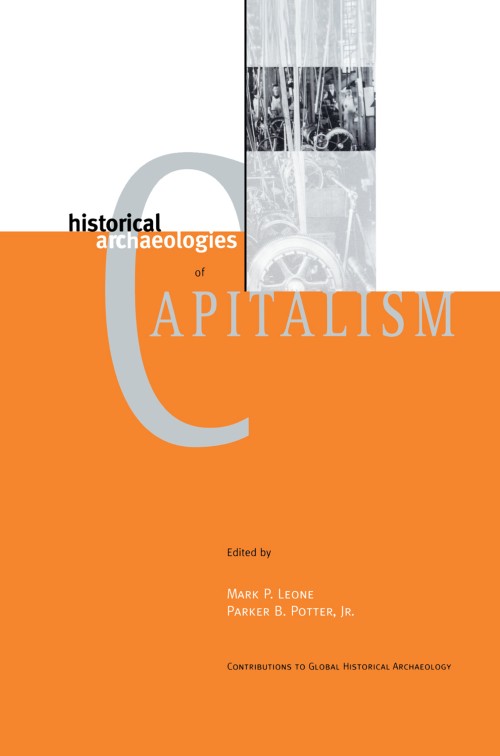
245 10|aHistorical Archaeologies of Capitalism|h[electronic resource] /|cedited by Mark P. Leone, Parker B. Potter Jr.
250 |a1st ed. 1999.
264 1|aNew York, NY :|bSpringer US :|bImprint: Springer,|c1999.
300 |aXIV, 248 p.|bonline resource.
336 |atext|btxt|2rdacontent
337 |acomputer|bc|2rdamedia
338 |aonline resource|bcr|2rdacarrier
347 |atext file|bPDF|2rda
490 1 |aContributions To Global Historical Archaeology
505 0 |aI. Issues In A Historical Archaeology Devoted To Studying Capitalism -- 1. Setting Some Terms for Historical Archaeologies of Capitalism -- II. Where The Questions Come From -- 2. Why Should Historical Archaeologists Study Capitalism? The Logic of Question and Answer and the Challenge of Systemic Analysis -- 3. Historical Archaeology and Identity in Modern America -- 4. The Contested Commons: Archaeologies of Race, Repression, and Resistance in New York City -- III. Integration Into Capitalism And Impoverishment -- 5. Ex Occidente Lux? An Archaeology of Later Capitalism in the Nineteenth-Century West -- 6. Archaeology and the Challenges of Capitalist Farm Tenancy in America -- 7. “A Bold and Gorgeous Front”: The Contradictions of African America and Consumer Culture -- 8. Ceramics from Annapolis, Maryland: A Measure of Time Routines and Work Discipline -- IV. Beyond North America -- 9. Historical, Archaeology, Capitalism.
520 |aAmerican things, American material culture, and American archaeology are the themes of this book. The authors use goods used or made in America to illuminate issues such as tenancy, racism, sexism, and regional bias. Contributors utilize data about everyday objects - from tin cans and bottles to namebrand items, from fish bones to machinery - to analyze the way American capitalism works. Their cogent analyses take us literally from broken dishes to the international economy. Especially notable chapters examine how an archaeologist formulates questions about exploitation under capitalism, and how the study of artifacts reveals African-American middle class culture and its response to racism.
532 8 |aAccessibility summary: This PDF is not accessible. It is based on scanned pages and does not support features such as screen reader compatibility or described non-text content (images, graphs etc). However, it likely supports searchable and selectable text based on OCR (Optical Character Recognition). Users with accessibility needs may not be able to use this content effectively. Please contact us at accessibilitysupport@springernature.com if you require assistance or an alternative format.
532 8 |aInaccessible, or known limited accessibility
532 8 |aNo reading system accessibility options actively disabled
532 8 |aPublisher contact for further accessibility information: accessibilitysupport@springernature.com
650 0|aArchaeology.
650 14|aArchaeology.
700 1 |aLeone, Mark P.|eeditor.|4edt|4http://id.loc.gov/vocabulary/relators/edt
700 1 |aPotter Jr., Parker B.|eeditor.|4edt|4http://id.loc.gov/vocabulary/relators/edt
710 2 |aSpringerLink (Online service)
773 0 |tSpringer Nature eBook
776 08|iPrinted edition:|z9780306460678
776 08|iPrinted edition:|z9780306460685
776 08|iPrinted edition:|z9781461547686
830 0|aContributions To Global Historical Archaeology
856 40|uhttps://doi.org/10.1007/978-1-4615-4767-9
912 |aZDB-2-SHU
912 |aZDB-2-SXS
912 |aZDB-2-BAE
950 |aHumanities, Social Sciences and Law (SpringerNature-11648)
950 |aSocial Sciences (R0) (SpringerNature-43726)