

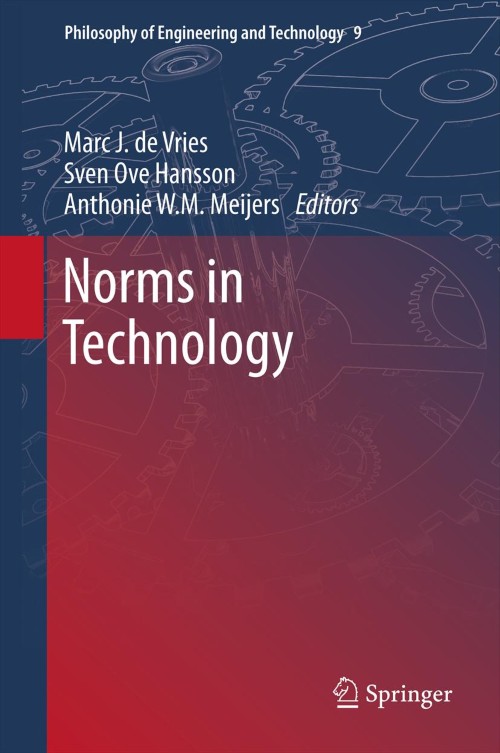
Norms in Technology [electronic resource] / edited by Marc J de Vries, Sven Ove Hansson, Anthonie W.M. Meijers.
Erişim Adresi
ISBN
9789400752436
Dil Kodu
İngilizce
Yer Numarası
DK/8641
Basım Bildirimi
1st ed. 2013.
Yayın Bilgisi
Dordrecht : Springer Netherlands : Imprint: Springer, 2013.
Fiziksel Niteleme
VIII, 244 p. online resource.
Dizi
Philosophy of Engineering and Technology, 1879-7210 ; 9
İçindekiler Notu
Preface -- Introduction -- Part I. Normativity in Technological Knowledge and Action.-Chapter 1. Extending the scope of technological knowledge: Anthonie W.M. Meijers and Peter Kroes -- Chapter 2. Rules, plans and the normativity of technological knowledge: Wybo Houkes -- Chapter 3. Beliefs, acceptances and technological knowledge: Marc J. de Vries and Anthonie W.M. Meijers -- Chapter 4. Policy objectives and the functions of transport systems: Holger Rosencrantz -- Chapter 5. Rational Goals in Engineering Design: The Venice Dams Case: Karin Edvardsson Björnberg -- Part 2. Normativity and Artefact Norms -- Chapter 6. Valuation of Artefacts and the Normativity of Technology: Sven Ove Hansson -- Chapter 7. Artifactual norms: Krist Vaesen -- Chapter 8. Instrumental Artifact Functions and Normativity: Jesse Hughes -- Chapter 9. The goodness and kindness of artefacts: Maarten Franssen -- Part 3. Normativity and Technological Risks -- Chapter 10. The Non-Reductivity of Normativity in Risks: Niklas Möller -- Chapter 11. Risk and Degrees of Rightness: Martin Peterson and Nicolas Espinoza -- Chapter 12. Naturalness, Artifacts, and Value: Per Sandin -- Chapter 13. Trust in Technological Systems: Philip J. Nickel -- Index. .
Özet, vb.
This book is a distinctive fusion of philosophy and technology, delineating the normative landscape that informs today’s technologies and tomorrow’s inventions. The authors examine what we deem to be the internal norms that govern our ever-expanding technical universe. Recognizing that developments in technology and engineering literally create our human future, transforming existing knowledge into tomorrow’s tools and infrastructure, they chart the normative criteria we use to evaluate novel technological artifacts: how, for example, do we judge a ‘good’ from a ‘bad’ expert system or nuclear power plant? As well as these ‘functional’ norms, and the norms that guide technological knowledge and reasoning, the book examines commonly agreed benchmarks in safety and risk reduction, which play a pivotal role in engineering practice. Informed by the core insight that, in technology and engineering, factual knowledge relating, for example, to the properties of materials or the load-bearing characteristics of differing construction designs is not enough, this analysis follows the often unseen foundations upon which technologies rest—the norms that guide the creative forces shaping the technical landscape to come. The book, a comprehensive survey of these emerging topics in the philosophy of technology, clarifies the role these norms (epistemological, functional, and risk-assessing) play in technological innovation, and the consequences they have for our understanding of technological knowledge.
Konu
Technology __ Philosophy.
Knowledge, Theory of.
Ethics.
Philosophy of Technology.
Epistemology.
Moral Philosophy and Applied Ethics.
Knowledge, Theory of.
Ethics.
Philosophy of Technology.
Epistemology.
Moral Philosophy and Applied Ethics.
Diğer Yazarlar
Kurum Adı
Eseri Alıntıla
Referansları kullanmadan önce gözden geçirmeniz ve varsa gerekli düzeltmeleri yapmanız önerilir.
Dijital Kaynak
MARC Görünümü
LEADER 04861nam a22005655i 4500
001 807348
003 TR_AnAIT
005 20260127003934
007 cr nn 008mamaa
008 121205s2013 ne | s |||| 0|eng d
020 |a9789400752436|9978-94-007-5243-6
024 7 |a10.1007/978-94-007-5243-6|2doi
041 |aeng
049 |aTürk Tarih Kurumu Kütüphanesi
050 4|aT14
072 7|aHP|2bicssc
072 7|aTB|2bicssc
072 7|aSCI075000|2bisacsh
072 7|aQD|2thema
072 7|aTB|2thema
082 04|a601|223
090 |aDK/8641
245 10|aNorms in Technology|h[electronic resource] /|cedited by Marc J de Vries, Sven Ove Hansson, Anthonie W.M. Meijers.
250 |a1st ed. 2013.
264 1|aDordrecht :|bSpringer Netherlands :|bImprint: Springer,|c2013.
300 |aVIII, 244 p.|bonline resource.
336 |atext|btxt|2rdacontent
337 |acomputer|bc|2rdamedia
338 |aonline resource|bcr|2rdacarrier
347 |atext file|bPDF|2rda
490 1 |aPhilosophy of Engineering and Technology,|x1879-7210 ;|v9
505 0 |aPreface -- Introduction -- Part I. Normativity in Technological Knowledge and Action.-Chapter 1. Extending the scope of technological knowledge: Anthonie W.M. Meijers and Peter Kroes -- Chapter 2. Rules, plans and the normativity of technological knowledge: Wybo Houkes -- Chapter 3. Beliefs, acceptances and technological knowledge: Marc J. de Vries and Anthonie W.M. Meijers -- Chapter 4. Policy objectives and the functions of transport systems: Holger Rosencrantz -- Chapter 5. Rational Goals in Engineering Design: The Venice Dams Case: Karin Edvardsson Björnberg -- Part 2. Normativity and Artefact Norms -- Chapter 6. Valuation of Artefacts and the Normativity of Technology: Sven Ove Hansson -- Chapter 7. Artifactual norms: Krist Vaesen -- Chapter 8. Instrumental Artifact Functions and Normativity: Jesse Hughes -- Chapter 9. The goodness and kindness of artefacts: Maarten Franssen -- Part 3. Normativity and Technological Risks -- Chapter 10. The Non-Reductivity of Normativity in Risks: Niklas Möller -- Chapter 11. Risk and Degrees of Rightness: Martin Peterson and Nicolas Espinoza -- Chapter 12. Naturalness, Artifacts, and Value: Per Sandin -- Chapter 13. Trust in Technological Systems: Philip J. Nickel -- Index. .
520 |aThis book is a distinctive fusion of philosophy and technology, delineating the normative landscape that informs today’s technologies and tomorrow’s inventions. The authors examine what we deem to be the internal norms that govern our ever-expanding technical universe. Recognizing that developments in technology and engineering literally create our human future, transforming existing knowledge into tomorrow’s tools and infrastructure, they chart the normative criteria we use to evaluate novel technological artifacts: how, for example, do we judge a ‘good’ from a ‘bad’ expert system or nuclear power plant? As well as these ‘functional’ norms, and the norms that guide technological knowledge and reasoning, the book examines commonly agreed benchmarks in safety and risk reduction, which play a pivotal role in engineering practice. Informed by the core insight that, in technology and engineering, factual knowledge relating, for example, to the properties of materials or the load-bearing characteristics of differing construction designs is not enough, this analysis follows the often unseen foundations upon which technologies rest—the norms that guide the creative forces shaping the technical landscape to come. The book, a comprehensive survey of these emerging topics in the philosophy of technology, clarifies the role these norms (epistemological, functional, and risk-assessing) play in technological innovation, and the consequences they have for our understanding of technological knowledge.
650 0|aTechnology|xPhilosophy.
650 0|aKnowledge, Theory of.
650 0|aEthics.
650 14|aPhilosophy of Technology.
650 24|aEpistemology.
650 24|aMoral Philosophy and Applied Ethics.
700 1 |ade Vries, Marc J.|eeditor.|4edt|4http://id.loc.gov/vocabulary/relators/edt
700 1 |aHansson, Sven Ove.|eeditor.|4edt|4http://id.loc.gov/vocabulary/relators/edt
700 1 |aMeijers, Anthonie W.M.|eeditor.|4edt|4http://id.loc.gov/vocabulary/relators/edt
710 2 |aSpringerLink (Online service)
773 0 |tSpringer Nature eBook
776 08|iPrinted edition:|z9789400752429
776 08|iPrinted edition:|z9789400752443
776 08|iPrinted edition:|z9789400798168
830 0|aPhilosophy of Engineering and Technology,|x1879-7210 ;|v9
856 40|uhttps://doi.org/10.1007/978-94-007-5243-6
912 |aZDB-2-SHU
912 |aZDB-2-SXPR
950 |aHumanities, Social Sciences and Law (SpringerNature-11648)
950 |aPhilosophy and Religion (R0) (SpringerNature-43725)
001 807348
003 TR_AnAIT
005 20260127003934
007 cr nn 008mamaa
008 121205s2013 ne | s |||| 0|eng d
020 |a9789400752436|9978-94-007-5243-6
024 7 |a10.1007/978-94-007-5243-6|2doi
041 |aeng
049 |aTürk Tarih Kurumu Kütüphanesi
050 4|aT14
072 7|aHP|2bicssc
072 7|aTB|2bicssc
072 7|aSCI075000|2bisacsh
072 7|aQD|2thema
072 7|aTB|2thema
082 04|a601|223
090 |aDK/8641
245 10|aNorms in Technology|h[electronic resource] /|cedited by Marc J de Vries, Sven Ove Hansson, Anthonie W.M. Meijers.
250 |a1st ed. 2013.
264 1|aDordrecht :|bSpringer Netherlands :|bImprint: Springer,|c2013.
300 |aVIII, 244 p.|bonline resource.
336 |atext|btxt|2rdacontent
337 |acomputer|bc|2rdamedia
338 |aonline resource|bcr|2rdacarrier
347 |atext file|bPDF|2rda
490 1 |aPhilosophy of Engineering and Technology,|x1879-7210 ;|v9
505 0 |aPreface -- Introduction -- Part I. Normativity in Technological Knowledge and Action.-Chapter 1. Extending the scope of technological knowledge: Anthonie W.M. Meijers and Peter Kroes -- Chapter 2. Rules, plans and the normativity of technological knowledge: Wybo Houkes -- Chapter 3. Beliefs, acceptances and technological knowledge: Marc J. de Vries and Anthonie W.M. Meijers -- Chapter 4. Policy objectives and the functions of transport systems: Holger Rosencrantz -- Chapter 5. Rational Goals in Engineering Design: The Venice Dams Case: Karin Edvardsson Björnberg -- Part 2. Normativity and Artefact Norms -- Chapter 6. Valuation of Artefacts and the Normativity of Technology: Sven Ove Hansson -- Chapter 7. Artifactual norms: Krist Vaesen -- Chapter 8. Instrumental Artifact Functions and Normativity: Jesse Hughes -- Chapter 9. The goodness and kindness of artefacts: Maarten Franssen -- Part 3. Normativity and Technological Risks -- Chapter 10. The Non-Reductivity of Normativity in Risks: Niklas Möller -- Chapter 11. Risk and Degrees of Rightness: Martin Peterson and Nicolas Espinoza -- Chapter 12. Naturalness, Artifacts, and Value: Per Sandin -- Chapter 13. Trust in Technological Systems: Philip J. Nickel -- Index. .
520 |aThis book is a distinctive fusion of philosophy and technology, delineating the normative landscape that informs today’s technologies and tomorrow’s inventions. The authors examine what we deem to be the internal norms that govern our ever-expanding technical universe. Recognizing that developments in technology and engineering literally create our human future, transforming existing knowledge into tomorrow’s tools and infrastructure, they chart the normative criteria we use to evaluate novel technological artifacts: how, for example, do we judge a ‘good’ from a ‘bad’ expert system or nuclear power plant? As well as these ‘functional’ norms, and the norms that guide technological knowledge and reasoning, the book examines commonly agreed benchmarks in safety and risk reduction, which play a pivotal role in engineering practice. Informed by the core insight that, in technology and engineering, factual knowledge relating, for example, to the properties of materials or the load-bearing characteristics of differing construction designs is not enough, this analysis follows the often unseen foundations upon which technologies rest—the norms that guide the creative forces shaping the technical landscape to come. The book, a comprehensive survey of these emerging topics in the philosophy of technology, clarifies the role these norms (epistemological, functional, and risk-assessing) play in technological innovation, and the consequences they have for our understanding of technological knowledge.
650 0|aTechnology|xPhilosophy.
650 0|aKnowledge, Theory of.
650 0|aEthics.
650 14|aPhilosophy of Technology.
650 24|aEpistemology.
650 24|aMoral Philosophy and Applied Ethics.
700 1 |ade Vries, Marc J.|eeditor.|4edt|4http://id.loc.gov/vocabulary/relators/edt
700 1 |aHansson, Sven Ove.|eeditor.|4edt|4http://id.loc.gov/vocabulary/relators/edt
700 1 |aMeijers, Anthonie W.M.|eeditor.|4edt|4http://id.loc.gov/vocabulary/relators/edt
710 2 |aSpringerLink (Online service)
773 0 |tSpringer Nature eBook
776 08|iPrinted edition:|z9789400752429
776 08|iPrinted edition:|z9789400752443
776 08|iPrinted edition:|z9789400798168
830 0|aPhilosophy of Engineering and Technology,|x1879-7210 ;|v9
856 40|uhttps://doi.org/10.1007/978-94-007-5243-6
912 |aZDB-2-SHU
912 |aZDB-2-SXPR
950 |aHumanities, Social Sciences and Law (SpringerNature-11648)
950 |aPhilosophy and Religion (R0) (SpringerNature-43725)
Materyaller
Depodan talep edilen materyal sadece kütüphane içerisinde kullanılmaktadır.
Materyal dışarıya ödünç verilmemektedir.
Materyal dışarıya ödünç verilmemektedir.
