LEADER 03589nam a22004455i 4500
001 807444
003 TR_AnAIT
005 20260127004124
007 cr nn 008mamaa
008 140416s2014 ne | s |||| 0|eng d
020 |a9789462095519|9978-94-6209-551-9
024 7 |a10.1007/978-94-6209-551-9|2doi
041 |aeng
049 |aTürk Tarih Kurumu Kütüphanesi
050 4|aL1-991
072 7|aJN|2bicssc
072 7|aEDU000000|2bisacsh
072 7|aJN|2thema
082 04|a370|223
090 |aDK/8737
100 1 |aHarris, Anne M.|eauthor.|4aut|4http://id.loc.gov/vocabulary/relators/aut
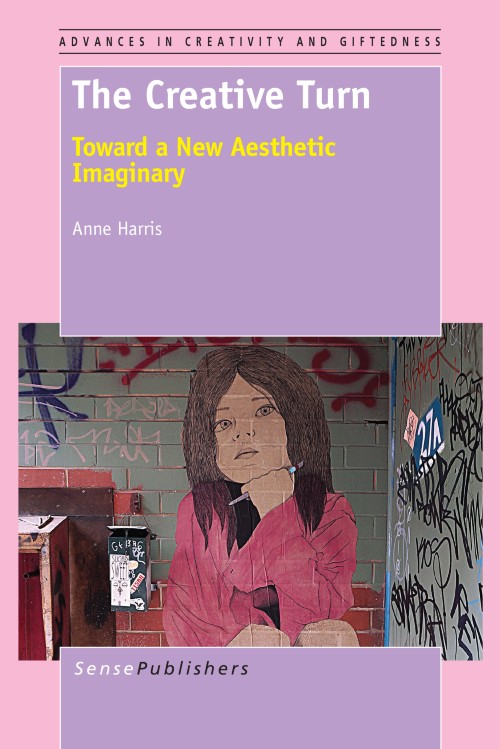
245 14|aThe Creative Turn|h[electronic resource] :|bToward a New Aesthetic Imaginary /|cby Anne M. Harris.
250 |a1st ed. 2014.
264 1|aRotterdam :|bSensePublishers :|bImprint: SensePublishers,|c2014.
300 |aX, 188 p.|bonline resource.
336 |atext|btxt|2rdacontent
337 |acomputer|bc|2rdamedia
338 |aonline resource|bcr|2rdacarrier
347 |atext file|bPDF|2rda
490 1 |aAdvances in Creativity and Giftedness ;|v6
520 |aThe conundrum of understanding, practising and teaching contemporary creativity is that it wants to be all things to all people. Almost all modern lists of creativity, creative thinking and how-to ‘becoming creative’ books begin with one premise: the creative individual/artist is not special, rather each of us is creative in a special way and these skills can – and must - be nurtured. Increasingly, industry and education leaders are claiming that creativity is the core skill to take us into a prosperous future, signalling the democratisation of creativity as industry. Yet centuries of association between aesthetics, mastery and creativity are hard to dismantle. These days, it is increasingly difficult to discuss creativity without reference to business, industry and innovation. Why do we love to think of creativity in this way and no longer as that rare visitation of the muse or the elite gift of the few? This book looks at the possibility that creativity is taking a turn, what that turn might be, and how it relates to industry, education and, ultimately, cultural role of creativity and aesthetics for the 21st century. In proliferating discourses of the commodification of creativity, there is one thing all the experts agree on: creativity is undefinable, possibly unteachable, largely unassessable, and becoming the most valuable commodity in 21st-century markets.
532 8 |aAccessibility summary: This PDF eBook is produced by a third-party. We have requested that the file be made accessible and compliant with the European Accessibility Act (EAA). However, we have not been able to fully verify its compliance with recognized accessibility standards (such as PDF/UA or WCAG). For detailed accessibility information, please refer to the original publisher’s website. If you require an accessible version of this content, please contact accessibilitysupport@springernature.com. We are committed to improving accessibility and will work with the publisher to meet your needs wherever possible.
532 8 |aPublisher contact for further accessibility information: accessibilitysupport@springernature.com
650 0|aEducation.
650 14|aEducation.
710 2 |aSpringerLink (Online service)
773 0 |tSpringer Nature eBook
830 0|aAdvances in Creativity and Giftedness ;|v6
856 40|uhttps://doi.org/10.1007/978-94-6209-551-9
912 |aZDB-2-SHU
912 |aZDB-2-SXED
950 |aHumanities, Social Sciences and Law (SpringerNature-11648)
950 |aEducation (R0) (SpringerNature-43721)