LEADER 04033nam a22004935i 4500
001 807624
003 TR_AnAIT
005 20260127004458
007 cr nn 008mamaa
008 110330s2011 xxu| s |||| 0|eng d
020 |a9781441905796|9978-1-4419-0579-6
024 7 |a10.1007/978-1-4419-0579-6|2doi
041 |aeng
049 |aTürk Tarih Kurumu Kütüphanesi
050 4|aLB1060-1077
072 7|aJNC|2bicssc
072 7|aEDU009000|2bisacsh
072 7|aJNC|2thema
082 04|a370.15|223
090 |aDK/8917
100 1 |aNeuman, Delia.|eauthor.|4aut|4http://id.loc.gov/vocabulary/relators/aut
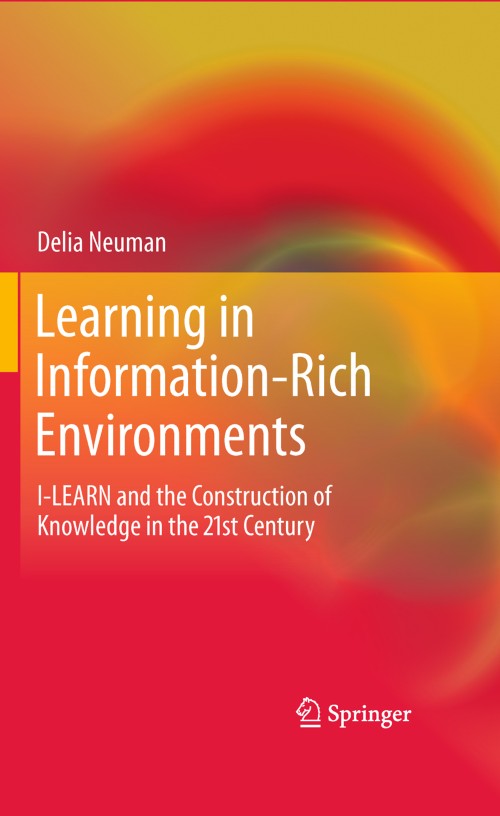
245 10|aLearning in Information-Rich Environments|h[electronic resource] :|bI-LEARN and the Construction of Knowledge in the 21st Century /|cby Delia Neuman.
250 |a1st ed. 2011.
264 1|aNew York, NY :|bSpringer US :|bImprint: Springer,|c2011.
300 |aXV, 141 p.|bonline resource.
336 |atext|btxt|2rdacontent
337 |acomputer|bc|2rdamedia
338 |aonline resource|bcr|2rdacarrier
347 |atext file|bPDF|2rda
505 0 |aInformation as a Tool for Learning -- Information-Rich Environments, Part One -- Information-Rich Environments, Part Two -- Today’s Learners as Information Users -- I-LEARN: A Model for Knowledge Construction in the Information Age -- Issues in Learning in Information-Rich Environments -- Assessing Learning in Information-Rich Environments -- Conclusion.
520 |aLearning in Information-Rich Environments I-LEARN and the Construction of Knowledge in the 21st Century Delia Neuman Human beings are bombarded with information at all times—not just electronically, but through our senses and experiences, affecting how we seek, process, and create information. From this limitless complexity comes an important question: how can we learn and teach more effectively in our information-generating world? Grounded in seminal ideas in learning theory, instructional systems design, and information studies, Learning in Information-Rich Environments brings together ideas that have run in parallel for years but whose relationship has not been explored in full until now, expanding on familiar and contemporary concepts of learning to include our interactivity with everyday situations and stimuli. This comprehensive and thought-provoking analysis links traditional theories to emerging ideasin learning by: Demonstrating that information is the basic unit of learning, critical thinking, and problem solving. Defining information-rich environments and the range of information formats—including print, audio, video, and others—that comprise them. Extending these concepts to the Internet/World Wide Web and the current spectrum of information and communication technologies used for learning. Exploring the 21st-century skills and strategies needed to capitalize on learning opportunities in contemporary information environments. Setting out the non-linear I-LEARN model of gaining and using knowledge in formal and informal information-rich environments. Discussing how I-LEARN can be used in the assessment of learning, and in the design of assessment tools. Its skillful blend of elegant concepts and real-world evidence makes Learning in Information-Rich Environments a must-read title forgraduate students and educators in educational theory, instructional design, and information science.
650 0|aLearning, Psychology of.
650 0|aLibrary science.
650 0|aEducation|xData processing.
650 14|aInstructional Psychology.
650 24|aLibrary Science.
650 24|aComputers and Education.
710 2 |aSpringerLink (Online service)
773 0 |tSpringer Nature eBook
776 08|iPrinted edition:|z9781441905789
776 08|iPrinted edition:|z9781441905802
776 08|iPrinted edition:|z9781489993588
856 40|uhttps://doi.org/10.1007/978-1-4419-0579-6
912 |aZDB-2-SHU
912 |aZDB-2-SXED
950 |aHumanities, Social Sciences and Law (SpringerNature-11648)
950 |aEducation (R0) (SpringerNature-43721)