LEADER 03774nam a22005415i 4500
001 807642
003 TR_AnAIT
005 20260127004520
007 cr nn 008mamaa
008 100316s2010 ne | s |||| 0|eng d
020 |a9789048138043|9978-90-481-3804-3
024 7 |a10.1007/978-90-481-3804-3|2doi
041 |aeng
049 |aTürk Tarih Kurumu Kütüphanesi
050 4|aB63
072 7|aHPS|2bicssc
072 7|aPHI034000|2bisacsh
072 7|aQDTS|2thema
082 04|a300.1|223
090 |aDK/8935
100 1 |aNoland, James R. L.|eauthor.|4aut|4http://id.loc.gov/vocabulary/relators/aut
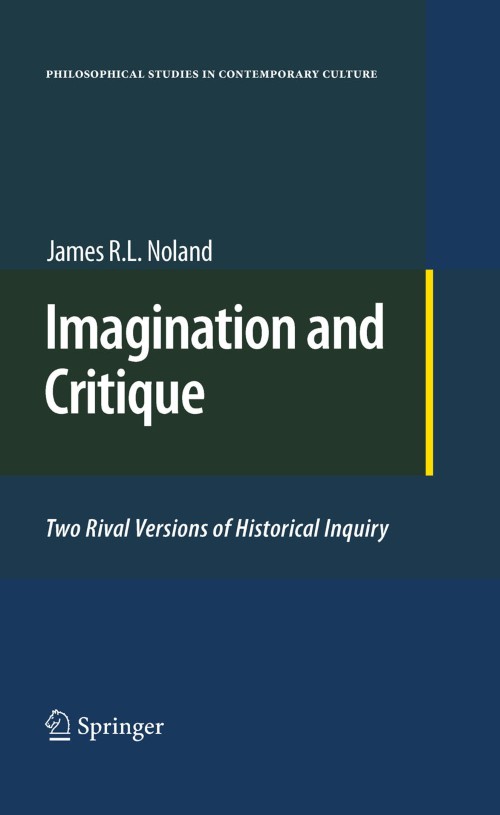
245 10|aImagination and Critique|h[electronic resource] :|bTwo Rival Versions of Historical Inquiry /|cby James R. L. Noland.
250 |a1st ed. 2010.
264 1|aDordrecht :|bSpringer Netherlands :|bImprint: Springer,|c2010.
300 |aX, 200 p.|bonline resource.
336 |atext|btxt|2rdacontent
337 |acomputer|bc|2rdamedia
338 |aonline resource|bcr|2rdacarrier
347 |atext file|bPDF|2rda
490 1 |aPhilosophical Studies in Contemporary Culture,|x2215-1753 ;|v19
505 0 |aThe Story of the Federal Income Tax: A Case Study -- Vico and the Faculty of Imagination -- Marx’s Critique of History -- Addressing Marx Through Rawls -- Ideology and the Problem of Naming -- Imagination in Practice -- What’s the Matter with What’s the Matter with Kansas? -- Freeing Anthropology from Critique -- Imagination and the Possibility of Civil Politics.
520 |aThis project is the result of a philosopher’s extended engagement with the literature and practice of political science and public policy formation. One finds in these fields, and in social science generally, two fundamentally opposed approaches to inquiry into the nature and cause of historical political events. These two approaches, which are sometimes employed simultaneously, are both powerful and persuasive. Yet, the two accounts are incompatible and comprehensive. Making a choice between the two is not simply about choosing a view of history; the choice affects how one anticipates policy developments in the future, and, more importantly, how one seeks to influence and shape public policy now and in the years to come. Because there is no external standard of history by which to judge them, one must examine the conceptions of human nature, reason and freedom underlying each in order to adjudicate between the two. Following Alasdair MacIntyre’s approach in Three Rival Versions of Moral Inquiry, this book analyzes and evaluates the internal coherence and ultimate viability of the two fundamental versions of historical inquiry. Intended not only for philosophers but also for students and practitioners of political science and public policy, the book includes a case study of a particularly significant political development in U.S. history- the ratification of the 16th Amendment- and suggests some specific implications of the philosophical conclusions.
650 0|aPhilosophy and social sciences.
650 0|aHistory.
650 0|aPhilosophy.
650 0|aPolitical science|xPhilosophy.
650 14|aPhilosophy of the Social Sciences.
650 24|aHistory.
650 24|aPhilosophy.
650 24|aPolitical Philosophy.
710 2 |aSpringerLink (Online service)
773 0 |tSpringer Nature eBook
776 08|iPrinted edition:|z9789048138036
776 08|iPrinted edition:|z9789048138203
776 08|iPrinted edition:|z9789400731851
830 0|aPhilosophical Studies in Contemporary Culture,|x2215-1753 ;|v19
856 40|uhttps://doi.org/10.1007/978-90-481-3804-3
912 |aZDB-2-SHU
912 |aZDB-2-SXPR
950 |aHumanities, Social Sciences and Law (SpringerNature-11648)
950 |aPhilosophy and Religion (R0) (SpringerNature-43725)