

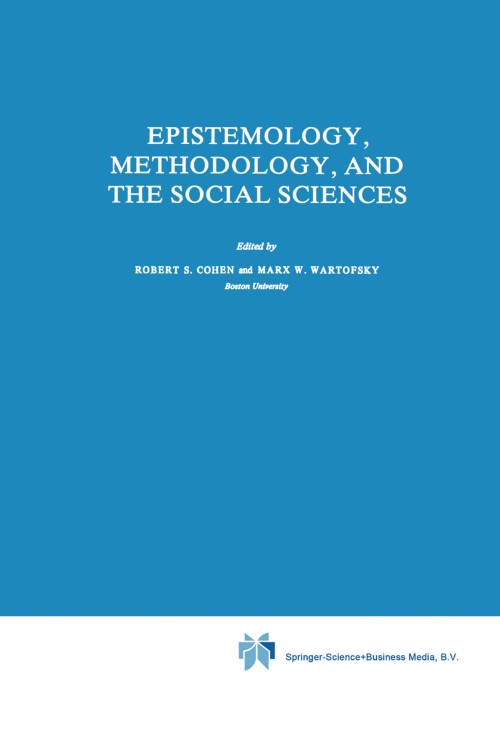
Epistemology, Methodology, and the Social Sciences [electronic resource] / edited by Robert S. Cohen, Marx W. Wartofsky.
Erişim Adresi
ISBN
9789401714587
Dil Kodu
İngilizce
Yer Numarası
DK/9105
Basım Bildirimi
1st ed. 1983.
Yayın Bilgisi
Dordrecht : Springer Netherlands : Imprint: Springer, 1983.
Fiziksel Niteleme
VIII, 270 p. online resource.
Dizi
Boston Studies in the Philosophy and History of Science, 2214-7942 ; 71
İçindekiler Notu
Ideology and Objectivity -- Toward a Logic of Historical Constitution -- Beyond Causality in the Social Sciences: Reciprocity as a Model of Non-exploitative Social Relations -- Empiricism and the Philosophy of Science, or, n Dogmas of Empiricism -- Realism and the Supposed Poverty of Sociological Theories -- The Role and Status of the Rationality Principle in the Social Sciences -- Marxian Paradigms versus Microeconomic Structures -- Paradise not Surrendered: Jewish Reactions to Copernicus and the Growth of Modern Science -- The Peculiar Evolutionary Strategy of Man -- Technologies as Forms of Life -- Index of Names.
Özet, vb.
The last decades have seen major reformations in the philosophy and history of science. What has been called 'post-positivist' philosophy of science has introduced radically new concerns with historical, social, and valuative components of scientific thought in the natural sciences, and has raised up the demons of relativism, subjectivism and sociologism to haunt the once calm precincts of objectivity and realism. Though these disturbances intruded upon what had seemed to be the logically well-ordered domain of the philoso phy of the natural sciences, they were no news to the social sciences. There, the messy business of human action, volition, decision, the considerations of practical purposes and social values, the role of ideology and the problem of rationality, had long conspired to defeat logical-reconstructionist programs. The attempt to tarne the social sciences to the harness of a strict hypothetico deductive model of explanation failed. Within the social sciences, phenome nological, Marxist, hermeneuticist, action-theoretical approaches vied in attempting to capture the distinctiveness of human phenomena. In fact, the philosophy of the natural sciences, even in its 'hard' forms, has itself become infected with the increasing reflection upon the role of such social-scientific categories, in the attempt to understand the nature of the scientific enterprise.
Konu
Science __ Philosophy.
Philosophy and social sciences.
Knowledge, Theory of.
Philosophy of Science.
Philosophy of the Social Sciences.
Epistemology.
Philosophy and social sciences.
Knowledge, Theory of.
Philosophy of Science.
Philosophy of the Social Sciences.
Epistemology.
Diğer Yazarlar
Kurum Adı
Eseri Alıntıla
Referansları kullanmadan önce gözden geçirmeniz ve varsa gerekli düzeltmeleri yapmanız önerilir.
Dijital Kaynak
MARC Görünümü
LEADER 04823nam a22006015i 4500
001 807812
003 TR_AnAIT
005 20260127004843
007 cr nn 008mamaa
008 130220s1983 ne | s |||| 0|eng d
020 |a9789401714587|9978-94-017-1458-7
024 7 |a10.1007/978-94-017-1458-7|2doi
041 |aeng
049 |aTürk Tarih Kurumu Kütüphanesi
050 4|aQ174-175.3
050 4|aB67
072 7|aPDA|2bicssc
072 7|aSCI075000|2bisacsh
072 7|aPDA|2thema
082 04|a501|223
090 |aDK/9105
245 10|aEpistemology, Methodology, and the Social Sciences|h[electronic resource] /|cedited by Robert S. Cohen, Marx W. Wartofsky.
250 |a1st ed. 1983.
264 1|aDordrecht :|bSpringer Netherlands :|bImprint: Springer,|c1983.
300 |aVIII, 270 p.|bonline resource.
336 |atext|btxt|2rdacontent
337 |acomputer|bc|2rdamedia
338 |aonline resource|bcr|2rdacarrier
347 |atext file|bPDF|2rda
490 1 |aBoston Studies in the Philosophy and History of Science,|x2214-7942 ;|v71
505 0 |aIdeology and Objectivity -- Toward a Logic of Historical Constitution -- Beyond Causality in the Social Sciences: Reciprocity as a Model of Non-exploitative Social Relations -- Empiricism and the Philosophy of Science, or, n Dogmas of Empiricism -- Realism and the Supposed Poverty of Sociological Theories -- The Role and Status of the Rationality Principle in the Social Sciences -- Marxian Paradigms versus Microeconomic Structures -- Paradise not Surrendered: Jewish Reactions to Copernicus and the Growth of Modern Science -- The Peculiar Evolutionary Strategy of Man -- Technologies as Forms of Life -- Index of Names.
520 |aThe last decades have seen major reformations in the philosophy and history of science. What has been called 'post-positivist' philosophy of science has introduced radically new concerns with historical, social, and valuative components of scientific thought in the natural sciences, and has raised up the demons of relativism, subjectivism and sociologism to haunt the once calm precincts of objectivity and realism. Though these disturbances intruded upon what had seemed to be the logically well-ordered domain of the philoso phy of the natural sciences, they were no news to the social sciences. There, the messy business of human action, volition, decision, the considerations of practical purposes and social values, the role of ideology and the problem of rationality, had long conspired to defeat logical-reconstructionist programs. The attempt to tarne the social sciences to the harness of a strict hypothetico deductive model of explanation failed. Within the social sciences, phenome nological, Marxist, hermeneuticist, action-theoretical approaches vied in attempting to capture the distinctiveness of human phenomena. In fact, the philosophy of the natural sciences, even in its 'hard' forms, has itself become infected with the increasing reflection upon the role of such social-scientific categories, in the attempt to understand the nature of the scientific enterprise.
532 8 |aAccessibility summary: This PDF is not accessible. It is based on scanned pages and does not support features such as screen reader compatibility or described non-text content (images, graphs etc). However, it likely supports searchable and selectable text based on OCR (Optical Character Recognition). Users with accessibility needs may not be able to use this content effectively. Please contact us at accessibilitysupport@springernature.com if you require assistance or an alternative format.
532 8 |aInaccessible, or known limited accessibility
532 8 |aNo reading system accessibility options actively disabled
532 8 |aPublisher contact for further accessibility information: accessibilitysupport@springernature.com
650 0|aScience|xPhilosophy.
650 0|aPhilosophy and social sciences.
650 0|aKnowledge, Theory of.
650 14|aPhilosophy of Science.
650 24|aPhilosophy of the Social Sciences.
650 24|aEpistemology.
700 1 |aCohen, Robert S.|eeditor.|4edt|4http://id.loc.gov/vocabulary/relators/edt
700 1 |aWartofsky, Marx W.|eeditor.|4edt|4http://id.loc.gov/vocabulary/relators/edt
710 2 |aSpringerLink (Online service)
773 0 |tSpringer Nature eBook
776 08|iPrinted edition:|z9789027714541
776 08|iPrinted edition:|z9789048183760
776 08|iPrinted edition:|z9789401714594
830 0|aBoston Studies in the Philosophy and History of Science,|x2214-7942 ;|v71
856 40|uhttps://doi.org/10.1007/978-94-017-1458-7
912 |aZDB-2-SHU
912 |aZDB-2-SXPR
912 |aZDB-2-BAE
950 |aHumanities, Social Sciences and Law (SpringerNature-11648)
950 |aPhilosophy and Religion (R0) (SpringerNature-43725)
001 807812
003 TR_AnAIT
005 20260127004843
007 cr nn 008mamaa
008 130220s1983 ne | s |||| 0|eng d
020 |a9789401714587|9978-94-017-1458-7
024 7 |a10.1007/978-94-017-1458-7|2doi
041 |aeng
049 |aTürk Tarih Kurumu Kütüphanesi
050 4|aQ174-175.3
050 4|aB67
072 7|aPDA|2bicssc
072 7|aSCI075000|2bisacsh
072 7|aPDA|2thema
082 04|a501|223
090 |aDK/9105
245 10|aEpistemology, Methodology, and the Social Sciences|h[electronic resource] /|cedited by Robert S. Cohen, Marx W. Wartofsky.
250 |a1st ed. 1983.
264 1|aDordrecht :|bSpringer Netherlands :|bImprint: Springer,|c1983.
300 |aVIII, 270 p.|bonline resource.
336 |atext|btxt|2rdacontent
337 |acomputer|bc|2rdamedia
338 |aonline resource|bcr|2rdacarrier
347 |atext file|bPDF|2rda
490 1 |aBoston Studies in the Philosophy and History of Science,|x2214-7942 ;|v71
505 0 |aIdeology and Objectivity -- Toward a Logic of Historical Constitution -- Beyond Causality in the Social Sciences: Reciprocity as a Model of Non-exploitative Social Relations -- Empiricism and the Philosophy of Science, or, n Dogmas of Empiricism -- Realism and the Supposed Poverty of Sociological Theories -- The Role and Status of the Rationality Principle in the Social Sciences -- Marxian Paradigms versus Microeconomic Structures -- Paradise not Surrendered: Jewish Reactions to Copernicus and the Growth of Modern Science -- The Peculiar Evolutionary Strategy of Man -- Technologies as Forms of Life -- Index of Names.
520 |aThe last decades have seen major reformations in the philosophy and history of science. What has been called 'post-positivist' philosophy of science has introduced radically new concerns with historical, social, and valuative components of scientific thought in the natural sciences, and has raised up the demons of relativism, subjectivism and sociologism to haunt the once calm precincts of objectivity and realism. Though these disturbances intruded upon what had seemed to be the logically well-ordered domain of the philoso phy of the natural sciences, they were no news to the social sciences. There, the messy business of human action, volition, decision, the considerations of practical purposes and social values, the role of ideology and the problem of rationality, had long conspired to defeat logical-reconstructionist programs. The attempt to tarne the social sciences to the harness of a strict hypothetico deductive model of explanation failed. Within the social sciences, phenome nological, Marxist, hermeneuticist, action-theoretical approaches vied in attempting to capture the distinctiveness of human phenomena. In fact, the philosophy of the natural sciences, even in its 'hard' forms, has itself become infected with the increasing reflection upon the role of such social-scientific categories, in the attempt to understand the nature of the scientific enterprise.
532 8 |aAccessibility summary: This PDF is not accessible. It is based on scanned pages and does not support features such as screen reader compatibility or described non-text content (images, graphs etc). However, it likely supports searchable and selectable text based on OCR (Optical Character Recognition). Users with accessibility needs may not be able to use this content effectively. Please contact us at accessibilitysupport@springernature.com if you require assistance or an alternative format.
532 8 |aInaccessible, or known limited accessibility
532 8 |aNo reading system accessibility options actively disabled
532 8 |aPublisher contact for further accessibility information: accessibilitysupport@springernature.com
650 0|aScience|xPhilosophy.
650 0|aPhilosophy and social sciences.
650 0|aKnowledge, Theory of.
650 14|aPhilosophy of Science.
650 24|aPhilosophy of the Social Sciences.
650 24|aEpistemology.
700 1 |aCohen, Robert S.|eeditor.|4edt|4http://id.loc.gov/vocabulary/relators/edt
700 1 |aWartofsky, Marx W.|eeditor.|4edt|4http://id.loc.gov/vocabulary/relators/edt
710 2 |aSpringerLink (Online service)
773 0 |tSpringer Nature eBook
776 08|iPrinted edition:|z9789027714541
776 08|iPrinted edition:|z9789048183760
776 08|iPrinted edition:|z9789401714594
830 0|aBoston Studies in the Philosophy and History of Science,|x2214-7942 ;|v71
856 40|uhttps://doi.org/10.1007/978-94-017-1458-7
912 |aZDB-2-SHU
912 |aZDB-2-SXPR
912 |aZDB-2-BAE
950 |aHumanities, Social Sciences and Law (SpringerNature-11648)
950 |aPhilosophy and Religion (R0) (SpringerNature-43725)
Materyaller
Depodan talep edilen materyal sadece kütüphane içerisinde kullanılmaktadır.
Materyal dışarıya ödünç verilmemektedir.
Materyal dışarıya ödünç verilmemektedir.
