

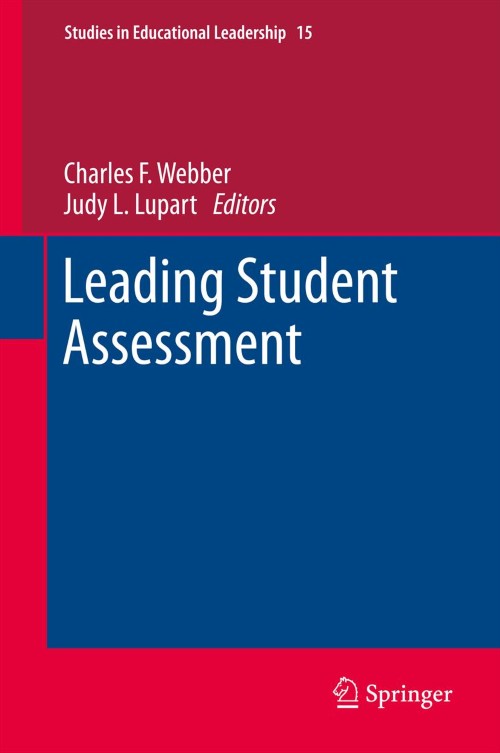
Leading Student Assessment [electronic resource] / edited by Charles F. Webber, Judy L. Lupart.
Erişim Adresi
ISBN
9789400717275
Dil Kodu
İngilizce
Yer Numarası
DK/9124
Basım Bildirimi
1st ed. 2012.
Yayın Bilgisi
Dordrecht : Springer Netherlands : Imprint: Springer, 2012.
Fiziksel Niteleme
XII, 304 p. online resource.
Dizi
Studies in Educational Leadership, 2543-0130 ; 15
İçindekiler Notu
INTRODUCTION: 1. Taking Stock of Here and Now; Judy L. Lupart and Charles F. Webber -- 2. School Leadership, Evidence-based Decision Making and Large-scale Student Assessment; Kenneth Leithwood -- 3. Lessons Learned: The Promise and Possibility of Educational Accountability in the United States; Charles L. Slater, Marla W. McGhee, Sarah W. Nelson, Lionel “Skip” Meno -- 4. Student Assessment Policy and Practice in Alberta: An Assessment for Learning; Jim Brandon and Marsi Quarin-Wright -- 5. Fair and Ethical Student Assessment Practices; Jean L. Pettifor and Donald H. Saklofske -- 6. How Can Psychological Assessment Inform Classroom Practice? The Role of the School Psychologist in Canadian Schools; Joan Jeary and Vicki Schwean -- 7. Current Issues in Assessing Students with Special Needs; John Venn -- 8. Student in School Characteristics Related to Student Achievement: A Methodological Approach; John O. Anderson -- 9. Student Voice in Fair Assessment Practice; Nola Aitken -- 10. Grade Level of Achievement Data: Key Indicators for School-Based Decision-Makers; John Burger and Anna Nadirova -- 11. Teacher Feedback in Formative Classroom Assessment; Susan M. Brookhart -- 12. Using a Measurement Paradigm to Guide Classroom Assessment Processes; Sandy Heldsinger -- 13. Putting the Focus on Learning: Shifting Classroom Assessment Practices; Sherry Bennett and Dale Armstrong -- CONCLUSION: 14. The Ecology of Student Assessment; Charles F. Webber, Judy Lupart and Shelleyann Scott -- Index.
Özet, vb.
This book presents a new and refreshing look at student assessment from the perspective of leading educational theorists, researchers, and practitioners. The authors call for boundary-breaking assessment that reflects clear understandings of the purposes of assessment, a balance of assessment creativity and realism, the ability to detect solutions for assessment challenges, and the capacity to question and imagine assessment alternatives. The 14 chapters offer school and district educators, policy makers, researchers, and university teacher preparation faculty with a comprehensive, current overview of the state and art of student assessment. Key questions are posed about assessment and critical challenges are presented along with sound evidence-based solutions. Student assessment is analyzed in terms of its relationship with classroom instructional practices and large-scale testing programs. Formative and summative assessments are compared and contrasted. The role of psychological assessment in informing classroom practices is profiled along with the need for student voice in fair assessment practices. Readers will be challenged to consider the ecology of student assessment, that is, the impact of assessment in classrooms and schools through to the macro level of globalized societies. The underpinning values and assumptions of student assessment are highlighted. Finally, a rationale is offered for reconceptualizing and redefining assessment. .
Konu
School management and organization.
School administration.
Educational tests and measurements.
Education.
Organization and Leadership.
Assessment and Testing.
Education.
School administration.
Educational tests and measurements.
Education.
Organization and Leadership.
Assessment and Testing.
Education.
Diğer Yazarlar
Kurum Adı
Eseri Alıntıla
Referansları kullanmadan önce gözden geçirmeniz ve varsa gerekli düzeltmeleri yapmanız önerilir.
Dijital Kaynak
MARC Görünümü
LEADER 04936nam a22005415i 4500
001 807831
003 TR_AnAIT
005 20260127004905
007 cr nn 008mamaa
008 110916s2012 ne | s |||| 0|eng d
020 |a9789400717275|9978-94-007-1727-5
024 7 |a10.1007/978-94-007-1727-5|2doi
041 |aeng
049 |aTürk Tarih Kurumu Kütüphanesi
050 4|aLB2801-3095
072 7|aJNK|2bicssc
072 7|aEDU001000|2bisacsh
072 7|aJNK|2thema
082 04|a371.2|223
090 |aDK/9124
245 10|aLeading Student Assessment|h[electronic resource] /|cedited by Charles F. Webber, Judy L. Lupart.
250 |a1st ed. 2012.
264 1|aDordrecht :|bSpringer Netherlands :|bImprint: Springer,|c2012.
300 |aXII, 304 p.|bonline resource.
336 |atext|btxt|2rdacontent
337 |acomputer|bc|2rdamedia
338 |aonline resource|bcr|2rdacarrier
347 |atext file|bPDF|2rda
490 1 |aStudies in Educational Leadership,|x2543-0130 ;|v15
505 0 |aINTRODUCTION: 1. Taking Stock of Here and Now; Judy L. Lupart and Charles F. Webber -- 2. School Leadership, Evidence-based Decision Making and Large-scale Student Assessment; Kenneth Leithwood -- 3. Lessons Learned: The Promise and Possibility of Educational Accountability in the United States; Charles L. Slater, Marla W. McGhee, Sarah W. Nelson, Lionel “Skip” Meno -- 4. Student Assessment Policy and Practice in Alberta: An Assessment for Learning; Jim Brandon and Marsi Quarin-Wright -- 5. Fair and Ethical Student Assessment Practices; Jean L. Pettifor and Donald H. Saklofske -- 6. How Can Psychological Assessment Inform Classroom Practice? The Role of the School Psychologist in Canadian Schools; Joan Jeary and Vicki Schwean -- 7. Current Issues in Assessing Students with Special Needs; John Venn -- 8. Student in School Characteristics Related to Student Achievement: A Methodological Approach; John O. Anderson -- 9. Student Voice in Fair Assessment Practice; Nola Aitken -- 10. Grade Level of Achievement Data: Key Indicators for School-Based Decision-Makers; John Burger and Anna Nadirova -- 11. Teacher Feedback in Formative Classroom Assessment; Susan M. Brookhart -- 12. Using a Measurement Paradigm to Guide Classroom Assessment Processes; Sandy Heldsinger -- 13. Putting the Focus on Learning: Shifting Classroom Assessment Practices; Sherry Bennett and Dale Armstrong -- CONCLUSION: 14. The Ecology of Student Assessment; Charles F. Webber, Judy Lupart and Shelleyann Scott -- Index.
520 |aThis book presents a new and refreshing look at student assessment from the perspective of leading educational theorists, researchers, and practitioners. The authors call for boundary-breaking assessment that reflects clear understandings of the purposes of assessment, a balance of assessment creativity and realism, the ability to detect solutions for assessment challenges, and the capacity to question and imagine assessment alternatives. The 14 chapters offer school and district educators, policy makers, researchers, and university teacher preparation faculty with a comprehensive, current overview of the state and art of student assessment. Key questions are posed about assessment and critical challenges are presented along with sound evidence-based solutions. Student assessment is analyzed in terms of its relationship with classroom instructional practices and large-scale testing programs. Formative and summative assessments are compared and contrasted. The role of psychological assessment in informing classroom practices is profiled along with the need for student voice in fair assessment practices. Readers will be challenged to consider the ecology of student assessment, that is, the impact of assessment in classrooms and schools through to the macro level of globalized societies. The underpinning values and assumptions of student assessment are highlighted. Finally, a rationale is offered for reconceptualizing and redefining assessment. .
650 0|aSchool management and organization.
650 0|aSchool administration.
650 0|aEducational tests and measurements.
650 0|aEducation.
650 14|aOrganization and Leadership.
650 24|aAssessment and Testing.
650 24|aEducation.
700 1 |aWebber, Charles F.|eeditor.|4edt|4http://id.loc.gov/vocabulary/relators/edt
700 1 |aLupart, Judy L.|eeditor.|4edt|4http://id.loc.gov/vocabulary/relators/edt
710 2 |aSpringerLink (Online service)
773 0 |tSpringer Nature eBook
776 08|iPrinted edition:|z9789400717268
776 08|iPrinted edition:|z9789400717282
776 08|iPrinted edition:|z9789400738119
830 0|aStudies in Educational Leadership,|x2543-0130 ;|v15
856 40|uhttps://doi.org/10.1007/978-94-007-1727-5
912 |aZDB-2-SHU
912 |aZDB-2-SXED
950 |aHumanities, Social Sciences and Law (SpringerNature-11648)
950 |aEducation (R0) (SpringerNature-43721)
001 807831
003 TR_AnAIT
005 20260127004905
007 cr nn 008mamaa
008 110916s2012 ne | s |||| 0|eng d
020 |a9789400717275|9978-94-007-1727-5
024 7 |a10.1007/978-94-007-1727-5|2doi
041 |aeng
049 |aTürk Tarih Kurumu Kütüphanesi
050 4|aLB2801-3095
072 7|aJNK|2bicssc
072 7|aEDU001000|2bisacsh
072 7|aJNK|2thema
082 04|a371.2|223
090 |aDK/9124
245 10|aLeading Student Assessment|h[electronic resource] /|cedited by Charles F. Webber, Judy L. Lupart.
250 |a1st ed. 2012.
264 1|aDordrecht :|bSpringer Netherlands :|bImprint: Springer,|c2012.
300 |aXII, 304 p.|bonline resource.
336 |atext|btxt|2rdacontent
337 |acomputer|bc|2rdamedia
338 |aonline resource|bcr|2rdacarrier
347 |atext file|bPDF|2rda
490 1 |aStudies in Educational Leadership,|x2543-0130 ;|v15
505 0 |aINTRODUCTION: 1. Taking Stock of Here and Now; Judy L. Lupart and Charles F. Webber -- 2. School Leadership, Evidence-based Decision Making and Large-scale Student Assessment; Kenneth Leithwood -- 3. Lessons Learned: The Promise and Possibility of Educational Accountability in the United States; Charles L. Slater, Marla W. McGhee, Sarah W. Nelson, Lionel “Skip” Meno -- 4. Student Assessment Policy and Practice in Alberta: An Assessment for Learning; Jim Brandon and Marsi Quarin-Wright -- 5. Fair and Ethical Student Assessment Practices; Jean L. Pettifor and Donald H. Saklofske -- 6. How Can Psychological Assessment Inform Classroom Practice? The Role of the School Psychologist in Canadian Schools; Joan Jeary and Vicki Schwean -- 7. Current Issues in Assessing Students with Special Needs; John Venn -- 8. Student in School Characteristics Related to Student Achievement: A Methodological Approach; John O. Anderson -- 9. Student Voice in Fair Assessment Practice; Nola Aitken -- 10. Grade Level of Achievement Data: Key Indicators for School-Based Decision-Makers; John Burger and Anna Nadirova -- 11. Teacher Feedback in Formative Classroom Assessment; Susan M. Brookhart -- 12. Using a Measurement Paradigm to Guide Classroom Assessment Processes; Sandy Heldsinger -- 13. Putting the Focus on Learning: Shifting Classroom Assessment Practices; Sherry Bennett and Dale Armstrong -- CONCLUSION: 14. The Ecology of Student Assessment; Charles F. Webber, Judy Lupart and Shelleyann Scott -- Index.
520 |aThis book presents a new and refreshing look at student assessment from the perspective of leading educational theorists, researchers, and practitioners. The authors call for boundary-breaking assessment that reflects clear understandings of the purposes of assessment, a balance of assessment creativity and realism, the ability to detect solutions for assessment challenges, and the capacity to question and imagine assessment alternatives. The 14 chapters offer school and district educators, policy makers, researchers, and university teacher preparation faculty with a comprehensive, current overview of the state and art of student assessment. Key questions are posed about assessment and critical challenges are presented along with sound evidence-based solutions. Student assessment is analyzed in terms of its relationship with classroom instructional practices and large-scale testing programs. Formative and summative assessments are compared and contrasted. The role of psychological assessment in informing classroom practices is profiled along with the need for student voice in fair assessment practices. Readers will be challenged to consider the ecology of student assessment, that is, the impact of assessment in classrooms and schools through to the macro level of globalized societies. The underpinning values and assumptions of student assessment are highlighted. Finally, a rationale is offered for reconceptualizing and redefining assessment. .
650 0|aSchool management and organization.
650 0|aSchool administration.
650 0|aEducational tests and measurements.
650 0|aEducation.
650 14|aOrganization and Leadership.
650 24|aAssessment and Testing.
650 24|aEducation.
700 1 |aWebber, Charles F.|eeditor.|4edt|4http://id.loc.gov/vocabulary/relators/edt
700 1 |aLupart, Judy L.|eeditor.|4edt|4http://id.loc.gov/vocabulary/relators/edt
710 2 |aSpringerLink (Online service)
773 0 |tSpringer Nature eBook
776 08|iPrinted edition:|z9789400717268
776 08|iPrinted edition:|z9789400717282
776 08|iPrinted edition:|z9789400738119
830 0|aStudies in Educational Leadership,|x2543-0130 ;|v15
856 40|uhttps://doi.org/10.1007/978-94-007-1727-5
912 |aZDB-2-SHU
912 |aZDB-2-SXED
950 |aHumanities, Social Sciences and Law (SpringerNature-11648)
950 |aEducation (R0) (SpringerNature-43721)
Materyaller
Depodan talep edilen materyal sadece kütüphane içerisinde kullanılmaktadır.
Materyal dışarıya ödünç verilmemektedir.
Materyal dışarıya ödünç verilmemektedir.
