

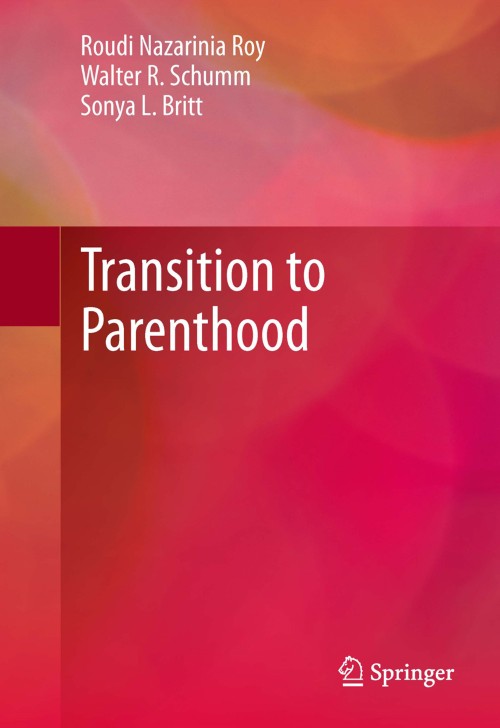
Transition to Parenthood [electronic resource] / by Roudi Nazarinia Roy, Walter R. Schumm, Sonya L. Britt.
Erişim Adresi
ISBN
9781461477686
Dil Kodu
İngilizce
Yer Numarası
DK/9136
Yazar
Basım Bildirimi
1st ed. 2014.
Yayın Bilgisi
New York, NY : Springer New York : Imprint: Springer, 2014.
Fiziksel Niteleme
XIV, 214 p. 3 illus. online resource.
İçindekiler Notu
A History of Fertility in America -- Theoretical Perspectives -- Voluntary versus Involuntary Childlessness -- Diversity -- Demographics.- Expectations -- Relationship Maintenance -- Children and Money -- Children with Special Needs -- Program Evaluation and Parenting Programs.
Özet, vb.
As couples marry and society evolves, a new generation of families is answering important questions pondered by professionals and couples alike. When should we have children? How many children should we have? What if we can't conceive? When is adoption an option? Can we--should we--fulfill what is expected of us? A comprehensive, multidisciplinary handbook boasting findings across traditional areas of study, Transition to Parenthood brings the contemporary family into clear, useful focus. Its expert coverage tracks current trends in family structures, roles, and dynamics, and explores the impact of individual members and the environment on the family unit. A variety of perspectives (e.g., ecological, life course, TPEX) are presented to best apply to clinical understanding, and the book considers topics as varied as the social class factor in women's fertility, patterns of relationship maintenance, and teaching children about money. And contrary to some schools of thought, the authors argue that macro and micro theories of families must be considered in combination for optimal results. Included in the coverage: A history of fertility in America. The family: diversity and demographics. Childlessness, voluntary and involuntary. The cost of raising a child. Maintaining your relationship across and after the transition to parenthood. Parenting programs and program evaluations. Navigating the transition to parenthood with a child with special needs. Fresh in approach and accessibly written, Transition to Parenthood will be a core reference for a variety of professionals, including family sociologists, family therapists, developmental psychologists, social workers, and counselors.
Konu
Sociology.
Social groups.
Developmental psychology.
Social service.
Sociology of Family, Youth and Aging.
Developmental Psychology.
Social Work.
Social groups.
Developmental psychology.
Social service.
Sociology of Family, Youth and Aging.
Developmental Psychology.
Social Work.
Diğer Yazarlar
Kurum Adı
