

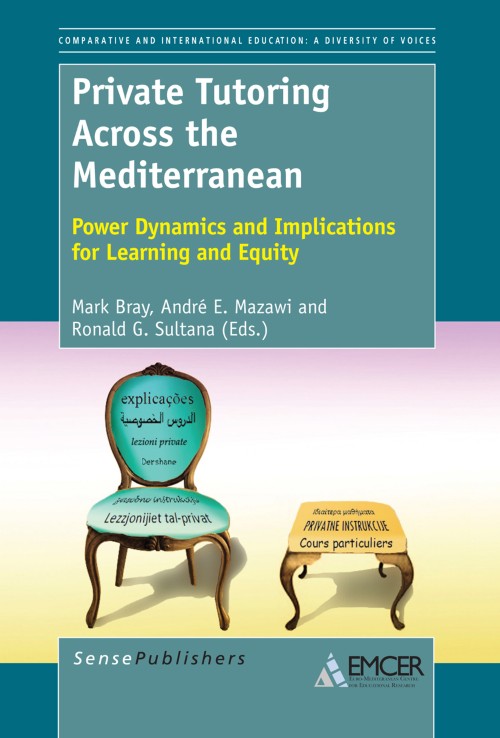
Private Tutoring Across the Mediterranean [electronic resource] : Power Dynamics and Implications for Learning and Equity / edited by Mark Bray, André E. Mazawi, Ronald G. Sultana.
Erişim Adresi
ISBN
9789462092372
Dil Kodu
İngilizce
Yer Numarası
DK/9271
Basım Bildirimi
1st ed. 2013.
Yayın Bilgisi
Rotterdam : SensePublishers : Imprint: SensePublishers, 2013.
Fiziksel Niteleme
VI, 221 p. online resource.
Dizi
Comparative and International Education: A Diversity of Voices, A Diversity of Voices, 2214-9899
Özet, vb.
Private tutoring—supplementary, out-of-school instruction offered at a fee to individuals or groups—represents a substantial household expenditure, even in systems that claim to have free public education. It plays out across, alongside, and even within some school systems. Emerging as a ‘shadow education’, private tutoring now operates as a system and industry crossing national, regional, and social-class boundaries. Private tutoring is provided through different modes of delivery including the internet. Policy makers, parents, teachers, trade unions, corporations, community associations, and students are implicated in the private tutoring industry. The debates over private tutoring are therefore part of the larger struggles over the ends of education in just and equitable societies. The authors in this volume address diverse national settings of private tutoring across the Mediterranean, and examine its political, economic, social, and cultural underpinnings. They draw on a range of conceptual frameworks, and deploy a variety of research methods to problematize the multifaceted relationships between tutoring, learning, and equity. The volume captures a multiplicity of voices, and focuses on some of the central challenges facing education in pluralistic societies.
Konu
Education.
Education.
Education.
Diğer Yazarlar
Kurum Adı
