LEADER 03916nam a22005775i 4500
001 808022
003 TR_AnAIT
005 20260127005249
007 cr nn 008mamaa
008 131106s1997 ne | s |||| 0|eng d
020 |a9789401588249|9978-94-015-8824-9
024 7 |a10.1007/978-94-015-8824-9|2doi
041 |aeng
049 |aTürk Tarih Kurumu Kütüphanesi
050 4|aB829.5.A-Z
072 7|aHPCF3|2bicssc
072 7|aPHI018000|2bisacsh
072 7|aQDHR5|2thema
082 04|a142.7|223
090 |aDK/9314
100 1 |aStröker, Elisabeth.|eauthor.|4aut|4http://id.loc.gov/vocabulary/relators/aut
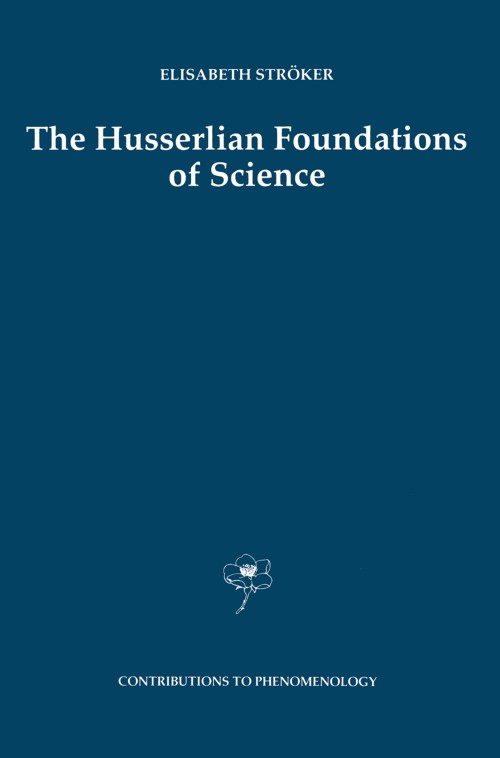
245 14|aThe Husserlian Foundations of Science|h[electronic resource] /|cby Elisabeth Ströker.
250 |a1st ed. 1997.
264 1|aDordrecht :|bSpringer Netherlands :|bImprint: Springer,|c1997.
300 |aXIV, 306 p.|bonline resource.
336 |atext|btxt|2rdacontent
337 |acomputer|bc|2rdamedia
338 |aonline resource|bcr|2rdacarrier
347 |atext file|bPDF|2rda
490 1 |aContributions to Phenomenology, In Cooperation with The Center for Advanced Research in Phenomenology,|x2215-1915 ;|v30
520 |aThis book starts with a representation of Husserl's idea of phenomenology as a foundational theory of science. The following essays elucidate the main features of the phenomenological method as worked out by Husserl in the course of the development of his philosophy - starting from merely 'descriptive' and going on to 'transcendental' and 'constitutive' phenomenology - in order to get access to the foundations of knowledge in general and of scientific knowledge in particular. Further essays deal with the Husserlian foundations of natural science, and the relations between phenomenology and psychology, as well as those between phenomenology and history. This second revised and enlarged edition - the first appeared in 1987 and was edited by Lee Hardy - contains two further essays: one deals with Husserl's never abandoned idea of phenomenology as a rigorous science and his further claim to restore phenomenological philosophy as 'First Philosophy', and the other one on the problem of crisis of the Western culture Husserl was concerned with during several periods of his life, demonstrates the actuality of his phenomenology even for philosophy of science in our times.
532 8 |aAccessibility summary: This PDF is not accessible. It is based on scanned pages and does not support features such as screen reader compatibility or described non-text content (images, graphs etc). However, it likely supports searchable and selectable text based on OCR (Optical Character Recognition). Users with accessibility needs may not be able to use this content effectively. Please contact us at accessibilitysupport@springernature.com if you require assistance or an alternative format.
532 8 |aInaccessible, or known limited accessibility
532 8 |aNo reading system accessibility options actively disabled
532 8 |aPublisher contact for further accessibility information: accessibilitysupport@springernature.com
650 0|aPhenomenology .
650 0|aPhilosophy of nature.
650 0|aPhilosophy of mind.
650 0|aSelf.
650 14|aPhenomenology.
650 24|aPhilosophy of Nature.
650 24|aPhilosophy of the Self.
710 2 |aSpringerLink (Online service)
773 0 |tSpringer Nature eBook
776 08|iPrinted edition:|z9780792347439
776 08|iPrinted edition:|z9789048149100
776 08|iPrinted edition:|z9789401588256
830 0|aContributions to Phenomenology, In Cooperation with The Center for Advanced Research in Phenomenology,|x2215-1915 ;|v30
856 40|uhttps://doi.org/10.1007/978-94-015-8824-9
912 |aZDB-2-SHU
912 |aZDB-2-SXPR
912 |aZDB-2-BAE
950 |aHumanities, Social Sciences and Law (SpringerNature-11648)
950 |aPhilosophy and Religion (R0) (SpringerNature-43725)