

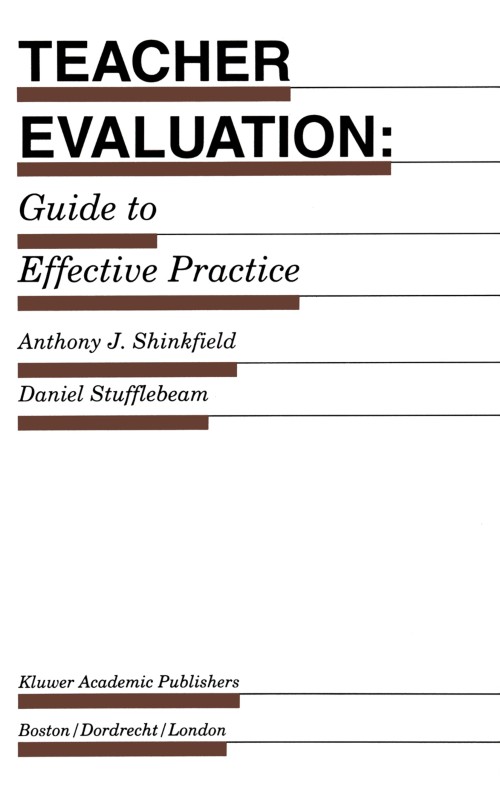
Teacher Evaluation [electronic resource] : Guide to Effective Practice / by Anthony J. Shinkfield, D.L. Stufflebeam.
Erişim Adresi
ISBN
9789400917965
Dil Kodu
İngilizce
Yer Numarası
DK/9351
Yazar
Basım Bildirimi
1st ed. 1995.
Yayın Bilgisi
Dordrecht : Springer Netherlands : Imprint: Springer, 1995.
Fiziksel Niteleme
X, 400 p. online resource.
Dizi
Evaluation in Education and Human Services ; 41
İçindekiler Notu
1 Historical Perspectives of Teacher Evaluation -- Pre-World War II -- Post-World War II Until the Mid-1970s -- The Late 1970s to the Present -- Future Challenges in Evaluation -- A National Center for Research on Teacher Evaluation and Dissemination of Outcomes -- The Praxis Series: Professional Assessments for Beginning Teachers -- The National Board for Professional Teaching Standards -- Conclusion -- References -- 2 Standards and Criteria for Teacher Evaluation -- Preamble: The Place and Importance of Standards -- References -- Professional Standards for Assessing and Improving Teacher Evaluation Systems -- Criteria for Performance-Based Teacher Assessments: Validity, Standards, and Issues -- 3 School Professionals’ Guide to Improving Teacher Evaluation Systems -- Preamble: A GUIDE to Improving Teacher Evaluation Systems -- Teacher Evaluation: Its Purpose, Meaning, and Improvement -- Organizing a Participatory Project to Improve Teacher Evaluation -- Profiling the Current Teacher Evaluation System -- Determining which Personnel Evaluation Standards Are Met by the Present Evaluation System -- Deciding and Planning How to Improve the Teacher Evaluation System -- Improving the Current Teacher Evaluation System -- Planning and Implementing the Evaluation Improvement Project -- References -- Form for Documenting a Teacher Evaluation System -- Questions to Be Answered in Addressing the Personnel Evaluation Standards -- 4 Models for Teacher Evaluation -- Preamble: Overview of Alternative Models -- Madeline Hunter: Instructional Effectiveness Through Clinical Supervision -- Thomas McGreal: Characteristics of Successful Teacher Evaluation -- Appendix: An Example of an Evaluation System That Reflects the Commonalities of Successful Systems -- Edward Iwanicki: Contract Plans—A ProfessionalGrowth-Oriented Approach to Evaluating Teacher Performance -- Getting Value from Teacher Self-Evaluation -- Richard Manatt: Teacher Performance Evaluation -- Toledo School District: Intern and Intervention Programs -- Principal and Peer Evaluation of Teachers for Professional Development -- The National Board for Professional Teaching Standards: Assessing Accomplished Teaching -- The Tennessee Value-Added Assessment System (TVAAS): Mixed Model Methodology in Educational Assessment -- An Accountability System Featuring Both “Value-Added” and Product Measures of Schooling -- 5 An Analysis of Alternate Models -- A Summary of the Purposes of the Ten Models Selected in Chapter 4 -- An Examination of the Models Against the Joint Committee’s Standards -- The Worth of the Presented Models for Decision Making -- References.
Özet, vb.
Teacher Evaluation: Guide to Professional Practice is organized around four dominant, interrelated core issues: professional standards, a guide to applying the Joint Committee's Standards, ten alternative models for the evaluation of teacher performance, and an analysis of these selected models. The book draws heavily on research and development conducted by the Federally funded national Center for Research on Educational Accountability and Teacher Evaluation (CREATE). The reader will come to grasp the essence of sound teacher evaluation and will be able to apply its principles, facts, ideas, processes, and procedures. Finally, the book invites and assists school professionals and other readers to examine the latest developments in teacher evaluation.
Konu
Educational tests and measurements.
Assessment and Testing.
Assessment and Testing.
Diğer Yazarlar
Kurum Adı
Eseri Alıntıla
Referansları kullanmadan önce gözden geçirmeniz ve varsa gerekli düzeltmeleri yapmanız önerilir.
Dijital Kaynak
MARC Görünümü
LEADER 05988nam a22005415i 4500
001 808059
003 TR_AnAIT
005 20260127005336
007 cr nn 008mamaa
008 121227s1995 ne | s |||| 0|eng d
020 |a9789400917965|9978-94-009-1796-5
024 7 |a10.1007/978-94-009-1796-5|2doi
041 |aeng
049 |aTürk Tarih Kurumu Kütüphanesi
050 4|aLB3050-3060.87
072 7|aJNKD|2bicssc
072 7|aEDU030000|2bisacsh
072 7|aJNDH|2thema
082 04|a371.26|223
090 |aDK/9351
100 1 |aShinkfield, Anthony J.|eauthor.|4aut|4http://id.loc.gov/vocabulary/relators/aut
245 10|aTeacher Evaluation|h[electronic resource] :|bGuide to Effective Practice /|cby Anthony J. Shinkfield, D.L. Stufflebeam.
250 |a1st ed. 1995.
264 1|aDordrecht :|bSpringer Netherlands :|bImprint: Springer,|c1995.
300 |aX, 400 p.|bonline resource.
336 |atext|btxt|2rdacontent
337 |acomputer|bc|2rdamedia
338 |aonline resource|bcr|2rdacarrier
347 |atext file|bPDF|2rda
490 1 |aEvaluation in Education and Human Services ;|v41
505 0 |a1 Historical Perspectives of Teacher Evaluation -- Pre-World War II -- Post-World War II Until the Mid-1970s -- The Late 1970s to the Present -- Future Challenges in Evaluation -- A National Center for Research on Teacher Evaluation and Dissemination of Outcomes -- The Praxis Series: Professional Assessments for Beginning Teachers -- The National Board for Professional Teaching Standards -- Conclusion -- References -- 2 Standards and Criteria for Teacher Evaluation -- Preamble: The Place and Importance of Standards -- References -- Professional Standards for Assessing and Improving Teacher Evaluation Systems -- Criteria for Performance-Based Teacher Assessments: Validity, Standards, and Issues -- 3 School Professionals’ Guide to Improving Teacher Evaluation Systems -- Preamble: A GUIDE to Improving Teacher Evaluation Systems -- Teacher Evaluation: Its Purpose, Meaning, and Improvement -- Organizing a Participatory Project to Improve Teacher Evaluation -- Profiling the Current Teacher Evaluation System -- Determining which Personnel Evaluation Standards Are Met by the Present Evaluation System -- Deciding and Planning How to Improve the Teacher Evaluation System -- Improving the Current Teacher Evaluation System -- Planning and Implementing the Evaluation Improvement Project -- References -- Form for Documenting a Teacher Evaluation System -- Questions to Be Answered in Addressing the Personnel Evaluation Standards -- 4 Models for Teacher Evaluation -- Preamble: Overview of Alternative Models -- Madeline Hunter: Instructional Effectiveness Through Clinical Supervision -- Thomas McGreal: Characteristics of Successful Teacher Evaluation -- Appendix: An Example of an Evaluation System That Reflects the Commonalities of Successful Systems -- Edward Iwanicki: Contract Plans—A ProfessionalGrowth-Oriented Approach to Evaluating Teacher Performance -- Getting Value from Teacher Self-Evaluation -- Richard Manatt: Teacher Performance Evaluation -- Toledo School District: Intern and Intervention Programs -- Principal and Peer Evaluation of Teachers for Professional Development -- The National Board for Professional Teaching Standards: Assessing Accomplished Teaching -- The Tennessee Value-Added Assessment System (TVAAS): Mixed Model Methodology in Educational Assessment -- An Accountability System Featuring Both “Value-Added” and Product Measures of Schooling -- 5 An Analysis of Alternate Models -- A Summary of the Purposes of the Ten Models Selected in Chapter 4 -- An Examination of the Models Against the Joint Committee’s Standards -- The Worth of the Presented Models for Decision Making -- References.
520 |aTeacher Evaluation: Guide to Professional Practice is organized around four dominant, interrelated core issues: professional standards, a guide to applying the Joint Committee's Standards, ten alternative models for the evaluation of teacher performance, and an analysis of these selected models. The book draws heavily on research and development conducted by the Federally funded national Center for Research on Educational Accountability and Teacher Evaluation (CREATE). The reader will come to grasp the essence of sound teacher evaluation and will be able to apply its principles, facts, ideas, processes, and procedures. Finally, the book invites and assists school professionals and other readers to examine the latest developments in teacher evaluation.
532 8 |aAccessibility summary: This PDF is not accessible. It is based on scanned pages and does not support features such as screen reader compatibility or described non-text content (images, graphs etc). However, it likely supports searchable and selectable text based on OCR (Optical Character Recognition). Users with accessibility needs may not be able to use this content effectively. Please contact us at accessibilitysupport@springernature.com if you require assistance or an alternative format.
532 8 |aInaccessible, or known limited accessibility
532 8 |aNo reading system accessibility options actively disabled
532 8 |aPublisher contact for further accessibility information: accessibilitysupport@springernature.com
650 0|aEducational tests and measurements.
650 14|aAssessment and Testing.
700 1 |aStufflebeam, D.L.|eauthor.|4aut|4http://id.loc.gov/vocabulary/relators/aut
710 2 |aSpringerLink (Online service)
773 0 |tSpringer Nature eBook
776 08|iPrinted edition:|z9780792395812
776 08|iPrinted edition:|z9780792396741
776 08|iPrinted edition:|z9789400917972
830 0|aEvaluation in Education and Human Services ;|v41
856 40|uhttps://doi.org/10.1007/978-94-009-1796-5
912 |aZDB-2-SHU
912 |aZDB-2-SXED
912 |aZDB-2-BAE
950 |aHumanities, Social Sciences and Law (SpringerNature-11648)
950 |aEducation (R0) (SpringerNature-43721)
001 808059
003 TR_AnAIT
005 20260127005336
007 cr nn 008mamaa
008 121227s1995 ne | s |||| 0|eng d
020 |a9789400917965|9978-94-009-1796-5
024 7 |a10.1007/978-94-009-1796-5|2doi
041 |aeng
049 |aTürk Tarih Kurumu Kütüphanesi
050 4|aLB3050-3060.87
072 7|aJNKD|2bicssc
072 7|aEDU030000|2bisacsh
072 7|aJNDH|2thema
082 04|a371.26|223
090 |aDK/9351
100 1 |aShinkfield, Anthony J.|eauthor.|4aut|4http://id.loc.gov/vocabulary/relators/aut
245 10|aTeacher Evaluation|h[electronic resource] :|bGuide to Effective Practice /|cby Anthony J. Shinkfield, D.L. Stufflebeam.
250 |a1st ed. 1995.
264 1|aDordrecht :|bSpringer Netherlands :|bImprint: Springer,|c1995.
300 |aX, 400 p.|bonline resource.
336 |atext|btxt|2rdacontent
337 |acomputer|bc|2rdamedia
338 |aonline resource|bcr|2rdacarrier
347 |atext file|bPDF|2rda
490 1 |aEvaluation in Education and Human Services ;|v41
505 0 |a1 Historical Perspectives of Teacher Evaluation -- Pre-World War II -- Post-World War II Until the Mid-1970s -- The Late 1970s to the Present -- Future Challenges in Evaluation -- A National Center for Research on Teacher Evaluation and Dissemination of Outcomes -- The Praxis Series: Professional Assessments for Beginning Teachers -- The National Board for Professional Teaching Standards -- Conclusion -- References -- 2 Standards and Criteria for Teacher Evaluation -- Preamble: The Place and Importance of Standards -- References -- Professional Standards for Assessing and Improving Teacher Evaluation Systems -- Criteria for Performance-Based Teacher Assessments: Validity, Standards, and Issues -- 3 School Professionals’ Guide to Improving Teacher Evaluation Systems -- Preamble: A GUIDE to Improving Teacher Evaluation Systems -- Teacher Evaluation: Its Purpose, Meaning, and Improvement -- Organizing a Participatory Project to Improve Teacher Evaluation -- Profiling the Current Teacher Evaluation System -- Determining which Personnel Evaluation Standards Are Met by the Present Evaluation System -- Deciding and Planning How to Improve the Teacher Evaluation System -- Improving the Current Teacher Evaluation System -- Planning and Implementing the Evaluation Improvement Project -- References -- Form for Documenting a Teacher Evaluation System -- Questions to Be Answered in Addressing the Personnel Evaluation Standards -- 4 Models for Teacher Evaluation -- Preamble: Overview of Alternative Models -- Madeline Hunter: Instructional Effectiveness Through Clinical Supervision -- Thomas McGreal: Characteristics of Successful Teacher Evaluation -- Appendix: An Example of an Evaluation System That Reflects the Commonalities of Successful Systems -- Edward Iwanicki: Contract Plans—A ProfessionalGrowth-Oriented Approach to Evaluating Teacher Performance -- Getting Value from Teacher Self-Evaluation -- Richard Manatt: Teacher Performance Evaluation -- Toledo School District: Intern and Intervention Programs -- Principal and Peer Evaluation of Teachers for Professional Development -- The National Board for Professional Teaching Standards: Assessing Accomplished Teaching -- The Tennessee Value-Added Assessment System (TVAAS): Mixed Model Methodology in Educational Assessment -- An Accountability System Featuring Both “Value-Added” and Product Measures of Schooling -- 5 An Analysis of Alternate Models -- A Summary of the Purposes of the Ten Models Selected in Chapter 4 -- An Examination of the Models Against the Joint Committee’s Standards -- The Worth of the Presented Models for Decision Making -- References.
520 |aTeacher Evaluation: Guide to Professional Practice is organized around four dominant, interrelated core issues: professional standards, a guide to applying the Joint Committee's Standards, ten alternative models for the evaluation of teacher performance, and an analysis of these selected models. The book draws heavily on research and development conducted by the Federally funded national Center for Research on Educational Accountability and Teacher Evaluation (CREATE). The reader will come to grasp the essence of sound teacher evaluation and will be able to apply its principles, facts, ideas, processes, and procedures. Finally, the book invites and assists school professionals and other readers to examine the latest developments in teacher evaluation.
532 8 |aAccessibility summary: This PDF is not accessible. It is based on scanned pages and does not support features such as screen reader compatibility or described non-text content (images, graphs etc). However, it likely supports searchable and selectable text based on OCR (Optical Character Recognition). Users with accessibility needs may not be able to use this content effectively. Please contact us at accessibilitysupport@springernature.com if you require assistance or an alternative format.
532 8 |aInaccessible, or known limited accessibility
532 8 |aNo reading system accessibility options actively disabled
532 8 |aPublisher contact for further accessibility information: accessibilitysupport@springernature.com
650 0|aEducational tests and measurements.
650 14|aAssessment and Testing.
700 1 |aStufflebeam, D.L.|eauthor.|4aut|4http://id.loc.gov/vocabulary/relators/aut
710 2 |aSpringerLink (Online service)
773 0 |tSpringer Nature eBook
776 08|iPrinted edition:|z9780792395812
776 08|iPrinted edition:|z9780792396741
776 08|iPrinted edition:|z9789400917972
830 0|aEvaluation in Education and Human Services ;|v41
856 40|uhttps://doi.org/10.1007/978-94-009-1796-5
912 |aZDB-2-SHU
912 |aZDB-2-SXED
912 |aZDB-2-BAE
950 |aHumanities, Social Sciences and Law (SpringerNature-11648)
950 |aEducation (R0) (SpringerNature-43721)
Materyaller
Depodan talep edilen materyal sadece kütüphane içerisinde kullanılmaktadır.
Materyal dışarıya ödünç verilmemektedir.
Materyal dışarıya ödünç verilmemektedir.
