

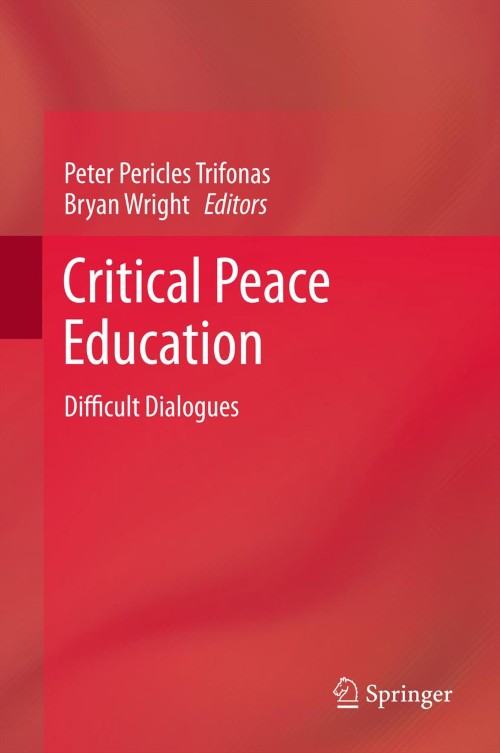
Critical Peace Education [electronic resource] : Difficult Dialogues / edited by Peter Pericles Trifonas, Bryan Wright.
Erişim Adresi
ISBN
9789048139453
Dil Kodu
İngilizce
Yer Numarası
DK/9367
Basım Bildirimi
1st ed. 2013.
Yayın Bilgisi
Dordrecht : Springer Netherlands : Imprint: Springer, 2013.
Fiziksel Niteleme
XX, 172 p. online resource.
İçindekiler Notu
Meditating on the Barricades: Concerns, Cautions and Possibilities for Peace Education for Political Efficacy, Betty Reardon -- The Cold Peace, Michael A. Peters and James Thayer -- Re-imag(e)ining the Cosmopolitical: Deconstructing the Other, Bryan A. Wright -- The Transformative Power of Engaged Thinking for Peace Education, Robert Gould -- Critical Pedagogy and Peace Education: Understanding Violence, Human Rights, and the Historical Project of Militant Peace, Panayota Gounari -- Cosmology, Context, and Peace Education: A View From War Zones, Michael G. Wessells -- Critical Emotional Praxis: Rethinking Teaching and Learning About Trauma and Reconciliation in Schools, Mychalinos Zembylas -- What you see depends where you stand: Critical anticolonial perspectives on Genocide Education addressing the 1994 Rwandan Genocide, Lisa K. Taylor, Marie-Jolie Rwigema, Sollange Ssuter Umwali -- Forging a Constellation, Re-covering A Space of Memory Beyond Reconciliation and Consternation, Mario Di Paolantonio -- The Road to Inclusion: Citizenship and Participatory Action Research as a Means of Redressing “Otherness” Among Homeless Youth, David Alan Goldberg -- Dialogical Hospitality as a Habitat for Peace, Francois Mifsud.
Özet, vb.
Forward-thinking pedagogues as well as peace researchers have, in recent decades, cast a critical eye over teaching content and methodology with the aim of promulgating notions of peace and sustainability in education. This volume gives voice to the reflections of educational theorists and practitioners who have taken on the task of articulating a ‘curriculum of difference’ that gives positive voice to these key concepts in the pedagogical arena. Here, contributors from around the world engage with paradigm-shifting discourses that reexamine questions of ontology and human subjectivity—discourses that advocate interdisciplinarity as well as the reformulation of epistemological boundaries. Deconstructing the origins and limits of human knowledge and learning, the book affords educators the opportunity to identify and express common elements of the subjects taught and studied in educational institutions, elements that facilitate students’ apprehension of peace and sustainability. With penetrating analysis of contemporary issues in the field, this volume introduces a range of fresh theoretical approaches that extend the boundaries of peace education, which is broadly defined as promoting the responsible, equitable and sustainable co-existence of differing human communities. In doing so, the chapters show how we can improve our lives as well as our chances of survival as a species by acknowledging the importance of shared human aspirations that cut across borders, of genuinely listening to alternative voices and opinions, of challenging the ubiquitous, socially constructed historical narratives that define human relations only in terms of power. Charged with vitality and originality, this new publication is a critical examination of issues central to the development and utility of global education.
Konu
Educational sociology.
Sociology of Education.
Sociology of Education.
Diğer Yazarlar
Kurum Adı
Eseri Alıntıla
Referansları kullanmadan önce gözden geçirmeniz ve varsa gerekli düzeltmeleri yapmanız önerilir.
Dijital Kaynak
MARC Görünümü
LEADER 04772nam a22004815i 4500
001 808075
003 TR_AnAIT
005 20260127005354
007 cr nn 008mamaa
008 121009s2013 ne | s |||| 0|eng d
020 |a9789048139453|9978-90-481-3945-3
024 7 |a10.1007/978-90-481-3945-3|2doi
041 |aeng
049 |aTürk Tarih Kurumu Kütüphanesi
050 4|aLC189-214.53
072 7|aJN|2bicssc
072 7|aJHB|2bicssc
072 7|aEDU040000|2bisacsh
072 7|aJN|2thema
072 7|aJHB|2thema
082 04|a306.43|223
090 |aDK/9367
245 10|aCritical Peace Education|h[electronic resource] :|bDifficult Dialogues /|cedited by Peter Pericles Trifonas, Bryan Wright.
250 |a1st ed. 2013.
264 1|aDordrecht :|bSpringer Netherlands :|bImprint: Springer,|c2013.
300 |aXX, 172 p.|bonline resource.
336 |atext|btxt|2rdacontent
337 |acomputer|bc|2rdamedia
338 |aonline resource|bcr|2rdacarrier
347 |atext file|bPDF|2rda
505 0 |aMeditating on the Barricades: Concerns, Cautions and Possibilities for Peace Education for Political Efficacy, Betty Reardon -- The Cold Peace, Michael A. Peters and James Thayer -- Re-imag(e)ining the Cosmopolitical: Deconstructing the Other, Bryan A. Wright -- The Transformative Power of Engaged Thinking for Peace Education, Robert Gould -- Critical Pedagogy and Peace Education: Understanding Violence, Human Rights, and the Historical Project of Militant Peace, Panayota Gounari -- Cosmology, Context, and Peace Education: A View From War Zones, Michael G. Wessells -- Critical Emotional Praxis: Rethinking Teaching and Learning About Trauma and Reconciliation in Schools, Mychalinos Zembylas -- What you see depends where you stand: Critical anticolonial perspectives on Genocide Education addressing the 1994 Rwandan Genocide, Lisa K. Taylor, Marie-Jolie Rwigema, Sollange Ssuter Umwali -- Forging a Constellation, Re-covering A Space of Memory Beyond Reconciliation and Consternation, Mario Di Paolantonio -- The Road to Inclusion: Citizenship and Participatory Action Research as a Means of Redressing “Otherness” Among Homeless Youth, David Alan Goldberg -- Dialogical Hospitality as a Habitat for Peace, Francois Mifsud.
520 |aForward-thinking pedagogues as well as peace researchers have, in recent decades, cast a critical eye over teaching content and methodology with the aim of promulgating notions of peace and sustainability in education. This volume gives voice to the reflections of educational theorists and practitioners who have taken on the task of articulating a ‘curriculum of difference’ that gives positive voice to these key concepts in the pedagogical arena. Here, contributors from around the world engage with paradigm-shifting discourses that reexamine questions of ontology and human subjectivity—discourses that advocate interdisciplinarity as well as the reformulation of epistemological boundaries. Deconstructing the origins and limits of human knowledge and learning, the book affords educators the opportunity to identify and express common elements of the subjects taught and studied in educational institutions, elements that facilitate students’ apprehension of peace and sustainability. With penetrating analysis of contemporary issues in the field, this volume introduces a range of fresh theoretical approaches that extend the boundaries of peace education, which is broadly defined as promoting the responsible, equitable and sustainable co-existence of differing human communities. In doing so, the chapters show how we can improve our lives as well as our chances of survival as a species by acknowledging the importance of shared human aspirations that cut across borders, of genuinely listening to alternative voices and opinions, of challenging the ubiquitous, socially constructed historical narratives that define human relations only in terms of power. Charged with vitality and originality, this new publication is a critical examination of issues central to the development and utility of global education.
650 0|aEducational sociology.
650 14|aSociology of Education.
700 1 |aTrifonas, Peter Pericles.|eeditor.|4edt|4http://id.loc.gov/vocabulary/relators/edt
700 1 |aWright, Bryan.|eeditor.|4edt|4http://id.loc.gov/vocabulary/relators/edt
710 2 |aSpringerLink (Online service)
773 0 |tSpringer Nature eBook
776 08|iPrinted edition:|z9789048139446
776 08|iPrinted edition:|z9789048139637
776 08|iPrinted edition:|z9789401782364
856 40|uhttps://doi.org/10.1007/978-90-481-3945-3
912 |aZDB-2-SHU
912 |aZDB-2-SXED
950 |aHumanities, Social Sciences and Law (SpringerNature-11648)
950 |aEducation (R0) (SpringerNature-43721)
001 808075
003 TR_AnAIT
005 20260127005354
007 cr nn 008mamaa
008 121009s2013 ne | s |||| 0|eng d
020 |a9789048139453|9978-90-481-3945-3
024 7 |a10.1007/978-90-481-3945-3|2doi
041 |aeng
049 |aTürk Tarih Kurumu Kütüphanesi
050 4|aLC189-214.53
072 7|aJN|2bicssc
072 7|aJHB|2bicssc
072 7|aEDU040000|2bisacsh
072 7|aJN|2thema
072 7|aJHB|2thema
082 04|a306.43|223
090 |aDK/9367
245 10|aCritical Peace Education|h[electronic resource] :|bDifficult Dialogues /|cedited by Peter Pericles Trifonas, Bryan Wright.
250 |a1st ed. 2013.
264 1|aDordrecht :|bSpringer Netherlands :|bImprint: Springer,|c2013.
300 |aXX, 172 p.|bonline resource.
336 |atext|btxt|2rdacontent
337 |acomputer|bc|2rdamedia
338 |aonline resource|bcr|2rdacarrier
347 |atext file|bPDF|2rda
505 0 |aMeditating on the Barricades: Concerns, Cautions and Possibilities for Peace Education for Political Efficacy, Betty Reardon -- The Cold Peace, Michael A. Peters and James Thayer -- Re-imag(e)ining the Cosmopolitical: Deconstructing the Other, Bryan A. Wright -- The Transformative Power of Engaged Thinking for Peace Education, Robert Gould -- Critical Pedagogy and Peace Education: Understanding Violence, Human Rights, and the Historical Project of Militant Peace, Panayota Gounari -- Cosmology, Context, and Peace Education: A View From War Zones, Michael G. Wessells -- Critical Emotional Praxis: Rethinking Teaching and Learning About Trauma and Reconciliation in Schools, Mychalinos Zembylas -- What you see depends where you stand: Critical anticolonial perspectives on Genocide Education addressing the 1994 Rwandan Genocide, Lisa K. Taylor, Marie-Jolie Rwigema, Sollange Ssuter Umwali -- Forging a Constellation, Re-covering A Space of Memory Beyond Reconciliation and Consternation, Mario Di Paolantonio -- The Road to Inclusion: Citizenship and Participatory Action Research as a Means of Redressing “Otherness” Among Homeless Youth, David Alan Goldberg -- Dialogical Hospitality as a Habitat for Peace, Francois Mifsud.
520 |aForward-thinking pedagogues as well as peace researchers have, in recent decades, cast a critical eye over teaching content and methodology with the aim of promulgating notions of peace and sustainability in education. This volume gives voice to the reflections of educational theorists and practitioners who have taken on the task of articulating a ‘curriculum of difference’ that gives positive voice to these key concepts in the pedagogical arena. Here, contributors from around the world engage with paradigm-shifting discourses that reexamine questions of ontology and human subjectivity—discourses that advocate interdisciplinarity as well as the reformulation of epistemological boundaries. Deconstructing the origins and limits of human knowledge and learning, the book affords educators the opportunity to identify and express common elements of the subjects taught and studied in educational institutions, elements that facilitate students’ apprehension of peace and sustainability. With penetrating analysis of contemporary issues in the field, this volume introduces a range of fresh theoretical approaches that extend the boundaries of peace education, which is broadly defined as promoting the responsible, equitable and sustainable co-existence of differing human communities. In doing so, the chapters show how we can improve our lives as well as our chances of survival as a species by acknowledging the importance of shared human aspirations that cut across borders, of genuinely listening to alternative voices and opinions, of challenging the ubiquitous, socially constructed historical narratives that define human relations only in terms of power. Charged with vitality and originality, this new publication is a critical examination of issues central to the development and utility of global education.
650 0|aEducational sociology.
650 14|aSociology of Education.
700 1 |aTrifonas, Peter Pericles.|eeditor.|4edt|4http://id.loc.gov/vocabulary/relators/edt
700 1 |aWright, Bryan.|eeditor.|4edt|4http://id.loc.gov/vocabulary/relators/edt
710 2 |aSpringerLink (Online service)
773 0 |tSpringer Nature eBook
776 08|iPrinted edition:|z9789048139446
776 08|iPrinted edition:|z9789048139637
776 08|iPrinted edition:|z9789401782364
856 40|uhttps://doi.org/10.1007/978-90-481-3945-3
912 |aZDB-2-SHU
912 |aZDB-2-SXED
950 |aHumanities, Social Sciences and Law (SpringerNature-11648)
950 |aEducation (R0) (SpringerNature-43721)
Materyaller
Depodan talep edilen materyal sadece kütüphane içerisinde kullanılmaktadır.
Materyal dışarıya ödünç verilmemektedir.
Materyal dışarıya ödünç verilmemektedir.
