

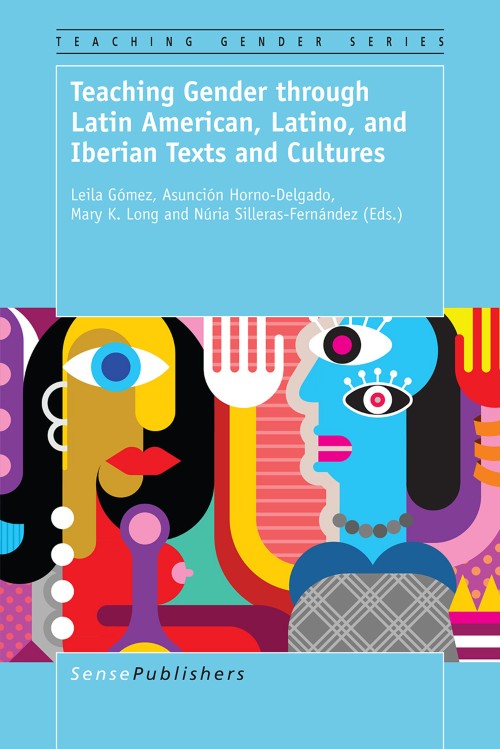
Teaching Gender through Latin American, Latino, and Iberian Texts and Cultures [electronic resource] / edited by Leila Gómez, Asunción Horno-Delgado, Mary K. Long, Núria Silleras-Fernández.
Erişim Adresi
ISBN
9789463000918
Dil Kodu
İngilizce
Yer Numarası
DK/9524
Basım Bildirimi
1st ed. 2015.
Yayın Bilgisi
Rotterdam : SensePublishers : Imprint: SensePublishers, 2015.
Fiziksel Niteleme
XII, 230 p. online resource.
Dizi
Teaching Gender
Özet, vb.
Teaching Gender through Latin American, Latino, and Iberian Texts and Cultures provides a dynamic exploration of the subject of teaching gender and feminism through the fundamental corpus encompassing Latin American, Iberian and Latino authors and cultures from the Middle Ages to the 21st century. The four editors have created a collaborative forum for both experienced and new voices to share multiple theoretical and practical approaches to the topic. The volume is the first to bring so many areas of study and perspectives together and will serve as a tool for reassessing what it means to teach gender in our fields while providing theoretical and concrete examples of pedagogical strategies, case studies relating to in-class experiences, and suggestions for approaching gender issues that readers can experiment with in their own classrooms. The book will engage students and educators around the topic of gender within the fields of Latin American, Latino and Iberian studies, Gender and Women’s studies, Cultural Studies, English, Education, Comparative Literature, Ethnic studies and Language and Culture for Specific Purposes within Higher Education programs. “Teaching Gender through Latin American, Latino, and Iberian Texts and Cultures makes a compelling case for the central role of feminist inquiry in higher education today … Startlingly honest and deeply informed, the essays lead us through classroom experiences in a wide variety of institutional and disciplinary settings. Read together, these essays articulate a vision for twenty-first century feminist pedagogies that embrace a rich diversity of theory, methodology, and modality.” – Lisa Vollendorf, Professor of Spanish and Dean of Humanities and the Arts, San José State University. Author of The Lives of Women: A New History of Inquisitional Spain “What is it like to teach feminism and gender through Latin American, Iberian, and Latino texts? This rich collection of texts … provides a series ofinsightful and exhaustive answers to this question … An essential book for teachers of Latin American, Iberian and Latino/a texts, this volume will also spark new debates among scholars in Gender Studies.” – Mónica Szurmuk, Researcher at the National Scientific and Technical Research Council of Argentina. Author of Mujeres en viaje and co-editor of the Cambridge History of Latin American Women’s Literature.
Konu
Education.
Education.
Education.
Kurum Adı
Eseri Alıntıla
Referansları kullanmadan önce gözden geçirmeniz ve varsa gerekli düzeltmeleri yapmanız önerilir.
Dijital Kaynak
MARC Görünümü
LEADER 04945nam a22004815i 4500
001 808232
003 TR_AnAIT
005 20260127005700
007 cr nn 008mamaa
008 150625s2015 ne | s |||| 0|eng d
020 |a9789463000918|9978-94-6300-091-8
024 7 |a10.1007/978-94-6300-091-8|2doi
041 |aeng
049 |aTürk Tarih Kurumu Kütüphanesi
050 4|aL1-991
072 7|aJN|2bicssc
072 7|aEDU000000|2bisacsh
072 7|aJN|2thema
082 04|a370|223
090 |aDK/9524
245 10|aTeaching Gender through Latin American, Latino, and Iberian Texts and Cultures|h[electronic resource] /|cedited by Leila Gómez, Asunción Horno-Delgado, Mary K. Long, Núria Silleras-Fernández.
250 |a1st ed. 2015.
264 1|aRotterdam :|bSensePublishers :|bImprint: SensePublishers,|c2015.
300 |aXII, 230 p.|bonline resource.
336 |atext|btxt|2rdacontent
337 |acomputer|bc|2rdamedia
338 |aonline resource|bcr|2rdacarrier
347 |atext file|bPDF|2rda
490 1 |aTeaching Gender
520 |aTeaching Gender through Latin American, Latino, and Iberian Texts and Cultures provides a dynamic exploration of the subject of teaching gender and feminism through the fundamental corpus encompassing Latin American, Iberian and Latino authors and cultures from the Middle Ages to the 21st century. The four editors have created a collaborative forum for both experienced and new voices to share multiple theoretical and practical approaches to the topic. The volume is the first to bring so many areas of study and perspectives together and will serve as a tool for reassessing what it means to teach gender in our fields while providing theoretical and concrete examples of pedagogical strategies, case studies relating to in-class experiences, and suggestions for approaching gender issues that readers can experiment with in their own classrooms. The book will engage students and educators around the topic of gender within the fields of Latin American, Latino and Iberian studies, Gender and Women’s studies, Cultural Studies, English, Education, Comparative Literature, Ethnic studies and Language and Culture for Specific Purposes within Higher Education programs. “Teaching Gender through Latin American, Latino, and Iberian Texts and Cultures makes a compelling case for the central role of feminist inquiry in higher education today … Startlingly honest and deeply informed, the essays lead us through classroom experiences in a wide variety of institutional and disciplinary settings. Read together, these essays articulate a vision for twenty-first century feminist pedagogies that embrace a rich diversity of theory, methodology, and modality.” – Lisa Vollendorf, Professor of Spanish and Dean of Humanities and the Arts, San José State University. Author of The Lives of Women: A New History of Inquisitional Spain “What is it like to teach feminism and gender through Latin American, Iberian, and Latino texts? This rich collection of texts … provides a series ofinsightful and exhaustive answers to this question … An essential book for teachers of Latin American, Iberian and Latino/a texts, this volume will also spark new debates among scholars in Gender Studies.” – Mónica Szurmuk, Researcher at the National Scientific and Technical Research Council of Argentina. Author of Mujeres en viaje and co-editor of the Cambridge History of Latin American Women’s Literature.
532 8 |aAccessibility summary: This PDF eBook is produced by a third-party. We have requested that the file be made accessible and compliant with the European Accessibility Act (EAA). However, we have not been able to fully verify its compliance with recognized accessibility standards (such as PDF/UA or WCAG). For detailed accessibility information, please refer to the original publisher’s website. If you require an accessible version of this content, please contact accessibilitysupport@springernature.com. We are committed to improving accessibility and will work with the publisher to meet your needs wherever possible.
532 8 |aPublisher contact for further accessibility information: accessibilitysupport@springernature.com
650 0|aEducation.
650 14|aEducation.
700 1 |aGómez, Leila.|eeditor.|4edt|4http://id.loc.gov/vocabulary/relators/edt
700 1 |aHorno-Delgado, Asunción.|eeditor.|4edt|4http://id.loc.gov/vocabulary/relators/edt
700 1 |aK. Long, Mary.|eeditor.|4edt|4http://id.loc.gov/vocabulary/relators/edt
700 1 |aSilleras-Fernández, Núria.|eeditor.|4edt|4http://id.loc.gov/vocabulary/relators/edt
710 2 |aSpringerLink (Online service)
773 0 |tSpringer Nature eBook
830 0|aTeaching Gender
856 40|uhttps://doi.org/10.1007/978-94-6300-091-8
912 |aZDB-2-SHU
912 |aZDB-2-SXED
950 |aHumanities, Social Sciences and Law (SpringerNature-11648)
950 |aEducation (R0) (SpringerNature-43721)
001 808232
003 TR_AnAIT
005 20260127005700
007 cr nn 008mamaa
008 150625s2015 ne | s |||| 0|eng d
020 |a9789463000918|9978-94-6300-091-8
024 7 |a10.1007/978-94-6300-091-8|2doi
041 |aeng
049 |aTürk Tarih Kurumu Kütüphanesi
050 4|aL1-991
072 7|aJN|2bicssc
072 7|aEDU000000|2bisacsh
072 7|aJN|2thema
082 04|a370|223
090 |aDK/9524
245 10|aTeaching Gender through Latin American, Latino, and Iberian Texts and Cultures|h[electronic resource] /|cedited by Leila Gómez, Asunción Horno-Delgado, Mary K. Long, Núria Silleras-Fernández.
250 |a1st ed. 2015.
264 1|aRotterdam :|bSensePublishers :|bImprint: SensePublishers,|c2015.
300 |aXII, 230 p.|bonline resource.
336 |atext|btxt|2rdacontent
337 |acomputer|bc|2rdamedia
338 |aonline resource|bcr|2rdacarrier
347 |atext file|bPDF|2rda
490 1 |aTeaching Gender
520 |aTeaching Gender through Latin American, Latino, and Iberian Texts and Cultures provides a dynamic exploration of the subject of teaching gender and feminism through the fundamental corpus encompassing Latin American, Iberian and Latino authors and cultures from the Middle Ages to the 21st century. The four editors have created a collaborative forum for both experienced and new voices to share multiple theoretical and practical approaches to the topic. The volume is the first to bring so many areas of study and perspectives together and will serve as a tool for reassessing what it means to teach gender in our fields while providing theoretical and concrete examples of pedagogical strategies, case studies relating to in-class experiences, and suggestions for approaching gender issues that readers can experiment with in their own classrooms. The book will engage students and educators around the topic of gender within the fields of Latin American, Latino and Iberian studies, Gender and Women’s studies, Cultural Studies, English, Education, Comparative Literature, Ethnic studies and Language and Culture for Specific Purposes within Higher Education programs. “Teaching Gender through Latin American, Latino, and Iberian Texts and Cultures makes a compelling case for the central role of feminist inquiry in higher education today … Startlingly honest and deeply informed, the essays lead us through classroom experiences in a wide variety of institutional and disciplinary settings. Read together, these essays articulate a vision for twenty-first century feminist pedagogies that embrace a rich diversity of theory, methodology, and modality.” – Lisa Vollendorf, Professor of Spanish and Dean of Humanities and the Arts, San José State University. Author of The Lives of Women: A New History of Inquisitional Spain “What is it like to teach feminism and gender through Latin American, Iberian, and Latino texts? This rich collection of texts … provides a series ofinsightful and exhaustive answers to this question … An essential book for teachers of Latin American, Iberian and Latino/a texts, this volume will also spark new debates among scholars in Gender Studies.” – Mónica Szurmuk, Researcher at the National Scientific and Technical Research Council of Argentina. Author of Mujeres en viaje and co-editor of the Cambridge History of Latin American Women’s Literature.
532 8 |aAccessibility summary: This PDF eBook is produced by a third-party. We have requested that the file be made accessible and compliant with the European Accessibility Act (EAA). However, we have not been able to fully verify its compliance with recognized accessibility standards (such as PDF/UA or WCAG). For detailed accessibility information, please refer to the original publisher’s website. If you require an accessible version of this content, please contact accessibilitysupport@springernature.com. We are committed to improving accessibility and will work with the publisher to meet your needs wherever possible.
532 8 |aPublisher contact for further accessibility information: accessibilitysupport@springernature.com
650 0|aEducation.
650 14|aEducation.
700 1 |aGómez, Leila.|eeditor.|4edt|4http://id.loc.gov/vocabulary/relators/edt
700 1 |aHorno-Delgado, Asunción.|eeditor.|4edt|4http://id.loc.gov/vocabulary/relators/edt
700 1 |aK. Long, Mary.|eeditor.|4edt|4http://id.loc.gov/vocabulary/relators/edt
700 1 |aSilleras-Fernández, Núria.|eeditor.|4edt|4http://id.loc.gov/vocabulary/relators/edt
710 2 |aSpringerLink (Online service)
773 0 |tSpringer Nature eBook
830 0|aTeaching Gender
856 40|uhttps://doi.org/10.1007/978-94-6300-091-8
912 |aZDB-2-SHU
912 |aZDB-2-SXED
950 |aHumanities, Social Sciences and Law (SpringerNature-11648)
950 |aEducation (R0) (SpringerNature-43721)
Materyaller
Depodan talep edilen materyal sadece kütüphane içerisinde kullanılmaktadır.
Materyal dışarıya ödünç verilmemektedir.
Materyal dışarıya ödünç verilmemektedir.
