

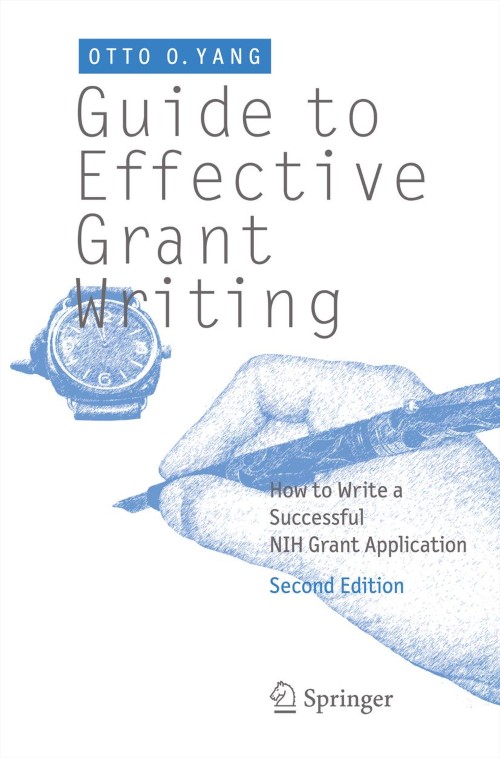
Guide to Effective Grant Writing [electronic resource] : How to Write a Successful NIH Grant Application / by Otto O Yang.
Erişim Adresi
ISBN
9781461415817
Dil Kodu
İngilizce
Yer Numarası
DK/9525
Yazar
Basım Bildirimi
2nd ed. 2012.
Yayın Bilgisi
New York, NY : Springer US : Imprint: Springer, 2012.
Fiziksel Niteleme
XIV, 90 p. online resource.
İçindekiler Notu
Preface To The First Edition -- Preface To The Current Edition.-Overview: Overall Goals When Writing Grant Applications -- Organization And Use This Guide -- Preparing To Write -- Types Of Nih Grants -- Anatomy Of The Nih Grant Application -- Starting To Write: Deciding The Research Aims And Overcoming Writer’s Block -- Organization And Writing Style -- Figures And Tables -- Specific Aims -- Research Strategy: Significance -- Research Strategy: Innovation -- Research Strategy: Approach -- Bibliography And References Cited -- Appendices -- Collaborators And Consultants -- Training And Career Development Grants -- Administrative Sections And Submission Process -- Scoring Process -- Resubmitting An Application -- Non-Nih Grants -- Conclusions -- Appendix: Useful Web Resources -- Index.
Özet, vb.
Getting funding from the NIH for research is one of the most important skills required of all academic researchers, and here, Otto O. Yang offers a fully updated second edition to his straightforward, common-sense Guide to Effective Grant Writing. Yang shares his perspectives from both ends: as a pioneering researcher applying for funding as well as an NIH scientific consultant reviewing grants. He provides the reader with a step-by-step account on how to write a successful grant application, while highlighting common errors. This definitive guide to the NIH review process is a must for any pioneering researcher. From the foreword: The bane of academic existence is grant writing, now more than ever given new economic realities that change an already challenging landscape. Yet without grants most of us would not be able to continue to ply our trade. With this enormous importance of grants, it is surprising that we are so well trained to do research, with so little attention given to grant writing, which is the lifeblood of academic research. Help became available with the first publication of this inspired book from Otto Yang MD, and now in its second edition it becomes even more invaluable. The book will be of great help to anyone writing a grant, even those of us who are more seasoned grant writers. The new edition is organized in similar fashion to the newly modified official NIH grant, readily helping the reader to navigate an entirely new terrain. Moreover, it outlines in very readable fashion specific suggestions for convincing study sections that the ideas being presented are worthy of funding, turning the reviewer into an advocate for the project being proposed. It also points out common errors that make reviewers lose enthusiasm even when the experiments are highly worthy of funding. Frequent use of examples makes the points very clear, and the clear style makes the book an enjoyableread. - Bruce D. Walker, Professor of Medicine and Director of the Partner’s AIDS Research Center at Harvard Medical School; Boston Massachusetts Former Chairman of an NIAID/NIH study section.
Konu
Education.
Teachers __ Training of.
Learning, Psychology of.
Life sciences.
Education.
Teaching and Teacher Education.
Instructional Psychology.
Life Sciences.
Teachers __ Training of.
Learning, Psychology of.
Life sciences.
Education.
Teaching and Teacher Education.
Instructional Psychology.
Life Sciences.
Kurum Adı
Eseri Alıntıla
Referansları kullanmadan önce gözden geçirmeniz ve varsa gerekli düzeltmeleri yapmanız önerilir.
Dijital Kaynak
MARC Görünümü
LEADER 04649nam a22005055i 4500
001 808233
003 TR_AnAIT
005 20260127005701
007 cr nn 008mamaa
008 120611s2012 xxu| s |||| 0|eng d
020 |a9781461415817|9978-1-4614-1581-7
024 7 |a10.1007/978-1-4614-1581-7|2doi
041 |aeng
049 |aTürk Tarih Kurumu Kütüphanesi
050 4|aL1-991
072 7|aJN|2bicssc
072 7|aEDU000000|2bisacsh
072 7|aJN|2thema
082 04|a370|223
090 |aDK/9525
100 1 |aYang, Otto O.|eauthor.|4aut|4http://id.loc.gov/vocabulary/relators/aut
245 10|aGuide to Effective Grant Writing|h[electronic resource] :|bHow to Write a Successful NIH Grant Application /|cby Otto O Yang.
250 |a2nd ed. 2012.
264 1|aNew York, NY :|bSpringer US :|bImprint: Springer,|c2012.
300 |aXIV, 90 p.|bonline resource.
336 |atext|btxt|2rdacontent
337 |acomputer|bc|2rdamedia
338 |aonline resource|bcr|2rdacarrier
347 |atext file|bPDF|2rda
505 0 |aPreface To The First Edition -- Preface To The Current Edition.-Overview: Overall Goals When Writing Grant Applications -- Organization And Use This Guide -- Preparing To Write -- Types Of Nih Grants -- Anatomy Of The Nih Grant Application -- Starting To Write: Deciding The Research Aims And Overcoming Writer’s Block -- Organization And Writing Style -- Figures And Tables -- Specific Aims -- Research Strategy: Significance -- Research Strategy: Innovation -- Research Strategy: Approach -- Bibliography And References Cited -- Appendices -- Collaborators And Consultants -- Training And Career Development Grants -- Administrative Sections And Submission Process -- Scoring Process -- Resubmitting An Application -- Non-Nih Grants -- Conclusions -- Appendix: Useful Web Resources -- Index.
520 |aGetting funding from the NIH for research is one of the most important skills required of all academic researchers, and here, Otto O. Yang offers a fully updated second edition to his straightforward, common-sense Guide to Effective Grant Writing. Yang shares his perspectives from both ends: as a pioneering researcher applying for funding as well as an NIH scientific consultant reviewing grants. He provides the reader with a step-by-step account on how to write a successful grant application, while highlighting common errors. This definitive guide to the NIH review process is a must for any pioneering researcher. From the foreword: The bane of academic existence is grant writing, now more than ever given new economic realities that change an already challenging landscape. Yet without grants most of us would not be able to continue to ply our trade. With this enormous importance of grants, it is surprising that we are so well trained to do research, with so little attention given to grant writing, which is the lifeblood of academic research. Help became available with the first publication of this inspired book from Otto Yang MD, and now in its second edition it becomes even more invaluable. The book will be of great help to anyone writing a grant, even those of us who are more seasoned grant writers. The new edition is organized in similar fashion to the newly modified official NIH grant, readily helping the reader to navigate an entirely new terrain. Moreover, it outlines in very readable fashion specific suggestions for convincing study sections that the ideas being presented are worthy of funding, turning the reviewer into an advocate for the project being proposed. It also points out common errors that make reviewers lose enthusiasm even when the experiments are highly worthy of funding. Frequent use of examples makes the points very clear, and the clear style makes the book an enjoyableread. - Bruce D. Walker, Professor of Medicine and Director of the Partner’s AIDS Research Center at Harvard Medical School; Boston Massachusetts Former Chairman of an NIAID/NIH study section.
650 0|aEducation.
650 0|aTeachers|xTraining of.
650 0|aLearning, Psychology of.
650 0|aLife sciences.
650 14|aEducation.
650 24|aTeaching and Teacher Education.
650 24|aInstructional Psychology.
650 24|aLife Sciences.
710 2 |aSpringerLink (Online service)
773 0 |tSpringer Nature eBook
776 08|iPrinted edition:|z9781461415800
776 08|iPrinted edition:|z9781461415824
856 40|uhttps://doi.org/10.1007/978-1-4614-1581-7
912 |aZDB-2-SHU
912 |aZDB-2-SXED
950 |aHumanities, Social Sciences and Law (SpringerNature-11648)
950 |aEducation (R0) (SpringerNature-43721)
001 808233
003 TR_AnAIT
005 20260127005701
007 cr nn 008mamaa
008 120611s2012 xxu| s |||| 0|eng d
020 |a9781461415817|9978-1-4614-1581-7
024 7 |a10.1007/978-1-4614-1581-7|2doi
041 |aeng
049 |aTürk Tarih Kurumu Kütüphanesi
050 4|aL1-991
072 7|aJN|2bicssc
072 7|aEDU000000|2bisacsh
072 7|aJN|2thema
082 04|a370|223
090 |aDK/9525
100 1 |aYang, Otto O.|eauthor.|4aut|4http://id.loc.gov/vocabulary/relators/aut
245 10|aGuide to Effective Grant Writing|h[electronic resource] :|bHow to Write a Successful NIH Grant Application /|cby Otto O Yang.
250 |a2nd ed. 2012.
264 1|aNew York, NY :|bSpringer US :|bImprint: Springer,|c2012.
300 |aXIV, 90 p.|bonline resource.
336 |atext|btxt|2rdacontent
337 |acomputer|bc|2rdamedia
338 |aonline resource|bcr|2rdacarrier
347 |atext file|bPDF|2rda
505 0 |aPreface To The First Edition -- Preface To The Current Edition.-Overview: Overall Goals When Writing Grant Applications -- Organization And Use This Guide -- Preparing To Write -- Types Of Nih Grants -- Anatomy Of The Nih Grant Application -- Starting To Write: Deciding The Research Aims And Overcoming Writer’s Block -- Organization And Writing Style -- Figures And Tables -- Specific Aims -- Research Strategy: Significance -- Research Strategy: Innovation -- Research Strategy: Approach -- Bibliography And References Cited -- Appendices -- Collaborators And Consultants -- Training And Career Development Grants -- Administrative Sections And Submission Process -- Scoring Process -- Resubmitting An Application -- Non-Nih Grants -- Conclusions -- Appendix: Useful Web Resources -- Index.
520 |aGetting funding from the NIH for research is one of the most important skills required of all academic researchers, and here, Otto O. Yang offers a fully updated second edition to his straightforward, common-sense Guide to Effective Grant Writing. Yang shares his perspectives from both ends: as a pioneering researcher applying for funding as well as an NIH scientific consultant reviewing grants. He provides the reader with a step-by-step account on how to write a successful grant application, while highlighting common errors. This definitive guide to the NIH review process is a must for any pioneering researcher. From the foreword: The bane of academic existence is grant writing, now more than ever given new economic realities that change an already challenging landscape. Yet without grants most of us would not be able to continue to ply our trade. With this enormous importance of grants, it is surprising that we are so well trained to do research, with so little attention given to grant writing, which is the lifeblood of academic research. Help became available with the first publication of this inspired book from Otto Yang MD, and now in its second edition it becomes even more invaluable. The book will be of great help to anyone writing a grant, even those of us who are more seasoned grant writers. The new edition is organized in similar fashion to the newly modified official NIH grant, readily helping the reader to navigate an entirely new terrain. Moreover, it outlines in very readable fashion specific suggestions for convincing study sections that the ideas being presented are worthy of funding, turning the reviewer into an advocate for the project being proposed. It also points out common errors that make reviewers lose enthusiasm even when the experiments are highly worthy of funding. Frequent use of examples makes the points very clear, and the clear style makes the book an enjoyableread. - Bruce D. Walker, Professor of Medicine and Director of the Partner’s AIDS Research Center at Harvard Medical School; Boston Massachusetts Former Chairman of an NIAID/NIH study section.
650 0|aEducation.
650 0|aTeachers|xTraining of.
650 0|aLearning, Psychology of.
650 0|aLife sciences.
650 14|aEducation.
650 24|aTeaching and Teacher Education.
650 24|aInstructional Psychology.
650 24|aLife Sciences.
710 2 |aSpringerLink (Online service)
773 0 |tSpringer Nature eBook
776 08|iPrinted edition:|z9781461415800
776 08|iPrinted edition:|z9781461415824
856 40|uhttps://doi.org/10.1007/978-1-4614-1581-7
912 |aZDB-2-SHU
912 |aZDB-2-SXED
950 |aHumanities, Social Sciences and Law (SpringerNature-11648)
950 |aEducation (R0) (SpringerNature-43721)
Materyaller
Depodan talep edilen materyal sadece kütüphane içerisinde kullanılmaktadır.
Materyal dışarıya ödünç verilmemektedir.
Materyal dışarıya ödünç verilmemektedir.
