LEADER 03893nam a22004335i 4500
001 808263
003 TR_AnAIT
005 20260131032049
007 cr nn 008mamaa
008 130220s2013 ne | s |||| 0|eng d
020 |a9789462091580|9978-94-6209-158-0
024 7 |a10.1007/978-94-6209-158-0|2doi
041 |aeng
049 |aTürk Tarih Kurumu Kütüphanesi
050 4|aL1-991
072 7|aJN|2bicssc
072 7|aEDU000000|2bisacsh
072 7|aJN|2thema
082 04|a370|223
090 |aDK/9552
100 1 |aRisku, Michael.|eauthor.|4aut|4http://id.loc.gov/vocabulary/relators/aut
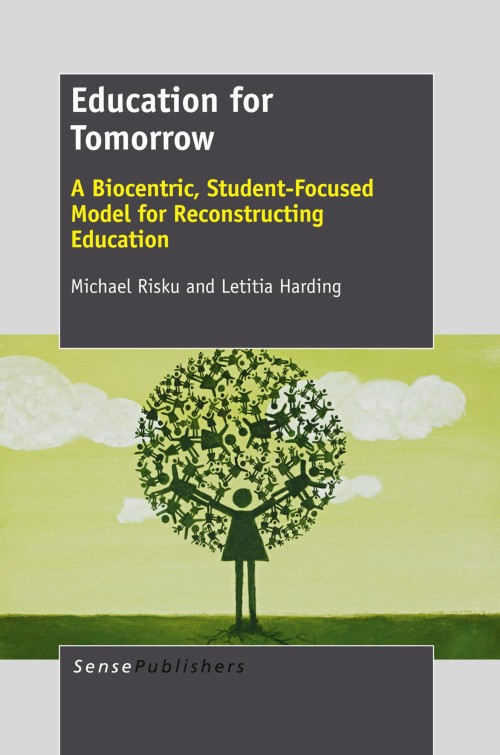
245 10|aEducation for Tomorrow|h[electronic resource] :|bA Biocentric, Student-Focused Model for Reconstructing Education /|cby Michael Risku, Letitia Harding.
250 |a1st ed. 2013.
264 1|aRotterdam :|bSensePublishers :|bImprint: SensePublishers,|c2013.
300 |aXII, 214 p.|bonline resource.
336 |atext|btxt|2rdacontent
337 |acomputer|bc|2rdamedia
338 |aonline resource|bcr|2rdacarrier
347 |atext file|bPDF|2rda
520 |aEducation for Tomorrow A Biocentric, Student-Focused Approach to Education Reform Michael Risku University of the Incarnate Word, USA and Letitia Harding University of the Incarnate Word, USA There are many books on the market which discuss indigenous ways of knowing, and bemoan western society’s seeming lack of interest in anything other than scientific fact-based knowledge. Equally plentiful are the writings of critical theorists who consider today’s public education system to be divisive, and manipulated by those in power to ensure that their children have the educational advantages needed to maintain the elite hierarchical status quo. Education for Tomorrow is unique in that it brings both of these approaches together first by examining the ways that indigenous people and women of all cultures acquire and pass on knowledge, and the deleterious effects that enforced Eurocentric systems have had on that process. The authors then turn to public schools to explore the influences, both good and bad, that today’s programs have on the distribution of opportunities afforded to all children in the United States. Finally, they offer suggestions for a revolutionary education system which highlights the need for all students to have the encouragement and freedom to look critically and rationally at their lives and at their relationship with the natural world. This can be achieved by looking back to the pedagogical methods of our indigenous ancestors, and forward to a time when all children, regardless of ethnic or socio-economic heritage, are taught in such a way that every aspect of their lives is addressed, nurtured, valued, and enhanced.
532 8 |aAccessibility summary: This PDF eBook is produced by a third-party. We have requested that the file be made accessible and compliant with the European Accessibility Act (EAA). However, we have not been able to fully verify its compliance with recognized accessibility standards (such as PDF/UA or WCAG). For detailed accessibility information, please refer to the original publisher’s website. If you require an accessible version of this content, please contact accessibilitysupport@springernature.com. We are committed to improving accessibility and will work with the publisher to meet your needs wherever possible.
532 8 |aPublisher contact for further accessibility information: accessibilitysupport@springernature.com
650 0|aEducation.
650 14|aEducation.
700 1 |aHarding, Letitia.|eauthor.|4aut|4http://id.loc.gov/vocabulary/relators/aut
710 2 |aSpringerLink (Online service)
773 0 |tSpringer Nature eBook
856 40|uhttps://doi.org/10.1007/978-94-6209-158-0
912 |aZDB-2-SHU
912 |aZDB-2-SXED
950 |aHumanities, Social Sciences and Law (SpringerNature-11648)
950 |aEducation (R0) (SpringerNature-43721)