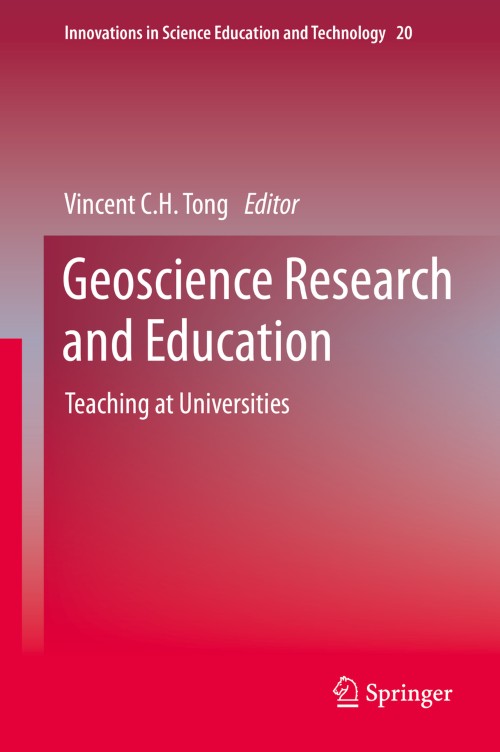
Geoscience Research and Education [electronic resource] : Teaching at Universities / edited by Vincent C. H. Tong.
Erişim Adresi
ISBN
9789400769465
Dil Kodu
İngilizce
Yer Numarası
DK/9609
Basım Bildirimi
1st ed. 2014.
Yayın Bilgisi
Dordrecht : Springer Netherlands : Imprint: Springer, 2014.
Fiziksel Niteleme
IX, 304 p. 69 illus., 60 illus. in color. online resource.
Dizi
Innovations in Science Education and Technology, 2213-2236 ; 20
İçindekiler Notu
PART I: INTRODUCTION -- 1. The context -- From research-implicit to research-enhanced teaching: A geoscience perspective, Vincent C. H. Tong -- Teaching and research in the contemporary university, Simon Marginson -- PART II: RESEARCH-TEACHING NEXUS IN GEOSCIENCE -- 2. Perspectives -- The challenge of combining research and teaching: A young geoscientist’s perspective, Laura J. Cobden -- Incorporating research into teaching geosciences: the Masters student’s perspective, Barbara McNutt -- Teaching on the High Seas: How Field Research Enhances Teaching at All Levels, Ken C. Macdonald -- 3. Promoting research-enhanced teaching -- Curricula and departmental strategies to link teaching and geoscience research, Alan Jenkins -- The Role of scholarly publication in geocognition and discipline-based geoscience education research, Julie Libarkin -- Geologic Displays as Science and Art, Marjorie A. Chan -- Teaching Geoscience Research to Adult Undergraduates and Distance Learners, Hilary Downes -- Geoscience Internships in the Oil and Gas Industry: A Winning Proposition for both Students and Employers, Rolf V. Ackermann and Lucy MacGregor -- PART III: PEDAGOGICAL EXAMPLES -- 4. Use of technology -- Integration of Enquiry Fossil Research Approaches and Students’ Local Environments within Online Geoscience Classrooms, Renee M. Clary and James H. Wandersee -- Embedding Research Practice Activities into Earth and Planetary Sciences Courses Through the Use of Remotely Operable Analytical Instrumentation, Jeffrey G. Ryan -- Using Interactive Virtual Field Guides and Linked Data in Geoscience Teaching and Learning, Tim Stott, Kate Litherland, Patrick Carmichael and Anne-Marie Nuttall -- GEOverse – An undergraduate research journal: ResearchDissemination within and beyond the Curriculum, Helen Walkington -- Towards technology- and research-enhanced education (TREE): Electronic feedback as a teaching tool in geoscience, Vincent C. H. Tong -- 5. Programme design -- Introducing university students to authentic, hands-on undergraduate geoscience research in entry-level coursework, Laura Guertin -- Engaging first-year students in team-oriented research: The Terrascope learning community, S. A. Bowring, A. W. Epstein and C. F. Harvey -- Students’ final projects: an opportunity to link research and teaching, Dolores Pereira and Luis Neves -- Teaching Environmental Sciences in an International and Interdisciplinary Framework: from Arid to Alpine Ecosystems in NE Spain, D. Badía, N. Bayfield, A. Cernusca, F. Fillat and D. Gómez -- The Role of concept inventories in course assessment, Julie Libarkin, Sarah E. Jardeleza and Teresa L. McElhinny.
Özet, vb.
Focusing on geoscience, this book applies a uniquely cross-disciplinary perspective to its examination of the relationship between scientific research and teaching at universities. Contributions show how the use of technology and innovative pedagogical design allows students at different stages of their university studies to develop skills and experience in geoscience research. The book offers wide-ranging insight from academics in geoscience, science education and higher education policy and pedagogy, as well as from students and industry experts. The opening section sets the context, with a chapter on teaching and research in the contemporary university by a world-leading academic in higher education, and an essay by the editor on the case of moving from research-implicit to research-enhanced teaching. Part Two addresses the research-teaching nexus in geoscience, offering chapters entitled The Challenge of Combining Research and Teaching: A Young Geoscientist’s Perspective; Teaching on the High Seas: How Field Research Enhances Teaching at All Levels; Curricula and Departmental Strategies to Link Teaching and Geoscience Research; and Geoscience Internships in the Oil and Gas Industry, among others. In Part Three, the use of technology is discussed in chapters such as Using Interactive Virtual Field Guides and Linked Data in Geoscience Teaching and Learning; and Towards Technology- and Research-enhanced Education (TREE): Electronic Feedback as a Teaching Tool in Geoscience. The Program Design section includes chapters on Introducing University Students to Authentic, Hands-on Undergraduate Geoscience Research, and the opportunity to link research and teaching in students’ final projects and more. Geoscience Research and Education: Teaching at Universitiesis a useful resource for understanding the research-teaching nexus and how it has been implemented in different types of universities and in different countries. Science academics seeking to integrate research into teaching will find the book highly relevant to their work. The emphasis on using technology as a means to link research and teaching will be of great interest and practical benefit to learning technologists, science educators and university policymakers. Together with the companion volume Geoscience Research and Outreach: Schools and Public Engagement, this book showcases the key role that geoscience research plays in a wide spectrum of educational settings.
Konu
Science __ Study and teaching.
Earth sciences.
Educational technology.
Education, Higher.
Science Education.
Earth Sciences.
Digital Education and Educational Technology.
Higher Education.
Earth sciences.
Educational technology.
Education, Higher.
Science Education.
Earth Sciences.
Digital Education and Educational Technology.
Higher Education.
Diğer Yazarlar
Kurum Adı

Eseri Alıntıla
Referansları kullanmadan önce gözden geçirmeniz ve varsa gerekli düzeltmeleri yapmanız önerilir.
Dijital Kaynak
MARC Görünümü
LEADER 07178nam a22005655i 4500
001 808320
003 TR_AnAIT
005 20260131031807
007 cr nn 008mamaa
008 130911s2014 ne | s |||| 0|eng d
020 |a9789400769465|9978-94-007-6946-5
024 7 |a10.1007/978-94-007-6946-5|2doi
041 |aeng
049 |aTürk Tarih Kurumu Kütüphanesi
050 4|aQ181-183.4
072 7|aJNU|2bicssc
072 7|aPD|2bicssc
072 7|aSCI063000|2bisacsh
072 7|aJNU|2thema
072 7|aPD|2thema
082 04|a507.1|223
090 |aDK/9609
245 10|aGeoscience Research and Education|h[electronic resource] :|bTeaching at Universities /|cedited by Vincent C. H. Tong.
250 |a1st ed. 2014.
264 1|aDordrecht :|bSpringer Netherlands :|bImprint: Springer,|c2014.
300 |aIX, 304 p. 69 illus., 60 illus. in color.|bonline resource.
336 |atext|btxt|2rdacontent
337 |acomputer|bc|2rdamedia
338 |aonline resource|bcr|2rdacarrier
347 |atext file|bPDF|2rda
490 1 |aInnovations in Science Education and Technology,|x2213-2236 ;|v20
505 0 |aPART I: INTRODUCTION -- 1. The context -- From research-implicit to research-enhanced teaching: A geoscience perspective, Vincent C. H. Tong -- Teaching and research in the contemporary university, Simon Marginson -- PART II: RESEARCH-TEACHING NEXUS IN GEOSCIENCE -- 2. Perspectives -- The challenge of combining research and teaching: A young geoscientist’s perspective, Laura J. Cobden -- Incorporating research into teaching geosciences: the Masters student’s perspective, Barbara McNutt -- Teaching on the High Seas: How Field Research Enhances Teaching at All Levels, Ken C. Macdonald -- 3. Promoting research-enhanced teaching -- Curricula and departmental strategies to link teaching and geoscience research, Alan Jenkins -- The Role of scholarly publication in geocognition and discipline-based geoscience education research, Julie Libarkin -- Geologic Displays as Science and Art, Marjorie A. Chan -- Teaching Geoscience Research to Adult Undergraduates and Distance Learners, Hilary Downes -- Geoscience Internships in the Oil and Gas Industry: A Winning Proposition for both Students and Employers, Rolf V. Ackermann and Lucy MacGregor -- PART III: PEDAGOGICAL EXAMPLES -- 4. Use of technology -- Integration of Enquiry Fossil Research Approaches and Students’ Local Environments within Online Geoscience Classrooms, Renee M. Clary and James H. Wandersee -- Embedding Research Practice Activities into Earth and Planetary Sciences Courses Through the Use of Remotely Operable Analytical Instrumentation, Jeffrey G. Ryan -- Using Interactive Virtual Field Guides and Linked Data in Geoscience Teaching and Learning, Tim Stott, Kate Litherland, Patrick Carmichael and Anne-Marie Nuttall -- GEOverse – An undergraduate research journal: ResearchDissemination within and beyond the Curriculum, Helen Walkington -- Towards technology- and research-enhanced education (TREE): Electronic feedback as a teaching tool in geoscience, Vincent C. H. Tong -- 5. Programme design -- Introducing university students to authentic, hands-on undergraduate geoscience research in entry-level coursework, Laura Guertin -- Engaging first-year students in team-oriented research: The Terrascope learning community, S. A. Bowring, A. W. Epstein and C. F. Harvey -- Students’ final projects: an opportunity to link research and teaching, Dolores Pereira and Luis Neves -- Teaching Environmental Sciences in an International and Interdisciplinary Framework: from Arid to Alpine Ecosystems in NE Spain, D. Badía, N. Bayfield, A. Cernusca, F. Fillat and D. Gómez -- The Role of concept inventories in course assessment, Julie Libarkin, Sarah E. Jardeleza and Teresa L. McElhinny.
520 |aFocusing on geoscience, this book applies a uniquely cross-disciplinary perspective to its examination of the relationship between scientific research and teaching at universities. Contributions show how the use of technology and innovative pedagogical design allows students at different stages of their university studies to develop skills and experience in geoscience research. The book offers wide-ranging insight from academics in geoscience, science education and higher education policy and pedagogy, as well as from students and industry experts. The opening section sets the context, with a chapter on teaching and research in the contemporary university by a world-leading academic in higher education, and an essay by the editor on the case of moving from research-implicit to research-enhanced teaching. Part Two addresses the research-teaching nexus in geoscience, offering chapters entitled The Challenge of Combining Research and Teaching: A Young Geoscientist’s Perspective; Teaching on the High Seas: How Field Research Enhances Teaching at All Levels; Curricula and Departmental Strategies to Link Teaching and Geoscience Research; and Geoscience Internships in the Oil and Gas Industry, among others. In Part Three, the use of technology is discussed in chapters such as Using Interactive Virtual Field Guides and Linked Data in Geoscience Teaching and Learning; and Towards Technology- and Research-enhanced Education (TREE): Electronic Feedback as a Teaching Tool in Geoscience. The Program Design section includes chapters on Introducing University Students to Authentic, Hands-on Undergraduate Geoscience Research, and the opportunity to link research and teaching in students’ final projects and more. Geoscience Research and Education: Teaching at Universitiesis a useful resource for understanding the research-teaching nexus and how it has been implemented in different types of universities and in different countries. Science academics seeking to integrate research into teaching will find the book highly relevant to their work. The emphasis on using technology as a means to link research and teaching will be of great interest and practical benefit to learning technologists, science educators and university policymakers. Together with the companion volume Geoscience Research and Outreach: Schools and Public Engagement, this book showcases the key role that geoscience research plays in a wide spectrum of educational settings.
650 0|aScience|xStudy and teaching.
650 0|aEarth sciences.
650 0|aEducational technology.
650 0|aEducation, Higher.
650 14|aScience Education.
650 24|aEarth Sciences.
650 24|aDigital Education and Educational Technology.
650 24|aHigher Education.
700 1 |aTong, Vincent C. H.|eeditor.|4edt|4http://id.loc.gov/vocabulary/relators/edt
710 2 |aSpringerLink (Online service)
773 0 |tSpringer Nature eBook
776 08|iPrinted edition:|z9789400769458
776 08|iPrinted edition:|z9789400769472
776 08|iPrinted edition:|z9789402406665
830 0|aInnovations in Science Education and Technology,|x2213-2236 ;|v20
856 40|uhttps://doi.org/10.1007/978-94-007-6946-5
912 |aZDB-2-SHU
912 |aZDB-2-SXED
950 |aHumanities, Social Sciences and Law (SpringerNature-11648)
950 |aEducation (R0) (SpringerNature-43721)
001 808320
003 TR_AnAIT
005 20260131031807
007 cr nn 008mamaa
008 130911s2014 ne | s |||| 0|eng d
020 |a9789400769465|9978-94-007-6946-5
024 7 |a10.1007/978-94-007-6946-5|2doi
041 |aeng
049 |aTürk Tarih Kurumu Kütüphanesi
050 4|aQ181-183.4
072 7|aJNU|2bicssc
072 7|aPD|2bicssc
072 7|aSCI063000|2bisacsh
072 7|aJNU|2thema
072 7|aPD|2thema
082 04|a507.1|223
090 |aDK/9609
245 10|aGeoscience Research and Education|h[electronic resource] :|bTeaching at Universities /|cedited by Vincent C. H. Tong.
250 |a1st ed. 2014.
264 1|aDordrecht :|bSpringer Netherlands :|bImprint: Springer,|c2014.
300 |aIX, 304 p. 69 illus., 60 illus. in color.|bonline resource.
336 |atext|btxt|2rdacontent
337 |acomputer|bc|2rdamedia
338 |aonline resource|bcr|2rdacarrier
347 |atext file|bPDF|2rda
490 1 |aInnovations in Science Education and Technology,|x2213-2236 ;|v20
505 0 |aPART I: INTRODUCTION -- 1. The context -- From research-implicit to research-enhanced teaching: A geoscience perspective, Vincent C. H. Tong -- Teaching and research in the contemporary university, Simon Marginson -- PART II: RESEARCH-TEACHING NEXUS IN GEOSCIENCE -- 2. Perspectives -- The challenge of combining research and teaching: A young geoscientist’s perspective, Laura J. Cobden -- Incorporating research into teaching geosciences: the Masters student’s perspective, Barbara McNutt -- Teaching on the High Seas: How Field Research Enhances Teaching at All Levels, Ken C. Macdonald -- 3. Promoting research-enhanced teaching -- Curricula and departmental strategies to link teaching and geoscience research, Alan Jenkins -- The Role of scholarly publication in geocognition and discipline-based geoscience education research, Julie Libarkin -- Geologic Displays as Science and Art, Marjorie A. Chan -- Teaching Geoscience Research to Adult Undergraduates and Distance Learners, Hilary Downes -- Geoscience Internships in the Oil and Gas Industry: A Winning Proposition for both Students and Employers, Rolf V. Ackermann and Lucy MacGregor -- PART III: PEDAGOGICAL EXAMPLES -- 4. Use of technology -- Integration of Enquiry Fossil Research Approaches and Students’ Local Environments within Online Geoscience Classrooms, Renee M. Clary and James H. Wandersee -- Embedding Research Practice Activities into Earth and Planetary Sciences Courses Through the Use of Remotely Operable Analytical Instrumentation, Jeffrey G. Ryan -- Using Interactive Virtual Field Guides and Linked Data in Geoscience Teaching and Learning, Tim Stott, Kate Litherland, Patrick Carmichael and Anne-Marie Nuttall -- GEOverse – An undergraduate research journal: ResearchDissemination within and beyond the Curriculum, Helen Walkington -- Towards technology- and research-enhanced education (TREE): Electronic feedback as a teaching tool in geoscience, Vincent C. H. Tong -- 5. Programme design -- Introducing university students to authentic, hands-on undergraduate geoscience research in entry-level coursework, Laura Guertin -- Engaging first-year students in team-oriented research: The Terrascope learning community, S. A. Bowring, A. W. Epstein and C. F. Harvey -- Students’ final projects: an opportunity to link research and teaching, Dolores Pereira and Luis Neves -- Teaching Environmental Sciences in an International and Interdisciplinary Framework: from Arid to Alpine Ecosystems in NE Spain, D. Badía, N. Bayfield, A. Cernusca, F. Fillat and D. Gómez -- The Role of concept inventories in course assessment, Julie Libarkin, Sarah E. Jardeleza and Teresa L. McElhinny.
520 |aFocusing on geoscience, this book applies a uniquely cross-disciplinary perspective to its examination of the relationship between scientific research and teaching at universities. Contributions show how the use of technology and innovative pedagogical design allows students at different stages of their university studies to develop skills and experience in geoscience research. The book offers wide-ranging insight from academics in geoscience, science education and higher education policy and pedagogy, as well as from students and industry experts. The opening section sets the context, with a chapter on teaching and research in the contemporary university by a world-leading academic in higher education, and an essay by the editor on the case of moving from research-implicit to research-enhanced teaching. Part Two addresses the research-teaching nexus in geoscience, offering chapters entitled The Challenge of Combining Research and Teaching: A Young Geoscientist’s Perspective; Teaching on the High Seas: How Field Research Enhances Teaching at All Levels; Curricula and Departmental Strategies to Link Teaching and Geoscience Research; and Geoscience Internships in the Oil and Gas Industry, among others. In Part Three, the use of technology is discussed in chapters such as Using Interactive Virtual Field Guides and Linked Data in Geoscience Teaching and Learning; and Towards Technology- and Research-enhanced Education (TREE): Electronic Feedback as a Teaching Tool in Geoscience. The Program Design section includes chapters on Introducing University Students to Authentic, Hands-on Undergraduate Geoscience Research, and the opportunity to link research and teaching in students’ final projects and more. Geoscience Research and Education: Teaching at Universitiesis a useful resource for understanding the research-teaching nexus and how it has been implemented in different types of universities and in different countries. Science academics seeking to integrate research into teaching will find the book highly relevant to their work. The emphasis on using technology as a means to link research and teaching will be of great interest and practical benefit to learning technologists, science educators and university policymakers. Together with the companion volume Geoscience Research and Outreach: Schools and Public Engagement, this book showcases the key role that geoscience research plays in a wide spectrum of educational settings.
650 0|aScience|xStudy and teaching.
650 0|aEarth sciences.
650 0|aEducational technology.
650 0|aEducation, Higher.
650 14|aScience Education.
650 24|aEarth Sciences.
650 24|aDigital Education and Educational Technology.
650 24|aHigher Education.
700 1 |aTong, Vincent C. H.|eeditor.|4edt|4http://id.loc.gov/vocabulary/relators/edt
710 2 |aSpringerLink (Online service)
773 0 |tSpringer Nature eBook
776 08|iPrinted edition:|z9789400769458
776 08|iPrinted edition:|z9789400769472
776 08|iPrinted edition:|z9789402406665
830 0|aInnovations in Science Education and Technology,|x2213-2236 ;|v20
856 40|uhttps://doi.org/10.1007/978-94-007-6946-5
912 |aZDB-2-SHU
912 |aZDB-2-SXED
950 |aHumanities, Social Sciences and Law (SpringerNature-11648)
950 |aEducation (R0) (SpringerNature-43721)
Materyaller
Depodan talep edilen materyal sadece kütüphane içerisinde kullanılmaktadır.
Materyal dışarıya ödünç verilmemektedir.
