LEADER 04227nam a22004935i 4500
001 808325
003 TR_AnAIT
005 20260131031745
007 cr nn 008mamaa
008 150227s2015 ne | s |||| 0|eng d
020 |a9789462099890|9978-94-6209-989-0
024 7 |a10.1007/978-94-6209-989-0|2doi
041 |aeng
049 |aTürk Tarih Kurumu Kütüphanesi
050 4|aL1-991
072 7|aJN|2bicssc
072 7|aEDU000000|2bisacsh
072 7|aJN|2thema
082 04|a370|223
090 |aDK/9614
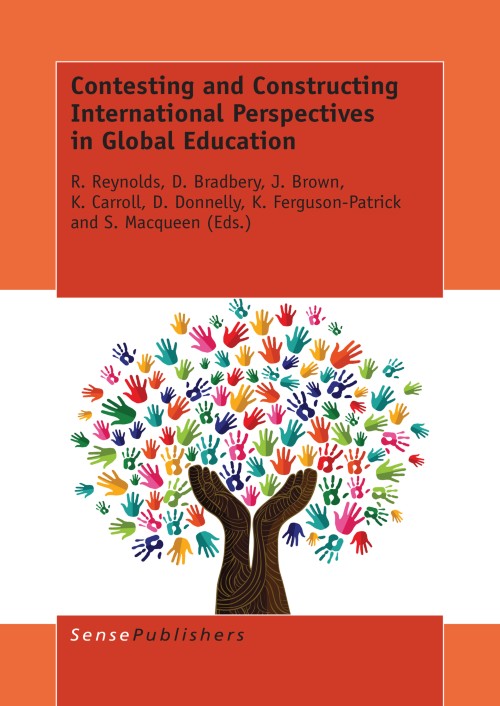
245 10|aContesting and Constructing International Perspectives in Global Education|h[electronic resource] /|cedited by R. Reynolds, D. Bradbery, J. Brown, K. Carroll, D. Donnelly, K. Ferguson-Patrick, S. Macqueen.
250 |a1st ed. 2015.
264 1|aRotterdam :|bSensePublishers :|bImprint: SensePublishers,|c2015.
300 |aVIII, 230 p.|bonline resource.
336 |atext|btxt|2rdacontent
337 |acomputer|bc|2rdamedia
338 |aonline resource|bcr|2rdacarrier
347 |atext file|bPDF|2rda
520 |aThis volume addresses the need for an international perspective on global education, and provides alternate voices to the theme of global education. The editors asked international educators in different contexts to indicate how their own experience of global education addresses the broad and contested concepts associated with this notion. Following the lead of the internationally acknowledged authors from North America, Europe, Africa, Australia, and Asia, perspectives were provided on a wide variety of contexts including tertiary education, and teacher education; various pedagogies for global education, including digital pedagogies; and curriculum development at school, tertiary and community levels. Contesting and Constructing International Perspectives in Global Education explores the tensions inherent in discussions of global education from a number of facets including spatial, pedagogical, temporal, social and cultural; and provides critical, descriptive and values-laden interpretations. The book is divided into five sections, “Temporal and Spatial Views of Global Education”; “Telling National Stories of Global Education”; “Empowering Citizens for Global Education”; “Deconstructing Global Education”; and “Transforming Curricula for Global Education”. It is envisaged as a starting point for a stronger international conception of global education and a way to build a conversation for the future of global education in a neo-liberal and less internationally confident time.
532 8 |aAccessibility summary: This PDF eBook is produced by a third-party. We have requested that the file be made accessible and compliant with the European Accessibility Act (EAA). However, we have not been able to fully verify its compliance with recognized accessibility standards (such as PDF/UA or WCAG). For detailed accessibility information, please refer to the original publisher’s website. If you require an accessible version of this content, please contact accessibilitysupport@springernature.com. We are committed to improving accessibility and will work with the publisher to meet your needs wherever possible.
532 8 |aPublisher contact for further accessibility information: accessibilitysupport@springernature.com
650 0|aEducation.
650 14|aEducation.
700 1 |aReynolds, R.|eeditor.|4edt|4http://id.loc.gov/vocabulary/relators/edt
700 1 |aBradbery, D.|eeditor.|4edt|4http://id.loc.gov/vocabulary/relators/edt
700 1 |aBrown, J.|eeditor.|4edt|4http://id.loc.gov/vocabulary/relators/edt
700 1 |aCarroll, K.|eeditor.|4edt|4http://id.loc.gov/vocabulary/relators/edt
700 1 |aDonnelly, D.|eeditor.|4edt|4http://id.loc.gov/vocabulary/relators/edt
700 1 |aFerguson-Patrick, K.|eeditor.|4edt|4http://id.loc.gov/vocabulary/relators/edt
700 1 |aMacqueen, S.|eeditor.|4edt|4http://id.loc.gov/vocabulary/relators/edt
710 2 |aSpringerLink (Online service)
773 0 |tSpringer Nature eBook
856 40|uhttps://doi.org/10.1007/978-94-6209-989-0
912 |aZDB-2-SHU
912 |aZDB-2-SXED
950 |aHumanities, Social Sciences and Law (SpringerNature-11648)
950 |aEducation (R0) (SpringerNature-43721)