

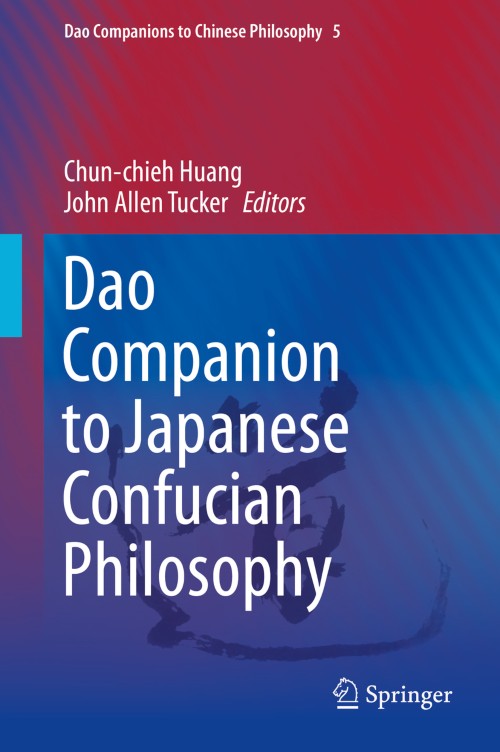
Dao Companion to Japanese Confucian Philosophy [electronic resource] / edited by Chun-chieh Huang, John Allen Tucker.
Erişim Adresi
ISBN
9789048129218
Dil Kodu
İngilizce
Yer Numarası
DK/9683
Basım Bildirimi
1st ed. 2014.
Yayın Bilgisi
Dordrecht : Springer Netherlands : Imprint: Springer, 2014.
Fiziksel Niteleme
XI, 429 p. online resource.
Dizi
Dao Companions to Chinese Philosophy, 2542-8780 ; 5
İçindekiler Notu
Chapter 1: Introduction; Huang Chun-chieh and John Allen Tucker -- Chapter 2: The Meanings of Words and Confucian Political Philosophy: A Study of Matsunaga Sekigo’s Ethics; John Allen Tucker -- Chapter 3: Spirits, Gods, and Heaven in Confucian Thought; W. J. Boot -- Chapter 4: Making Destiny in the Kingdom of Ryuku; Gregory Smits -- Chapter 5: The Somaticization of Learning in Edo Confucianism: The Rejection of Mind-Body Dualism in the Thought of Kaibara Ekken; Tsujimoto Masashi (translated by Barry D. Steben) -- Chapter 6: Ogyū Sorai: Confucian Conservative Reformer: From Journey to Kai to Discourse on Government; Olof G. Lidin -- Chapter 7: The Philosophical Moment Between Ogyū Sorai and Kaiho Seiryō: Indigenous Modernity in the Political Theories of Eighteenth-Century Japan? Olivier Ansart -- Chapter 8: Human Nature and the Way in the Philosophy of Dazai Shundai; Peter Flueckiger -- Chapter 9: Kokugaku Critiques of Confucianism and Chinese Culture; Peter Nosco -- Chapter 10: Saints as Sinners: Andō Shōeki’s Back-to-Nature Critique of the Saints, Confucian and Otherwise; Jacques Joly -- Chapter 11: Moral and Philosophical Idealism in Late-Edo Confucian Thought: Ōshio Chūsai and the Working Out of his “Great Aspiration”; Barry D. Steben -- Chapter 12: Divination and Meiji Politics: A Reading of Takashima Kaemon’s Judgment on the Yijing; Wai-Ming Ng -- Chapter 13: “Orthodoxy” and “Legitimacy” in the Yamazaki Ansai School; Maruyama Masao (translated by Barry D. Steben) -- Chapter 14: Zhu Xi and “Zhu Xi-ism:” Toward a Critical Perspective on the Ansai School; Koyasu Nobukuni (translated by Barry D. Steben).
Özet, vb.
This volume features in-depth philosophical analyses of major Japanese Confucian philosophers as well as themes and topics addressed in their writings. Its main historical focus is the early-modern period (1600-1868), when much original Confucian philosophizing occurred. Written by scholars from the United States, Canada, Europe, Australia, Japan, and China and eclectic in methodology and disciplinary approach, this anthology seeks to advance new multidimensional studies of Japanese Confucian philosophy for English language readers. It presents essays that focus on Japanese Confucianism, while including topics related to Buddhism, Shintō, Nativism, and even Andō Shōeki 安藤昌益 (1703-1762), one of the most vehement critics of Confucianism in all of East Asia. The book builds on the premise that Japanese Confucian philosophy consists in the ongoing engagement in critical, self-reflective discussions of and speculative theorizing about ethics, epistemology, metaphysics, political theory, and spiritual problems, as well as aesthetics, cosmology, and ontology.
Konu
Philosophy, Modern.
Religion.
Religion __ Philosophy.
Ethnology.
Culture.
Philosophical Traditions.
Religion.
Philosophy of Religion.
Regional Cultural Studies.
Religion.
Religion __ Philosophy.
Ethnology.
Culture.
Philosophical Traditions.
Religion.
Philosophy of Religion.
Regional Cultural Studies.
Diğer Yazarlar
Kurum Adı
Eseri Alıntıla
Referansları kullanmadan önce gözden geçirmeniz ve varsa gerekli düzeltmeleri yapmanız önerilir.
Dijital Kaynak
MARC Görünümü
LEADER 04756nam a22005655i 4500
001 808394
003 TR_AnAIT
005 20260131031404
007 cr nn 008mamaa
008 140905s2014 ne | s |||| 0|eng d
020 |a9789048129218|9978-90-481-2921-8
024 7 |a10.1007/978-90-481-2921-8|2doi
041 |aeng
049 |aTürk Tarih Kurumu Kütüphanesi
050 4|aB790-5802
072 7|aHP|2bicssc
072 7|aPHI031000|2bisacsh
072 7|aQDH|2thema
082 04|a140|223
090 |aDK/9683
245 10|aDao Companion to Japanese Confucian Philosophy|h[electronic resource] /|cedited by Chun-chieh Huang, John Allen Tucker.
250 |a1st ed. 2014.
264 1|aDordrecht :|bSpringer Netherlands :|bImprint: Springer,|c2014.
300 |aXI, 429 p.|bonline resource.
336 |atext|btxt|2rdacontent
337 |acomputer|bc|2rdamedia
338 |aonline resource|bcr|2rdacarrier
347 |atext file|bPDF|2rda
490 1 |aDao Companions to Chinese Philosophy,|x2542-8780 ;|v5
505 0 |aChapter 1: Introduction; Huang Chun-chieh and John Allen Tucker -- Chapter 2: The Meanings of Words and Confucian Political Philosophy: A Study of Matsunaga Sekigo’s Ethics; John Allen Tucker -- Chapter 3: Spirits, Gods, and Heaven in Confucian Thought; W. J. Boot -- Chapter 4: Making Destiny in the Kingdom of Ryuku; Gregory Smits -- Chapter 5: The Somaticization of Learning in Edo Confucianism: The Rejection of Mind-Body Dualism in the Thought of Kaibara Ekken; Tsujimoto Masashi (translated by Barry D. Steben) -- Chapter 6: Ogyū Sorai: Confucian Conservative Reformer: From Journey to Kai to Discourse on Government; Olof G. Lidin -- Chapter 7: The Philosophical Moment Between Ogyū Sorai and Kaiho Seiryō: Indigenous Modernity in the Political Theories of Eighteenth-Century Japan? Olivier Ansart -- Chapter 8: Human Nature and the Way in the Philosophy of Dazai Shundai; Peter Flueckiger -- Chapter 9: Kokugaku Critiques of Confucianism and Chinese Culture; Peter Nosco -- Chapter 10: Saints as Sinners: Andō Shōeki’s Back-to-Nature Critique of the Saints, Confucian and Otherwise; Jacques Joly -- Chapter 11: Moral and Philosophical Idealism in Late-Edo Confucian Thought: Ōshio Chūsai and the Working Out of his “Great Aspiration”; Barry D. Steben -- Chapter 12: Divination and Meiji Politics: A Reading of Takashima Kaemon’s Judgment on the Yijing; Wai-Ming Ng -- Chapter 13: “Orthodoxy” and “Legitimacy” in the Yamazaki Ansai School; Maruyama Masao (translated by Barry D. Steben) -- Chapter 14: Zhu Xi and “Zhu Xi-ism:” Toward a Critical Perspective on the Ansai School; Koyasu Nobukuni (translated by Barry D. Steben).
520 |aThis volume features in-depth philosophical analyses of major Japanese Confucian philosophers as well as themes and topics addressed in their writings. Its main historical focus is the early-modern period (1600-1868), when much original Confucian philosophizing occurred. Written by scholars from the United States, Canada, Europe, Australia, Japan, and China and eclectic in methodology and disciplinary approach, this anthology seeks to advance new multidimensional studies of Japanese Confucian philosophy for English language readers. It presents essays that focus on Japanese Confucianism, while including topics related to Buddhism, Shintō, Nativism, and even Andō Shōeki 安藤昌益 (1703-1762), one of the most vehement critics of Confucianism in all of East Asia. The book builds on the premise that Japanese Confucian philosophy consists in the ongoing engagement in critical, self-reflective discussions of and speculative theorizing about ethics, epistemology, metaphysics, political theory, and spiritual problems, as well as aesthetics, cosmology, and ontology.
650 0|aPhilosophy, Modern.
650 0|aReligion.
650 0|aReligion|xPhilosophy.
650 0|aEthnology.
650 0|aCulture.
650 14|aPhilosophical Traditions.
650 24|aReligion.
650 24|aPhilosophy of Religion.
650 24|aRegional Cultural Studies.
700 1 |aHuang, Chun-chieh.|eeditor.|4edt|4http://id.loc.gov/vocabulary/relators/edt
700 1 |aTucker, John Allen.|eeditor.|4edt|4http://id.loc.gov/vocabulary/relators/edt
710 2 |aSpringerLink (Online service)
773 0 |tSpringer Nature eBook
776 08|iPrinted edition:|z9789048129201
776 08|iPrinted edition:|z9789048129225
776 08|iPrinted edition:|z9789401777087
830 0|aDao Companions to Chinese Philosophy,|x2542-8780 ;|v5
856 40|uhttps://doi.org/10.1007/978-90-481-2921-8
912 |aZDB-2-SHU
912 |aZDB-2-SXPR
950 |aHumanities, Social Sciences and Law (SpringerNature-11648)
950 |aPhilosophy and Religion (R0) (SpringerNature-43725)
001 808394
003 TR_AnAIT
005 20260131031404
007 cr nn 008mamaa
008 140905s2014 ne | s |||| 0|eng d
020 |a9789048129218|9978-90-481-2921-8
024 7 |a10.1007/978-90-481-2921-8|2doi
041 |aeng
049 |aTürk Tarih Kurumu Kütüphanesi
050 4|aB790-5802
072 7|aHP|2bicssc
072 7|aPHI031000|2bisacsh
072 7|aQDH|2thema
082 04|a140|223
090 |aDK/9683
245 10|aDao Companion to Japanese Confucian Philosophy|h[electronic resource] /|cedited by Chun-chieh Huang, John Allen Tucker.
250 |a1st ed. 2014.
264 1|aDordrecht :|bSpringer Netherlands :|bImprint: Springer,|c2014.
300 |aXI, 429 p.|bonline resource.
336 |atext|btxt|2rdacontent
337 |acomputer|bc|2rdamedia
338 |aonline resource|bcr|2rdacarrier
347 |atext file|bPDF|2rda
490 1 |aDao Companions to Chinese Philosophy,|x2542-8780 ;|v5
505 0 |aChapter 1: Introduction; Huang Chun-chieh and John Allen Tucker -- Chapter 2: The Meanings of Words and Confucian Political Philosophy: A Study of Matsunaga Sekigo’s Ethics; John Allen Tucker -- Chapter 3: Spirits, Gods, and Heaven in Confucian Thought; W. J. Boot -- Chapter 4: Making Destiny in the Kingdom of Ryuku; Gregory Smits -- Chapter 5: The Somaticization of Learning in Edo Confucianism: The Rejection of Mind-Body Dualism in the Thought of Kaibara Ekken; Tsujimoto Masashi (translated by Barry D. Steben) -- Chapter 6: Ogyū Sorai: Confucian Conservative Reformer: From Journey to Kai to Discourse on Government; Olof G. Lidin -- Chapter 7: The Philosophical Moment Between Ogyū Sorai and Kaiho Seiryō: Indigenous Modernity in the Political Theories of Eighteenth-Century Japan? Olivier Ansart -- Chapter 8: Human Nature and the Way in the Philosophy of Dazai Shundai; Peter Flueckiger -- Chapter 9: Kokugaku Critiques of Confucianism and Chinese Culture; Peter Nosco -- Chapter 10: Saints as Sinners: Andō Shōeki’s Back-to-Nature Critique of the Saints, Confucian and Otherwise; Jacques Joly -- Chapter 11: Moral and Philosophical Idealism in Late-Edo Confucian Thought: Ōshio Chūsai and the Working Out of his “Great Aspiration”; Barry D. Steben -- Chapter 12: Divination and Meiji Politics: A Reading of Takashima Kaemon’s Judgment on the Yijing; Wai-Ming Ng -- Chapter 13: “Orthodoxy” and “Legitimacy” in the Yamazaki Ansai School; Maruyama Masao (translated by Barry D. Steben) -- Chapter 14: Zhu Xi and “Zhu Xi-ism:” Toward a Critical Perspective on the Ansai School; Koyasu Nobukuni (translated by Barry D. Steben).
520 |aThis volume features in-depth philosophical analyses of major Japanese Confucian philosophers as well as themes and topics addressed in their writings. Its main historical focus is the early-modern period (1600-1868), when much original Confucian philosophizing occurred. Written by scholars from the United States, Canada, Europe, Australia, Japan, and China and eclectic in methodology and disciplinary approach, this anthology seeks to advance new multidimensional studies of Japanese Confucian philosophy for English language readers. It presents essays that focus on Japanese Confucianism, while including topics related to Buddhism, Shintō, Nativism, and even Andō Shōeki 安藤昌益 (1703-1762), one of the most vehement critics of Confucianism in all of East Asia. The book builds on the premise that Japanese Confucian philosophy consists in the ongoing engagement in critical, self-reflective discussions of and speculative theorizing about ethics, epistemology, metaphysics, political theory, and spiritual problems, as well as aesthetics, cosmology, and ontology.
650 0|aPhilosophy, Modern.
650 0|aReligion.
650 0|aReligion|xPhilosophy.
650 0|aEthnology.
650 0|aCulture.
650 14|aPhilosophical Traditions.
650 24|aReligion.
650 24|aPhilosophy of Religion.
650 24|aRegional Cultural Studies.
700 1 |aHuang, Chun-chieh.|eeditor.|4edt|4http://id.loc.gov/vocabulary/relators/edt
700 1 |aTucker, John Allen.|eeditor.|4edt|4http://id.loc.gov/vocabulary/relators/edt
710 2 |aSpringerLink (Online service)
773 0 |tSpringer Nature eBook
776 08|iPrinted edition:|z9789048129201
776 08|iPrinted edition:|z9789048129225
776 08|iPrinted edition:|z9789401777087
830 0|aDao Companions to Chinese Philosophy,|x2542-8780 ;|v5
856 40|uhttps://doi.org/10.1007/978-90-481-2921-8
912 |aZDB-2-SHU
912 |aZDB-2-SXPR
950 |aHumanities, Social Sciences and Law (SpringerNature-11648)
950 |aPhilosophy and Religion (R0) (SpringerNature-43725)
Materyaller
Depodan talep edilen materyal sadece kütüphane içerisinde kullanılmaktadır.
Materyal dışarıya ödünç verilmemektedir.
Materyal dışarıya ödünç verilmemektedir.
