

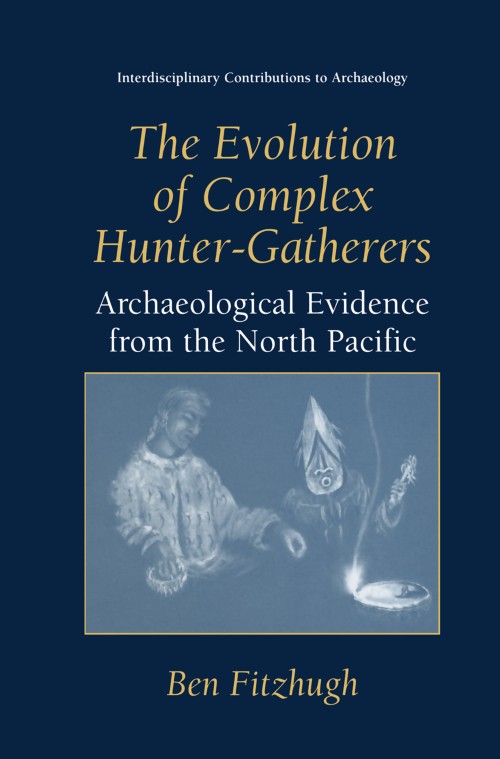
The Evolution of Complex Hunter-Gatherers [electronic resource] : Archaeological Evidence from the North Pacific / by Ben Fitzhugh.
Erişim Adresi
ISBN
9781461501374
Dil Kodu
İngilizce
Yer Numarası
DK/9693
Yazar
Basım Bildirimi
1st ed. 2003.
Yayın Bilgisi
New York, NY : Springer US : Imprint: Springer, 2003.
Fiziksel Niteleme
XV, 332 p. online resource.
Dizi
Interdisciplinary Contributions to Archaeology, 2730-6984
İçindekiler Notu
1 The Evolution of Complex Hunter-Gatherers -- 1.1. Introduction -- 1.2. The North Pacific Rim -- 1.2.1. Causality -- 1.3. Theoretical Orientation -- 2 The Kodiak Environment -- 2.1. The Physical Environment -- 2.2 Geology -- 2.3. Ecology -- 2.4. Temporal Dimensions of Environmental Variability -- 3 A Historical Framework -- 3.1. Overview -- 3.2. Ocean Bay I and II (7500-3500 BP) -- 3.3. Ocean Bay to Kachemak Transition -- 3.4. Early Kachemak/Old Kiavak (3200-2500 BP) -- 3.5. Late Kachemak /Three Saints Phase (2500-800 BP) -- 3.6. Kachemak-Koniag: Transition, Discontinuity or Replacement? -- 3.7. Koniag (800-200 BP) -- 3.8. Alutiiq/Russian-America (AD 1784–1864) -- 3.9. Alutiiq/US America (AD 1867-present) -- 3.10. Summary -- 4 Complex Hunter-Gatherers on the Kodiak Archipelago -- 4.1. Introduction -- 4.2. Feast and Famine for the Kodiak Alutiiq -- 4.3. Potlatch Feasting -- 4.4. Gender Relations -- 4.5. Leadership -- 4.6. Property Ownership -- 4.7. Trade -- 4.8. Warfare -- 4.9. Slavery -- 4.10. Summary -- 5 Colonization -- 5.1. Background -- 5.2. Maritime Adaptation -- 5.3. Evidence for the Earliest Occupants of Kodiak -- 5.4. Lifeways of Early Holocene Coastal Peoples -- 6 Modeling Emergent Complexity on the North Pacific -- 6.1. Introduction -- 6.2. Modeling Kodiak Social Evolution -- 6.3. Conclusion -- 7 The Sitkalidak Archaeological Survey Project -- 7.1. Project Goals -- 7.2. Methods -- 7.3. Site Chronology -- 7.4. Material Analysis -- 7.5. Excavations -- 8 Site Scale Analyses -- 8.1. Introduction -- 8.2. Component Frequencies as a Measure of Changing Settlement Density -- 8.3. Site Size Measures of Population Aggregation -- 8.4. Site Function Variability -- 8.5. Settlement Patterns -- 8.6. Summary -- 9 Social Inequality and Demography -- 9.1. House Attributes as a Measure of Social Variability -- 9.2. Trends inPopulation Change -- 9.3. Summary -- 10 Reconciliation, Extension, and Implications -- 10.1. Interrogating the Model -- 10.2. Overtures to Emergent Properties -- 10.3. Summary and Conclusion -- Appendices -- Appendix A -- Appendix B -- Appendix C -- Appendix D -- Endnotes -- References.
Özet, vb.
In 1987, I had the good fortune to join in the excavation of a phenomenal archae ological site on the western coast of Kodiak Island, in Alaska. The New Karluk site (a. k. a. , "Karluk One") was perched on the edge of the small village of Karluk at the mouth of the river of the same name, once one of the most productive salmon rivers in the North Pacific. I had just completed my sophomore year of college, and under the direction of Richard Jordan, I enthusiastically joined sev eral other students in the Kodiak Archaeology Projects New Karluk excavation. I had participated in my father's archaeological research in Eastern Canada since early childhood, but the Karluk dig was unlike any archaeology I had experienced before. For three months, we peeled back layers of grass, wood, and earth floors separated by remnants of ancient sod roofs. Due to the unusual preservation and richness of the site, at every tum we uncovered perishable items such as bent-wood bowls, masks, dolls, puffin-beak rattles, grass baskets, fragments of fiber netting, locks of hair, and food waste. Preservation was so excellent, in fact, that we often exposed grass blades still green after hundreds of years, which once exposed to air would tum brown before our eyes.
Konu
Archaeology.
Anthropology.
Archaeology.
Anthropology.
Anthropology.
Archaeology.
Anthropology.
Kurum Adı
Eseri Alıntıla
Referansları kullanmadan önce gözden geçirmeniz ve varsa gerekli düzeltmeleri yapmanız önerilir.
Dijital Kaynak
MARC Görünümü
LEADER 05922nam a22005535i 4500
001 808404
003 TR_AnAIT
005 20260131031337
007 cr nn 008mamaa
008 121227s2003 xxu| s |||| 0|eng d
020 |a9781461501374|9978-1-4615-0137-4
024 7 |a10.1007/978-1-4615-0137-4|2doi
041 |aeng
049 |aTürk Tarih Kurumu Kütüphanesi
050 4|aCC1-960
072 7|aHD|2bicssc
072 7|aSOC003000|2bisacsh
072 7|aNK|2thema
082 04|a930.1|223
090 |aDK/9693
100 1 |aFitzhugh, Ben.|eauthor.|4aut|4http://id.loc.gov/vocabulary/relators/aut
245 14|aThe Evolution of Complex Hunter-Gatherers|h[electronic resource] :|bArchaeological Evidence from the North Pacific /|cby Ben Fitzhugh.
250 |a1st ed. 2003.
264 1|aNew York, NY :|bSpringer US :|bImprint: Springer,|c2003.
300 |aXV, 332 p.|bonline resource.
336 |atext|btxt|2rdacontent
337 |acomputer|bc|2rdamedia
338 |aonline resource|bcr|2rdacarrier
347 |atext file|bPDF|2rda
490 1 |aInterdisciplinary Contributions to Archaeology,|x2730-6984
505 0 |a1 The Evolution of Complex Hunter-Gatherers -- 1.1. Introduction -- 1.2. The North Pacific Rim -- 1.2.1. Causality -- 1.3. Theoretical Orientation -- 2 The Kodiak Environment -- 2.1. The Physical Environment -- 2.2 Geology -- 2.3. Ecology -- 2.4. Temporal Dimensions of Environmental Variability -- 3 A Historical Framework -- 3.1. Overview -- 3.2. Ocean Bay I and II (7500-3500 BP) -- 3.3. Ocean Bay to Kachemak Transition -- 3.4. Early Kachemak/Old Kiavak (3200-2500 BP) -- 3.5. Late Kachemak /Three Saints Phase (2500-800 BP) -- 3.6. Kachemak-Koniag: Transition, Discontinuity or Replacement? -- 3.7. Koniag (800-200 BP) -- 3.8. Alutiiq/Russian-America (AD 1784–1864) -- 3.9. Alutiiq/US America (AD 1867-present) -- 3.10. Summary -- 4 Complex Hunter-Gatherers on the Kodiak Archipelago -- 4.1. Introduction -- 4.2. Feast and Famine for the Kodiak Alutiiq -- 4.3. Potlatch Feasting -- 4.4. Gender Relations -- 4.5. Leadership -- 4.6. Property Ownership -- 4.7. Trade -- 4.8. Warfare -- 4.9. Slavery -- 4.10. Summary -- 5 Colonization -- 5.1. Background -- 5.2. Maritime Adaptation -- 5.3. Evidence for the Earliest Occupants of Kodiak -- 5.4. Lifeways of Early Holocene Coastal Peoples -- 6 Modeling Emergent Complexity on the North Pacific -- 6.1. Introduction -- 6.2. Modeling Kodiak Social Evolution -- 6.3. Conclusion -- 7 The Sitkalidak Archaeological Survey Project -- 7.1. Project Goals -- 7.2. Methods -- 7.3. Site Chronology -- 7.4. Material Analysis -- 7.5. Excavations -- 8 Site Scale Analyses -- 8.1. Introduction -- 8.2. Component Frequencies as a Measure of Changing Settlement Density -- 8.3. Site Size Measures of Population Aggregation -- 8.4. Site Function Variability -- 8.5. Settlement Patterns -- 8.6. Summary -- 9 Social Inequality and Demography -- 9.1. House Attributes as a Measure of Social Variability -- 9.2. Trends inPopulation Change -- 9.3. Summary -- 10 Reconciliation, Extension, and Implications -- 10.1. Interrogating the Model -- 10.2. Overtures to Emergent Properties -- 10.3. Summary and Conclusion -- Appendices -- Appendix A -- Appendix B -- Appendix C -- Appendix D -- Endnotes -- References.
520 |aIn 1987, I had the good fortune to join in the excavation of a phenomenal archae ological site on the western coast of Kodiak Island, in Alaska. The New Karluk site (a. k. a. , "Karluk One") was perched on the edge of the small village of Karluk at the mouth of the river of the same name, once one of the most productive salmon rivers in the North Pacific. I had just completed my sophomore year of college, and under the direction of Richard Jordan, I enthusiastically joined sev eral other students in the Kodiak Archaeology Projects New Karluk excavation. I had participated in my father's archaeological research in Eastern Canada since early childhood, but the Karluk dig was unlike any archaeology I had experienced before. For three months, we peeled back layers of grass, wood, and earth floors separated by remnants of ancient sod roofs. Due to the unusual preservation and richness of the site, at every tum we uncovered perishable items such as bent-wood bowls, masks, dolls, puffin-beak rattles, grass baskets, fragments of fiber netting, locks of hair, and food waste. Preservation was so excellent, in fact, that we often exposed grass blades still green after hundreds of years, which once exposed to air would tum brown before our eyes.
532 8 |aAccessibility summary: This PDF is not accessible. It is based on scanned pages and does not support features such as screen reader compatibility or described non-text content (images, graphs etc). However, it likely supports searchable and selectable text based on OCR (Optical Character Recognition). Users with accessibility needs may not be able to use this content effectively. Please contact us at accessibilitysupport@springernature.com if you require assistance or an alternative format.
532 8 |aInaccessible, or known limited accessibility
532 8 |aNo reading system accessibility options actively disabled
532 8 |aPublisher contact for further accessibility information: accessibilitysupport@springernature.com
650 0|aArchaeology.
650 0|aAnthropology.
650 14|aArchaeology.
650 24|aAnthropology.
710 2 |aSpringerLink (Online service)
773 0 |tSpringer Nature eBook
776 08|iPrinted edition:|z9780306477539
776 08|iPrinted edition:|z9780306478536
776 08|iPrinted edition:|z9781461501381
830 0|aInterdisciplinary Contributions to Archaeology,|x2730-6984
856 40|uhttps://doi.org/10.1007/978-1-4615-0137-4
912 |aZDB-2-SHU
912 |aZDB-2-SXS
912 |aZDB-2-BAE
950 |aHumanities, Social Sciences and Law (SpringerNature-11648)
950 |aSocial Sciences (R0) (SpringerNature-43726)
001 808404
003 TR_AnAIT
005 20260131031337
007 cr nn 008mamaa
008 121227s2003 xxu| s |||| 0|eng d
020 |a9781461501374|9978-1-4615-0137-4
024 7 |a10.1007/978-1-4615-0137-4|2doi
041 |aeng
049 |aTürk Tarih Kurumu Kütüphanesi
050 4|aCC1-960
072 7|aHD|2bicssc
072 7|aSOC003000|2bisacsh
072 7|aNK|2thema
082 04|a930.1|223
090 |aDK/9693
100 1 |aFitzhugh, Ben.|eauthor.|4aut|4http://id.loc.gov/vocabulary/relators/aut
245 14|aThe Evolution of Complex Hunter-Gatherers|h[electronic resource] :|bArchaeological Evidence from the North Pacific /|cby Ben Fitzhugh.
250 |a1st ed. 2003.
264 1|aNew York, NY :|bSpringer US :|bImprint: Springer,|c2003.
300 |aXV, 332 p.|bonline resource.
336 |atext|btxt|2rdacontent
337 |acomputer|bc|2rdamedia
338 |aonline resource|bcr|2rdacarrier
347 |atext file|bPDF|2rda
490 1 |aInterdisciplinary Contributions to Archaeology,|x2730-6984
505 0 |a1 The Evolution of Complex Hunter-Gatherers -- 1.1. Introduction -- 1.2. The North Pacific Rim -- 1.2.1. Causality -- 1.3. Theoretical Orientation -- 2 The Kodiak Environment -- 2.1. The Physical Environment -- 2.2 Geology -- 2.3. Ecology -- 2.4. Temporal Dimensions of Environmental Variability -- 3 A Historical Framework -- 3.1. Overview -- 3.2. Ocean Bay I and II (7500-3500 BP) -- 3.3. Ocean Bay to Kachemak Transition -- 3.4. Early Kachemak/Old Kiavak (3200-2500 BP) -- 3.5. Late Kachemak /Three Saints Phase (2500-800 BP) -- 3.6. Kachemak-Koniag: Transition, Discontinuity or Replacement? -- 3.7. Koniag (800-200 BP) -- 3.8. Alutiiq/Russian-America (AD 1784–1864) -- 3.9. Alutiiq/US America (AD 1867-present) -- 3.10. Summary -- 4 Complex Hunter-Gatherers on the Kodiak Archipelago -- 4.1. Introduction -- 4.2. Feast and Famine for the Kodiak Alutiiq -- 4.3. Potlatch Feasting -- 4.4. Gender Relations -- 4.5. Leadership -- 4.6. Property Ownership -- 4.7. Trade -- 4.8. Warfare -- 4.9. Slavery -- 4.10. Summary -- 5 Colonization -- 5.1. Background -- 5.2. Maritime Adaptation -- 5.3. Evidence for the Earliest Occupants of Kodiak -- 5.4. Lifeways of Early Holocene Coastal Peoples -- 6 Modeling Emergent Complexity on the North Pacific -- 6.1. Introduction -- 6.2. Modeling Kodiak Social Evolution -- 6.3. Conclusion -- 7 The Sitkalidak Archaeological Survey Project -- 7.1. Project Goals -- 7.2. Methods -- 7.3. Site Chronology -- 7.4. Material Analysis -- 7.5. Excavations -- 8 Site Scale Analyses -- 8.1. Introduction -- 8.2. Component Frequencies as a Measure of Changing Settlement Density -- 8.3. Site Size Measures of Population Aggregation -- 8.4. Site Function Variability -- 8.5. Settlement Patterns -- 8.6. Summary -- 9 Social Inequality and Demography -- 9.1. House Attributes as a Measure of Social Variability -- 9.2. Trends inPopulation Change -- 9.3. Summary -- 10 Reconciliation, Extension, and Implications -- 10.1. Interrogating the Model -- 10.2. Overtures to Emergent Properties -- 10.3. Summary and Conclusion -- Appendices -- Appendix A -- Appendix B -- Appendix C -- Appendix D -- Endnotes -- References.
520 |aIn 1987, I had the good fortune to join in the excavation of a phenomenal archae ological site on the western coast of Kodiak Island, in Alaska. The New Karluk site (a. k. a. , "Karluk One") was perched on the edge of the small village of Karluk at the mouth of the river of the same name, once one of the most productive salmon rivers in the North Pacific. I had just completed my sophomore year of college, and under the direction of Richard Jordan, I enthusiastically joined sev eral other students in the Kodiak Archaeology Projects New Karluk excavation. I had participated in my father's archaeological research in Eastern Canada since early childhood, but the Karluk dig was unlike any archaeology I had experienced before. For three months, we peeled back layers of grass, wood, and earth floors separated by remnants of ancient sod roofs. Due to the unusual preservation and richness of the site, at every tum we uncovered perishable items such as bent-wood bowls, masks, dolls, puffin-beak rattles, grass baskets, fragments of fiber netting, locks of hair, and food waste. Preservation was so excellent, in fact, that we often exposed grass blades still green after hundreds of years, which once exposed to air would tum brown before our eyes.
532 8 |aAccessibility summary: This PDF is not accessible. It is based on scanned pages and does not support features such as screen reader compatibility or described non-text content (images, graphs etc). However, it likely supports searchable and selectable text based on OCR (Optical Character Recognition). Users with accessibility needs may not be able to use this content effectively. Please contact us at accessibilitysupport@springernature.com if you require assistance or an alternative format.
532 8 |aInaccessible, or known limited accessibility
532 8 |aNo reading system accessibility options actively disabled
532 8 |aPublisher contact for further accessibility information: accessibilitysupport@springernature.com
650 0|aArchaeology.
650 0|aAnthropology.
650 14|aArchaeology.
650 24|aAnthropology.
710 2 |aSpringerLink (Online service)
773 0 |tSpringer Nature eBook
776 08|iPrinted edition:|z9780306477539
776 08|iPrinted edition:|z9780306478536
776 08|iPrinted edition:|z9781461501381
830 0|aInterdisciplinary Contributions to Archaeology,|x2730-6984
856 40|uhttps://doi.org/10.1007/978-1-4615-0137-4
912 |aZDB-2-SHU
912 |aZDB-2-SXS
912 |aZDB-2-BAE
950 |aHumanities, Social Sciences and Law (SpringerNature-11648)
950 |aSocial Sciences (R0) (SpringerNature-43726)
Materyaller
Depodan talep edilen materyal sadece kütüphane içerisinde kullanılmaktadır.
Materyal dışarıya ödünç verilmemektedir.
Materyal dışarıya ödünç verilmemektedir.
