LEADER 03901nam a22005055i 4500
001 808438
003 TR_AnAIT
005 20260131031131
007 cr nn 008mamaa
008 111006s2012 xxu| s |||| 0|eng d
020 |a9781461407454|9978-1-4614-0745-4
024 7 |a10.1007/978-1-4614-0745-4|2doi
041 |aeng
049 |aTürk Tarih Kurumu Kütüphanesi
050 4|aHV6001-7220.5
072 7|aJKV|2bicssc
072 7|aSOC004000|2bisacsh
072 7|aJKV|2thema
082 04|a364|223
090 |aDK/9727
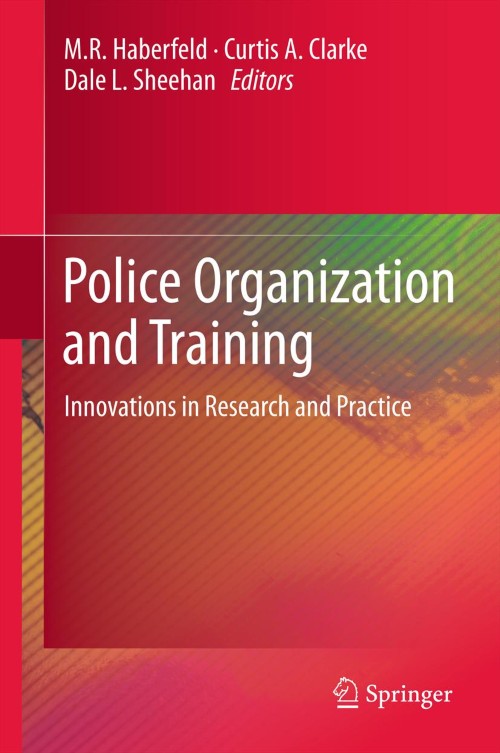
245 10|aPolice Organization and Training|h[electronic resource] :|bInnovations in Research and Practice /|cedited by M.R. Haberfeld, Curtis A. Clarke, Dale L. Sheehan.
250 |a1st ed. 2012.
264 1|aNew York, NY :|bSpringer New York :|bImprint: Springer,|c2012.
300 |aXIII, 214 p.|bonline resource.
336 |atext|btxt|2rdacontent
337 |acomputer|bc|2rdamedia
338 |aonline resource|bcr|2rdacarrier
347 |atext file|bPDF|2rda
520 |aCriminal enterprises are growing in sophistication. Terrorism is an ongoing security threat. The general public is more knowledgeable about legal matters. These developments, among others,necessitate new methods in police work--and in training new recruits and in-service officers. Given these challenges, improvements in training are a vital means of both staying ahead of lawbreakers and delivering the most effective services to the community. Police Organization and Training surveys innovations in law enforcement training in its evolution from military-style models toward continuing professional development, improved investigation methods, and overall best practices. International dispatches by training practitioners,academics, and other experts from the US, the UK, Canada, Germany, Hong Kong,and elsewhere emphasize blended education methods, competency-building curricula, program and policy development, and leadership concepts. These emerging paradigms and technologies, coupled with a clear focus on ethical issues, provide a lucid picture of the future of police training in both educational and law enforcement contexts. In addition, the book's training templates are not only instructive but also adaptable to different locales. Featured in the coverage: · Simulation technology as a training tool. · The Investigation Skill Education Program and the Professionalizing Investigation Program. · Redesigning specialized advanced criminal investigation and training. · A situation-oriented approach to addressing potentially dangerous situations. · Developments in United Nations peacekeeping training. · Combating modern piracy Police Organization and Training is a key resource for researcher sand policymakers in comparative criminal justice, police and public administration, and police training academies. It also has considerable utility as a classroom text in courses on policing and police administration.
650 0|aCriminology.
650 0|aSocial policy.
650 0|aPublic administration.
650 14|aCriminology.
650 24|aSocial Policy.
650 24|aPublic Administration.
700 1 |aHaberfeld, M.R.|eeditor.|4edt|4http://id.loc.gov/vocabulary/relators/edt
700 1 |aClarke, Curtis A.|eeditor.|4edt|4http://id.loc.gov/vocabulary/relators/edt
700 1 |aSheehan, Dale L.|eeditor.|4edt|4http://id.loc.gov/vocabulary/relators/edt
710 2 |aSpringerLink (Online service)
773 0 |tSpringer Nature eBook
776 08|iPrinted edition:|z9781461407447
776 08|iPrinted edition:|z9781461407461
776 08|iPrinted edition:|z9781489987624
856 40|uhttps://doi.org/10.1007/978-1-4614-0745-4
912 |aZDB-2-SHU
912 |aZDB-2-SXS
950 |aHumanities, Social Sciences and Law (SpringerNature-11648)
950 |aSocial Sciences (R0) (SpringerNature-43726)