LEADER 03284nam a22004455i 4500
001 808478
003 TR_AnAIT
005 20260131030858
007 cr nn 008mamaa
008 111112s2011 ne | s |||| 0|eng d
020 |a9789460914607|9978-94-6091-460-7
024 7 |a10.1007/978-94-6091-460-7|2doi
041 |aeng
049 |aTürk Tarih Kurumu Kütüphanesi
050 4|aLB1028.3
072 7|aJNV|2bicssc
072 7|aEDU000000|2bisacsh
072 7|aJNV|2thema
082 04|a371.33|223
090 |aDK/9767
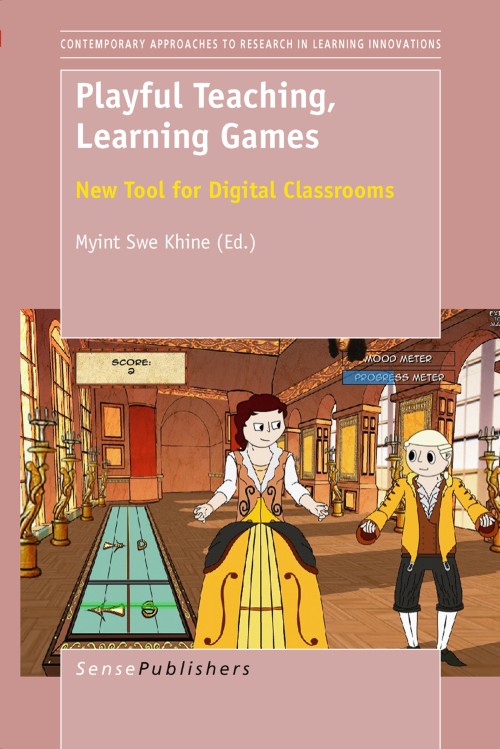
245 10|aPlayful Teaching, Learning Games:New Tool for Digital Classrooms|h[electronic resource] /|cedited by Myint Swe Khine.
250 |a1st ed. 2011.
264 1|aRotterdam :|bSensePublishers :|bImprint: SensePublishers,|c2011.
300 |aIX, 133 p.|bonline resource.
336 |atext|btxt|2rdacontent
337 |acomputer|bc|2rdamedia
338 |aonline resource|bcr|2rdacarrier
347 |atext file|bPDF|2rda
490 1 |aContemporary Approaches to Research in Learning Innovations ;|v5
520 |aEducators around the world acknowledge the fact that we live in the knowledge society and ability to think systematically is one of the necessary skills in order to function effectively in the 21st century. In the past two decades, popular culture introduced digital games as part of leisure activities for children and adults. Today playing computer games is routine activity for children of all ages. Many have agreed that interactive computer games enhance concentration, promote thinking, increase motivation and encourage socialisation. Educators found their way in introducing game-based learning in science education to entice the students in teaching difficult concepts. Simulation games provide authentic learning experience and virtual world excites the students to learn new phenomena and enliven their inquisitive mind. This book presents recent studies in game-based learning and reports continuing attempts to use games as new tool in the classrooms.
532 8 |aAccessibility summary: This PDF eBook is produced by a third-party. We have requested that the file be made accessible and compliant with the European Accessibility Act (EAA). However, we have not been able to fully verify its compliance with recognized accessibility standards (such as PDF/UA or WCAG). For detailed accessibility information, please refer to the original publisher’s website. If you require an accessible version of this content, please contact accessibilitysupport@springernature.com. We are committed to improving accessibility and will work with the publisher to meet your needs wherever possible.
532 8 |aPublisher contact for further accessibility information: accessibilitysupport@springernature.com
650 0|aEducational technology.
650 14|aDigital Education and Educational Technology.
700 1 |aSwe Khine, Myint.|eeditor.|4edt|4http://id.loc.gov/vocabulary/relators/edt
710 2 |aSpringerLink (Online service)
773 0 |tSpringer Nature eBook
830 0|aContemporary Approaches to Research in Learning Innovations ;|v5
856 40|uhttps://doi.org/10.1007/978-94-6091-460-7
912 |aZDB-2-SHU
912 |aZDB-2-SXED
950 |aHumanities, Social Sciences and Law (SpringerNature-11648)
950 |aEducation (R0) (SpringerNature-43721)