LEADER 03134nam a22005415i 4500
001 808503
003 TR_AnAIT
005 20260131030735
007 cr nn 008mamaa
008 100301s2002 ne | s |||| 0|eng d
020 |a9780306472077|9978-0-306-47207-7
024 7 |a10.1007/0-306-47207-4|2doi
041 |aeng
049 |aTürk Tarih Kurumu Kütüphanesi
050 4|aLB43
050 4|aLC1090
072 7|aJN|2bicssc
072 7|aEDU043000|2bisacsh
072 7|aJND|2thema
082 04|a370.116|223
082 04|a370.9|223
090 |aDK/9792
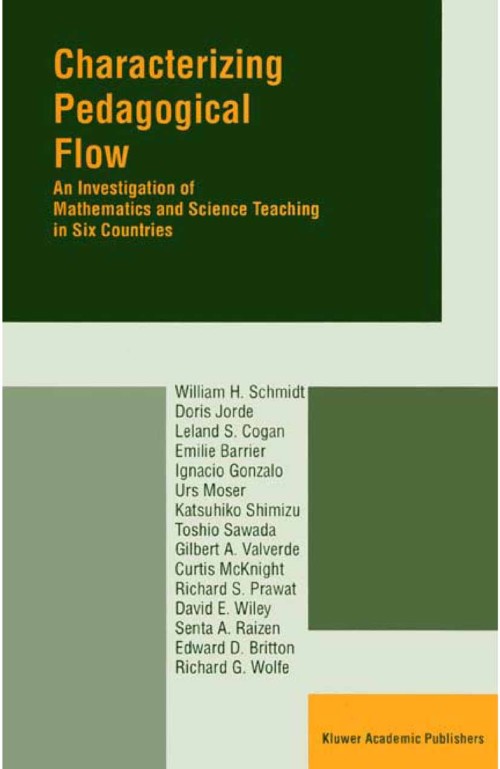
245 10|aCharacterizing Pedagogical Flow|h[electronic resource] :|bAn Investigation of Mathematics and Science Teaching in Six Countries /|cedited by W.H. Schmidt.
250 |a1st ed. 2002.
264 1|aDordrecht :|bSpringer Netherlands :|bImprint: Springer,|c2002.
300 |aXIV, 230 p.|bonline resource.
336 |atext|btxt|2rdacontent
337 |acomputer|bc|2rdamedia
338 |aonline resource|bcr|2rdacarrier
347 |atext file|bPDF|2rda
505 0 |aInvestigating Curriculum and Pedagogy -- Investigating the Story of Curriculum and Pedagogy: Conceptualizing and Comparing Educational Practices -- Exploring the Story of Curriculum: Examining Artifacts of Intention -- The Classroom Story Unfolds: Observing the Implementation of Curricular and Pedagogical Intentions -- Moving from Conceptions to Instrumentation -- Lessons from Lessons -- Case Studies of Six Countries -- France: Case Study -- Japan: Case Study -- Norway: Case Study -- Spain: Case Study -- Switzerland: Case Study -- United States: Case Study.
520 |aCharacterizing Pedagogical Flow presents conclusions from a multi-disciplinary, multi-national research project blending quantitative and qualitative approaches through a discourse methodology. The work produced portraits of mathematics and science education that were dramatically different for each of the countries involved: France, Japan, Norway, Spain, Switzerland, and the United States. To explain these differences, it is proposed that the interaction of curriculum and pedagogy is culturally unique and yields classroom learning experiences that are qualitatively different from country to country. This idea has profound implications for how international education research is interpreted.
650 0|aInternational education .
650 0|aComparative education.
650 0|aMathematics|xStudy and teaching .
650 0|aScience|xStudy and teaching.
650 14|aInternational and Comparative Education.
650 24|aMathematics Education.
650 24|aScience Education.
700 1 |aSchmidt, W.H.|eeditor.|4edt|4http://id.loc.gov/vocabulary/relators/edt
710 2 |aSpringerLink (Online service)
773 0 |tSpringer Nature eBook
776 08|iPrinted edition:|z9780792342724
776 08|iPrinted edition:|z9780792342731
776 08|iPrinted edition:|z9789401741163
856 40|uhttps://doi.org/10.1007/0-306-47207-4
912 |aZDB-2-SHU
912 |aZDB-2-SXED
912 |aZDB-2-BAE
950 |aHumanities, Social Sciences and Law (SpringerNature-11648)
950 |aEducation (R0) (SpringerNature-43721)