

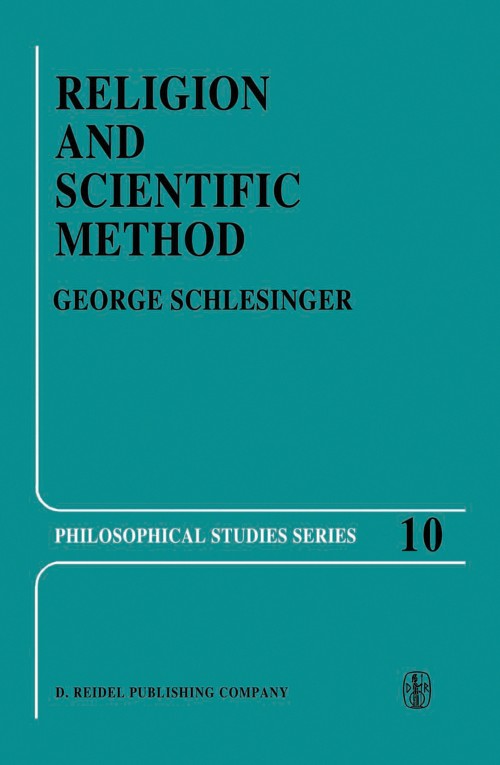
Religion and Scientific Method [electronic resource] / by G. Schlesinger.
Erişim Adresi
ISBN
9789401012355
Dil Kodu
İngilizce
Yer Numarası
DK/9851
Yazar
Basım Bildirimi
1st ed. 1977.
Yayın Bilgisi
Dordrecht : Springer Netherlands : Imprint: Springer, 1977.
Fiziksel Niteleme
VII, 204 p. online resource.
Dizi
Philosophical Studies Series, 2542-8349 ; 10
İçindekiler Notu
I The Problem Of Evil -- 1: Stating the Problem of Evil -- 2: The Irrelevance of the Amount of Evil -- 3: The Standard by which Divine Acts are Appraised -- 4: Suffering as Punishment -- 5: The Question of an Afterlife -- 6: The ‘Soul Making’ Theodicy -- 7: The Question of Moral Evil -- 8: The Justification for Creating Opportunities for Virtuous Response -- 9: A New Solution -- 10: The Removal of Objections to the Last Solution -- II Free Will, Men and Machines -- 11: A Conflict Between Religion and Science -- 12: Newcomb’s Problem of Choice -- 13: The Unpredictability of Some Human Choices -- 14: Some Queries Concerning the Absolute Incompetence of Predictors -- 15: The Predictor as a Diagnostician -- 16: ?-Machines and ?-Machines -- 17: ?-Machines and ?-Machines -- III The Confirmation of Theism -- 18: Pascal’s Wager -- 19: Theism and the Verification Principle -- 20: The Vindication of the Verification Principle -- 21: The Principles Underlying Scientific Method -- 22: Miracles -- 23: The Evidence for Theism -- 24: Theism and Scientific Method.
Özet, vb.
I With the immense success of modem science it has generally become accepted that the only way to acquire knowledge is by the use of the method uniformly practiced by working scientists. Consequently, the credibility of the claims of religion, which seem to be based on belief in revelation, tradition, authority and the like, have been considerably shaken. In the face of the serious threat provided by the ascendancy of modem scientific method ology, religious thinkers have adopted various defensive attitudes. Some have retreated into an extreme position where Theism is completely safe from any attack on it by the use of empirical methods of inquiry, maintaining that contrary to appearances, religion makes no factual claims whatsoever. To be religious, they say, is to subscribe to a certain value system; it is to adopt a set of practices and a given attitude to the meaning and purpose of life without making any assertions about this or that empirical feature of the universe. Others wishing to remain more faithful to what religion traditionally meant throughout the ages, agree that Theism does make factual claims but that these are so radically different from the kind of claims made by science that it is only right that they should be established by a separate method on its own. In matters of faith reliance on widely entrenched tradition and sacred authority is not objectionable according to some.
Konu
Philosophy and social sciences.
Philosophy of the Social Sciences.
Philosophy of the Social Sciences.
Kurum Adı
Eseri Alıntıla
Referansları kullanmadan önce gözden geçirmeniz ve varsa gerekli düzeltmeleri yapmanız önerilir.
Dijital Kaynak
MARC Görünümü
LEADER 04933nam a22005295i 4500
001 808562
003 TR_AnAIT
005 20260131030540
007 cr nn 008mamaa
008 121227s1977 ne | s |||| 0|eng d
020 |a9789401012355|9978-94-010-1235-5
024 7 |a10.1007/978-94-010-1235-5|2doi
041 |aeng
049 |aTürk Tarih Kurumu Kütüphanesi
050 4|aB63
072 7|aHPS|2bicssc
072 7|aPHI034000|2bisacsh
072 7|aQDTS|2thema
082 04|a300.1|223
090 |aDK/9851
100 1 |aSchlesinger, G.|eauthor.|4aut|4http://id.loc.gov/vocabulary/relators/aut
245 10|aReligion and Scientific Method|h[electronic resource] /|cby G. Schlesinger.
250 |a1st ed. 1977.
264 1|aDordrecht :|bSpringer Netherlands :|bImprint: Springer,|c1977.
300 |aVII, 204 p.|bonline resource.
336 |atext|btxt|2rdacontent
337 |acomputer|bc|2rdamedia
338 |aonline resource|bcr|2rdacarrier
347 |atext file|bPDF|2rda
490 1 |aPhilosophical Studies Series,|x2542-8349 ;|v10
505 0 |aI The Problem Of Evil -- 1: Stating the Problem of Evil -- 2: The Irrelevance of the Amount of Evil -- 3: The Standard by which Divine Acts are Appraised -- 4: Suffering as Punishment -- 5: The Question of an Afterlife -- 6: The ‘Soul Making’ Theodicy -- 7: The Question of Moral Evil -- 8: The Justification for Creating Opportunities for Virtuous Response -- 9: A New Solution -- 10: The Removal of Objections to the Last Solution -- II Free Will, Men and Machines -- 11: A Conflict Between Religion and Science -- 12: Newcomb’s Problem of Choice -- 13: The Unpredictability of Some Human Choices -- 14: Some Queries Concerning the Absolute Incompetence of Predictors -- 15: The Predictor as a Diagnostician -- 16: ?-Machines and ?-Machines -- 17: ?-Machines and ?-Machines -- III The Confirmation of Theism -- 18: Pascal’s Wager -- 19: Theism and the Verification Principle -- 20: The Vindication of the Verification Principle -- 21: The Principles Underlying Scientific Method -- 22: Miracles -- 23: The Evidence for Theism -- 24: Theism and Scientific Method.
520 |aI With the immense success of modem science it has generally become accepted that the only way to acquire knowledge is by the use of the method uniformly practiced by working scientists. Consequently, the credibility of the claims of religion, which seem to be based on belief in revelation, tradition, authority and the like, have been considerably shaken. In the face of the serious threat provided by the ascendancy of modem scientific method ology, religious thinkers have adopted various defensive attitudes. Some have retreated into an extreme position where Theism is completely safe from any attack on it by the use of empirical methods of inquiry, maintaining that contrary to appearances, religion makes no factual claims whatsoever. To be religious, they say, is to subscribe to a certain value system; it is to adopt a set of practices and a given attitude to the meaning and purpose of life without making any assertions about this or that empirical feature of the universe. Others wishing to remain more faithful to what religion traditionally meant throughout the ages, agree that Theism does make factual claims but that these are so radically different from the kind of claims made by science that it is only right that they should be established by a separate method on its own. In matters of faith reliance on widely entrenched tradition and sacred authority is not objectionable according to some.
532 8 |aAccessibility summary: This PDF is not accessible. It is based on scanned pages and does not support features such as screen reader compatibility or described non-text content (images, graphs etc). However, it likely supports searchable and selectable text based on OCR (Optical Character Recognition). Users with accessibility needs may not be able to use this content effectively. Please contact us at accessibilitysupport@springernature.com if you require assistance or an alternative format.
532 8 |aInaccessible, or known limited accessibility
532 8 |aNo reading system accessibility options actively disabled
532 8 |aPublisher contact for further accessibility information: accessibilitysupport@springernature.com
650 0|aPhilosophy and social sciences.
650 14|aPhilosophy of the Social Sciences.
710 2 |aSpringerLink (Online service)
773 0 |tSpringer Nature eBook
776 08|iPrinted edition:|z9789027708151
776 08|iPrinted edition:|z9789027708168
776 08|iPrinted edition:|z9789401012362
830 0|aPhilosophical Studies Series,|x2542-8349 ;|v10
856 40|uhttps://doi.org/10.1007/978-94-010-1235-5
912 |aZDB-2-SHU
912 |aZDB-2-SXPR
912 |aZDB-2-BAE
950 |aHumanities, Social Sciences and Law (SpringerNature-11648)
950 |aPhilosophy and Religion (R0) (SpringerNature-43725)
001 808562
003 TR_AnAIT
005 20260131030540
007 cr nn 008mamaa
008 121227s1977 ne | s |||| 0|eng d
020 |a9789401012355|9978-94-010-1235-5
024 7 |a10.1007/978-94-010-1235-5|2doi
041 |aeng
049 |aTürk Tarih Kurumu Kütüphanesi
050 4|aB63
072 7|aHPS|2bicssc
072 7|aPHI034000|2bisacsh
072 7|aQDTS|2thema
082 04|a300.1|223
090 |aDK/9851
100 1 |aSchlesinger, G.|eauthor.|4aut|4http://id.loc.gov/vocabulary/relators/aut
245 10|aReligion and Scientific Method|h[electronic resource] /|cby G. Schlesinger.
250 |a1st ed. 1977.
264 1|aDordrecht :|bSpringer Netherlands :|bImprint: Springer,|c1977.
300 |aVII, 204 p.|bonline resource.
336 |atext|btxt|2rdacontent
337 |acomputer|bc|2rdamedia
338 |aonline resource|bcr|2rdacarrier
347 |atext file|bPDF|2rda
490 1 |aPhilosophical Studies Series,|x2542-8349 ;|v10
505 0 |aI The Problem Of Evil -- 1: Stating the Problem of Evil -- 2: The Irrelevance of the Amount of Evil -- 3: The Standard by which Divine Acts are Appraised -- 4: Suffering as Punishment -- 5: The Question of an Afterlife -- 6: The ‘Soul Making’ Theodicy -- 7: The Question of Moral Evil -- 8: The Justification for Creating Opportunities for Virtuous Response -- 9: A New Solution -- 10: The Removal of Objections to the Last Solution -- II Free Will, Men and Machines -- 11: A Conflict Between Religion and Science -- 12: Newcomb’s Problem of Choice -- 13: The Unpredictability of Some Human Choices -- 14: Some Queries Concerning the Absolute Incompetence of Predictors -- 15: The Predictor as a Diagnostician -- 16: ?-Machines and ?-Machines -- 17: ?-Machines and ?-Machines -- III The Confirmation of Theism -- 18: Pascal’s Wager -- 19: Theism and the Verification Principle -- 20: The Vindication of the Verification Principle -- 21: The Principles Underlying Scientific Method -- 22: Miracles -- 23: The Evidence for Theism -- 24: Theism and Scientific Method.
520 |aI With the immense success of modem science it has generally become accepted that the only way to acquire knowledge is by the use of the method uniformly practiced by working scientists. Consequently, the credibility of the claims of religion, which seem to be based on belief in revelation, tradition, authority and the like, have been considerably shaken. In the face of the serious threat provided by the ascendancy of modem scientific method ology, religious thinkers have adopted various defensive attitudes. Some have retreated into an extreme position where Theism is completely safe from any attack on it by the use of empirical methods of inquiry, maintaining that contrary to appearances, religion makes no factual claims whatsoever. To be religious, they say, is to subscribe to a certain value system; it is to adopt a set of practices and a given attitude to the meaning and purpose of life without making any assertions about this or that empirical feature of the universe. Others wishing to remain more faithful to what religion traditionally meant throughout the ages, agree that Theism does make factual claims but that these are so radically different from the kind of claims made by science that it is only right that they should be established by a separate method on its own. In matters of faith reliance on widely entrenched tradition and sacred authority is not objectionable according to some.
532 8 |aAccessibility summary: This PDF is not accessible. It is based on scanned pages and does not support features such as screen reader compatibility or described non-text content (images, graphs etc). However, it likely supports searchable and selectable text based on OCR (Optical Character Recognition). Users with accessibility needs may not be able to use this content effectively. Please contact us at accessibilitysupport@springernature.com if you require assistance or an alternative format.
532 8 |aInaccessible, or known limited accessibility
532 8 |aNo reading system accessibility options actively disabled
532 8 |aPublisher contact for further accessibility information: accessibilitysupport@springernature.com
650 0|aPhilosophy and social sciences.
650 14|aPhilosophy of the Social Sciences.
710 2 |aSpringerLink (Online service)
773 0 |tSpringer Nature eBook
776 08|iPrinted edition:|z9789027708151
776 08|iPrinted edition:|z9789027708168
776 08|iPrinted edition:|z9789401012362
830 0|aPhilosophical Studies Series,|x2542-8349 ;|v10
856 40|uhttps://doi.org/10.1007/978-94-010-1235-5
912 |aZDB-2-SHU
912 |aZDB-2-SXPR
912 |aZDB-2-BAE
950 |aHumanities, Social Sciences and Law (SpringerNature-11648)
950 |aPhilosophy and Religion (R0) (SpringerNature-43725)
Materyaller
Depodan talep edilen materyal sadece kütüphane içerisinde kullanılmaktadır.
Materyal dışarıya ödünç verilmemektedir.
Materyal dışarıya ödünç verilmemektedir.
