LEADER 03403nam a22005895i 4500
001 808683
003 TR_AnAIT
005 20260131025804
007 cr nn 008mamaa
008 100427s2010 ne | s |||| 0|eng d
020 |a9789048188147|9978-90-481-8814-7
024 7 |a10.1007/978-90-481-8814-7|2doi
041 |aeng
049 |aTürk Tarih Kurumu Kütüphanesi
050 4|aHV40-69.2
072 7|aJKSN|2bicssc
072 7|aSOC025000|2bisacsh
072 7|aJKSN|2thema
082 04|a361.3|223
090 |aDK/9972
100 1 |aHale, Beatrice.|eauthor.|4aut|4http://id.loc.gov/vocabulary/relators/aut
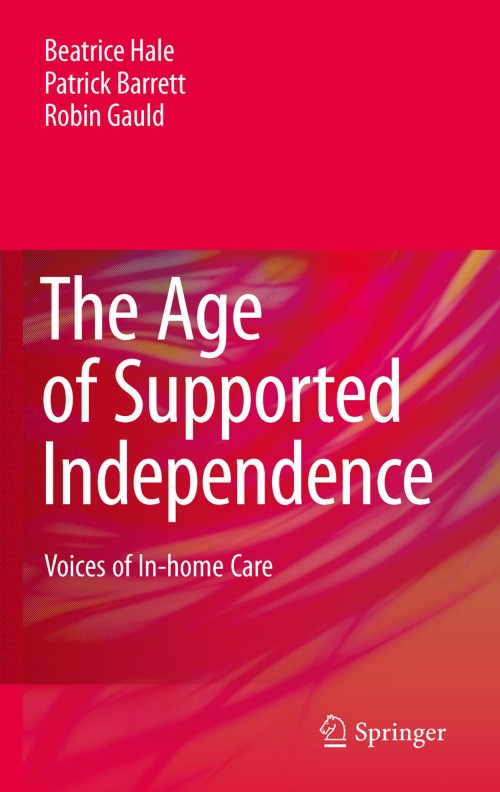
245 14|aThe Age of Supported Independence|h[electronic resource] :|bVoices of In-home Care /|cby Beatrice Hale, Patrick Barrett, Robin Gauld.
250 |a1st ed. 2010.
264 1|aDordrecht :|bSpringer Netherlands :|bImprint: Springer,|c2010.
300 |aXXI, 131 p.|bonline resource.
336 |atext|btxt|2rdacontent
337 |acomputer|bc|2rdamedia
338 |aonline resource|bcr|2rdacarrier
347 |atext file|bPDF|2rda
505 0 |aThe Demographic and Policy Context of Supported Independence in Later Life -- The Move from Independence -- Space and Liminality -- Temporality and Liminality -- Relational Transitions -- Separation, Liminality and the Potential for Reconnections at Home with Care -- Care Work and Reconnections -- Reconnections—Supported Independence and Agency in Frailty.
520 |aThis book investigates the experiences of older people who remain at home with care. It examines the transition points for the important life changes faced by family members who take on a greater care-giving role. The book draws on demographic analyses and qualitative fieldwork to explore the shift from independence to increasing dependence, and suggests that this transition constitutes movement into a new stage of life, that of an Age of Supported Independence. Applying the anthropological concept of rites of passage in their analysis, the authors focus on the changes in everyday living within the spatial environment of the home, the temporal organization of daily life, and the reshaping of relationships. They suggest that many older people – as well as the family members who become carers – remain in a state of ‘liminality’: unable to make sense of their new situation and experience and, despite assumptions that ageing-in-place sustains social connectedness, excluded from their communities.
650 0|aSocial service.
650 0|aSociology.
650 0|aSocial groups.
650 0|aGeriatrics.
650 0|aAging.
650 0|aAnthropology.
650 14|aSocial Work.
650 24|aSociology of Family, Youth and Aging.
650 24|aGeriatrics.
650 24|aAgeing.
650 24|aAnthropology.
650 24|aSociology.
700 1 |aBarrett, Patrick.|eauthor.|4aut|4http://id.loc.gov/vocabulary/relators/aut
700 1 |aGauld, Robin.|eauthor.|4aut|4http://id.loc.gov/vocabulary/relators/aut
710 2 |aSpringerLink (Online service)
773 0 |tSpringer Nature eBook
776 08|iPrinted edition:|z9789048188130
776 08|iPrinted edition:|z9789048188215
776 08|iPrinted edition:|z9789400791343
856 40|uhttps://doi.org/10.1007/978-90-481-8814-7
912 |aZDB-2-SHU
912 |aZDB-2-SXS
950 |aHumanities, Social Sciences and Law (SpringerNature-11648)
950 |aSocial Sciences (R0) (SpringerNature-43726)