

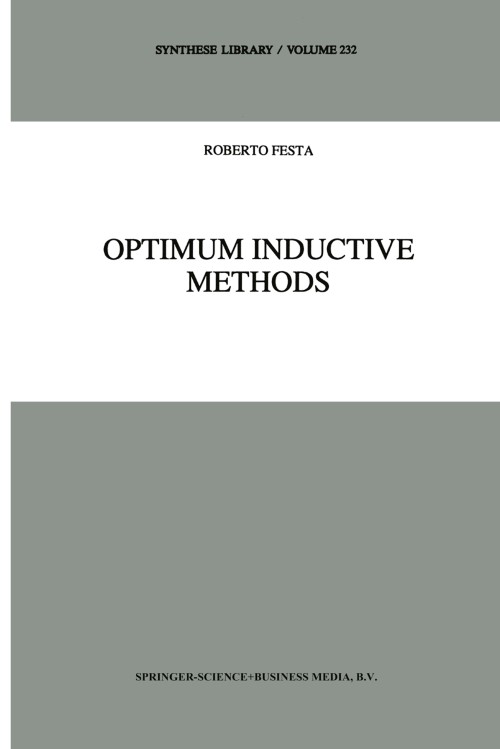
Optimum Inductive Methods [electronic resource] : A Study in Inductive Probability, Bayesian Statistics, and Verisimilitude / by R. Festa.
Erişim Adresi
ISBN
9789401581318
Dil Kodu
İngilizce
Yer Numarası
DK/10069
Yazar
Basım Bildirimi
1st ed. 1993.
Yayın Bilgisi
Dordrecht : Springer Netherlands : Imprint: Springer, 1993.
Fiziksel Niteleme
XIV, 194 p. online resource.
Dizi
Synthese Library, Studies in Epistemology, Logic, Methodology, and Philosophy of Science, 2542-8292 ; 232
İçindekiler Notu
1. Introduction -- 2. The Theory of Inductive Probabilities: Basic Features and Applications -- 3. Bayesian Statistics and Multinomial Inferences: Basic Features -- 4. Bayesian Point Estimation, Verisimilitude, and Immodesty -- 5. Exchangeable Inductive Methods, Bayesian Statistics, and Convergence towards the Truth -- 6. GC-Systems and Dirichlet Distributions -- 7. The Choice of Prior Probabilities: The Subjective, Aprioristic, and Contextual Approaches -- 8. The Epistemic Problem of Optimality (EPO): A Contextual Approach -- 9. The Contextual Approach to EPO: Comparisons with Other Views -- 10. Disordered Universes: Diversity Measures in Statistics and the Empirical Sciences -- 11. Concluding Remarks -- Notes -- References -- Index of Names -- Index of Subjects -- List of requirements and acronyms.
Özet, vb.
This book deals with a basic problem arising within the Bayesian approach 1 to scientific methodology, namely the choice of prior probabilities. The problem will be considered with special reference to some inference methods used within Bayesian statistics (BS) and the so-called theory of inductive 2 probabilities (T/P). In this study an important role will be played by the assumption - defended by Sir Karl Popper and the supporters of the current verisimilitude theory (VT) - that the cognitive goal of science is the achievement of a high degree of truthlikeness or verisimilitude. A more detailed outline of the issues and objectives of the book is given in Section 1. In Section 2 the historical background of the Bayesian approach and the verisimilitude theory is briefly illustrated. In Section 3, the methods used in TIP and BS for making multinomial inference~ are considered and some conceptual relationships between TIP and BS are pointed out. In Section 4 the main lines of a new approach to the problem of the choice of prior probabilities are illustrated. Lastly, in Section 5 >the structure of the book is described and a first explanation of some technical terms is provided.
Konu
Logic.
Statistics .
Science __ Philosophy.
Knowledge, Theory of.
Logic.
Statistics.
Philosophy of Science.
Epistemology.
Statistics .
Science __ Philosophy.
Knowledge, Theory of.
Logic.
Statistics.
Philosophy of Science.
Epistemology.
Kurum Adı
Eseri Alıntıla
Referansları kullanmadan önce gözden geçirmeniz ve varsa gerekli düzeltmeleri yapmanız önerilir.
Dijital Kaynak
MARC Görünümü
LEADER 04780nam a22006015i 4500
001 808780
003 TR_AnAIT
005 20260131025332
007 cr nn 008mamaa
008 121230s1993 ne | s |||| 0|eng d
020 |a9789401581318|9978-94-015-8131-8
024 7 |a10.1007/978-94-015-8131-8|2doi
041 |aeng
049 |aTürk Tarih Kurumu Kütüphanesi
050 4|aBC1-199
072 7|aHPL|2bicssc
072 7|aPHI011000|2bisacsh
072 7|aQDTL|2thema
082 04|a160|223
090 |aDK/10069
100 1 |aFesta, R.|eauthor.|4aut|4http://id.loc.gov/vocabulary/relators/aut
245 10|aOptimum Inductive Methods|h[electronic resource] :|bA Study in Inductive Probability, Bayesian Statistics, and Verisimilitude /|cby R. Festa.
250 |a1st ed. 1993.
264 1|aDordrecht :|bSpringer Netherlands :|bImprint: Springer,|c1993.
300 |aXIV, 194 p.|bonline resource.
336 |atext|btxt|2rdacontent
337 |acomputer|bc|2rdamedia
338 |aonline resource|bcr|2rdacarrier
347 |atext file|bPDF|2rda
490 1 |aSynthese Library, Studies in Epistemology, Logic, Methodology, and Philosophy of Science,|x2542-8292 ;|v232
505 0 |a1. Introduction -- 2. The Theory of Inductive Probabilities: Basic Features and Applications -- 3. Bayesian Statistics and Multinomial Inferences: Basic Features -- 4. Bayesian Point Estimation, Verisimilitude, and Immodesty -- 5. Exchangeable Inductive Methods, Bayesian Statistics, and Convergence towards the Truth -- 6. GC-Systems and Dirichlet Distributions -- 7. The Choice of Prior Probabilities: The Subjective, Aprioristic, and Contextual Approaches -- 8. The Epistemic Problem of Optimality (EPO): A Contextual Approach -- 9. The Contextual Approach to EPO: Comparisons with Other Views -- 10. Disordered Universes: Diversity Measures in Statistics and the Empirical Sciences -- 11. Concluding Remarks -- Notes -- References -- Index of Names -- Index of Subjects -- List of requirements and acronyms.
520 |aThis book deals with a basic problem arising within the Bayesian approach 1 to scientific methodology, namely the choice of prior probabilities. The problem will be considered with special reference to some inference methods used within Bayesian statistics (BS) and the so-called theory of inductive 2 probabilities (T/P). In this study an important role will be played by the assumption - defended by Sir Karl Popper and the supporters of the current verisimilitude theory (VT) - that the cognitive goal of science is the achievement of a high degree of truthlikeness or verisimilitude. A more detailed outline of the issues and objectives of the book is given in Section 1. In Section 2 the historical background of the Bayesian approach and the verisimilitude theory is briefly illustrated. In Section 3, the methods used in TIP and BS for making multinomial inference~ are considered and some conceptual relationships between TIP and BS are pointed out. In Section 4 the main lines of a new approach to the problem of the choice of prior probabilities are illustrated. Lastly, in Section 5 >the structure of the book is described and a first explanation of some technical terms is provided.
532 8 |aAccessibility summary: This PDF is not accessible. It is based on scanned pages and does not support features such as screen reader compatibility or described non-text content (images, graphs etc). However, it likely supports searchable and selectable text based on OCR (Optical Character Recognition). Users with accessibility needs may not be able to use this content effectively. Please contact us at accessibilitysupport@springernature.com if you require assistance or an alternative format.
532 8 |aInaccessible, or known limited accessibility
532 8 |aNo reading system accessibility options actively disabled
532 8 |aPublisher contact for further accessibility information: accessibilitysupport@springernature.com
650 0|aLogic.
650 0|aStatistics .
650 0|aScience|xPhilosophy.
650 0|aKnowledge, Theory of.
650 14|aLogic.
650 24|aStatistics.
650 24|aPhilosophy of Science.
650 24|aEpistemology.
710 2 |aSpringerLink (Online service)
773 0 |tSpringer Nature eBook
776 08|iPrinted edition:|z9780792324607
776 08|iPrinted edition:|z9789048143184
776 08|iPrinted edition:|z9789401581325
830 0|aSynthese Library, Studies in Epistemology, Logic, Methodology, and Philosophy of Science,|x2542-8292 ;|v232
856 40|uhttps://doi.org/10.1007/978-94-015-8131-8
912 |aZDB-2-SHU
912 |aZDB-2-SXPR
912 |aZDB-2-BAE
950 |aHumanities, Social Sciences and Law (SpringerNature-11648)
950 |aPhilosophy and Religion (R0) (SpringerNature-43725)
001 808780
003 TR_AnAIT
005 20260131025332
007 cr nn 008mamaa
008 121230s1993 ne | s |||| 0|eng d
020 |a9789401581318|9978-94-015-8131-8
024 7 |a10.1007/978-94-015-8131-8|2doi
041 |aeng
049 |aTürk Tarih Kurumu Kütüphanesi
050 4|aBC1-199
072 7|aHPL|2bicssc
072 7|aPHI011000|2bisacsh
072 7|aQDTL|2thema
082 04|a160|223
090 |aDK/10069
100 1 |aFesta, R.|eauthor.|4aut|4http://id.loc.gov/vocabulary/relators/aut
245 10|aOptimum Inductive Methods|h[electronic resource] :|bA Study in Inductive Probability, Bayesian Statistics, and Verisimilitude /|cby R. Festa.
250 |a1st ed. 1993.
264 1|aDordrecht :|bSpringer Netherlands :|bImprint: Springer,|c1993.
300 |aXIV, 194 p.|bonline resource.
336 |atext|btxt|2rdacontent
337 |acomputer|bc|2rdamedia
338 |aonline resource|bcr|2rdacarrier
347 |atext file|bPDF|2rda
490 1 |aSynthese Library, Studies in Epistemology, Logic, Methodology, and Philosophy of Science,|x2542-8292 ;|v232
505 0 |a1. Introduction -- 2. The Theory of Inductive Probabilities: Basic Features and Applications -- 3. Bayesian Statistics and Multinomial Inferences: Basic Features -- 4. Bayesian Point Estimation, Verisimilitude, and Immodesty -- 5. Exchangeable Inductive Methods, Bayesian Statistics, and Convergence towards the Truth -- 6. GC-Systems and Dirichlet Distributions -- 7. The Choice of Prior Probabilities: The Subjective, Aprioristic, and Contextual Approaches -- 8. The Epistemic Problem of Optimality (EPO): A Contextual Approach -- 9. The Contextual Approach to EPO: Comparisons with Other Views -- 10. Disordered Universes: Diversity Measures in Statistics and the Empirical Sciences -- 11. Concluding Remarks -- Notes -- References -- Index of Names -- Index of Subjects -- List of requirements and acronyms.
520 |aThis book deals with a basic problem arising within the Bayesian approach 1 to scientific methodology, namely the choice of prior probabilities. The problem will be considered with special reference to some inference methods used within Bayesian statistics (BS) and the so-called theory of inductive 2 probabilities (T/P). In this study an important role will be played by the assumption - defended by Sir Karl Popper and the supporters of the current verisimilitude theory (VT) - that the cognitive goal of science is the achievement of a high degree of truthlikeness or verisimilitude. A more detailed outline of the issues and objectives of the book is given in Section 1. In Section 2 the historical background of the Bayesian approach and the verisimilitude theory is briefly illustrated. In Section 3, the methods used in TIP and BS for making multinomial inference~ are considered and some conceptual relationships between TIP and BS are pointed out. In Section 4 the main lines of a new approach to the problem of the choice of prior probabilities are illustrated. Lastly, in Section 5 >the structure of the book is described and a first explanation of some technical terms is provided.
532 8 |aAccessibility summary: This PDF is not accessible. It is based on scanned pages and does not support features such as screen reader compatibility or described non-text content (images, graphs etc). However, it likely supports searchable and selectable text based on OCR (Optical Character Recognition). Users with accessibility needs may not be able to use this content effectively. Please contact us at accessibilitysupport@springernature.com if you require assistance or an alternative format.
532 8 |aInaccessible, or known limited accessibility
532 8 |aNo reading system accessibility options actively disabled
532 8 |aPublisher contact for further accessibility information: accessibilitysupport@springernature.com
650 0|aLogic.
650 0|aStatistics .
650 0|aScience|xPhilosophy.
650 0|aKnowledge, Theory of.
650 14|aLogic.
650 24|aStatistics.
650 24|aPhilosophy of Science.
650 24|aEpistemology.
710 2 |aSpringerLink (Online service)
773 0 |tSpringer Nature eBook
776 08|iPrinted edition:|z9780792324607
776 08|iPrinted edition:|z9789048143184
776 08|iPrinted edition:|z9789401581325
830 0|aSynthese Library, Studies in Epistemology, Logic, Methodology, and Philosophy of Science,|x2542-8292 ;|v232
856 40|uhttps://doi.org/10.1007/978-94-015-8131-8
912 |aZDB-2-SHU
912 |aZDB-2-SXPR
912 |aZDB-2-BAE
950 |aHumanities, Social Sciences and Law (SpringerNature-11648)
950 |aPhilosophy and Religion (R0) (SpringerNature-43725)
Materyaller
Depodan talep edilen materyal sadece kütüphane içerisinde kullanılmaktadır.
Materyal dışarıya ödünç verilmemektedir.
Materyal dışarıya ödünç verilmemektedir.
