

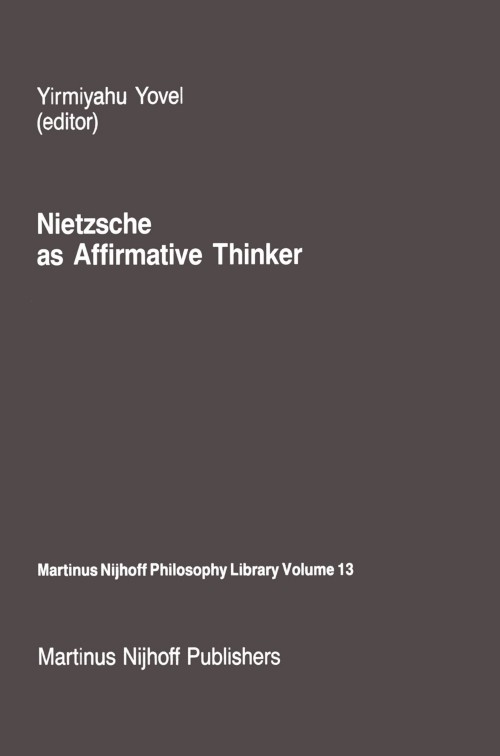
Nietzsche as Affirmative Thinker [electronic resource] : Papers Presented at the Fifth Jerusalem Philosophical Encounter, April 1983 / edited by Y. Yovel.
Erişim Adresi
ISBN
9789400943605
Dil Kodu
İngilizce
Yer Numarası
DK/10084
Basım Bildirimi
1st ed. 1986.
Yayın Bilgisi
Dordrecht : Springer Netherlands : Imprint: Springer, 1986.
Fiziksel Niteleme
XI, 233 p. online resource.
Dizi
Martinus Nijhoff Philosophy Library ; 13
İçindekiler Notu
I. Nietzsche and the Method of Philosophy -- Nietzsche on Philosophy, Interpretation, and Truth -- Nietzsche, Hume, and the Genealogical Method -- Nietzsche and the Project of Bringing Philosophy to an End -- Nietzsche and Contemporary Hermeneutics -- II. Varieties of Nietzsche’s Affirmation -- A More Severe Morality: Nietzsche’s Affirmative Ethics -- Will to Knowledge, Will to Ignorance, and Will to Power in Beyond Good and Evil -- The Socratic Nietzsche -- Nietzsche’s Concept of Education -- Nietzsche’s Style of Affirmation: The Metaphors of Genealogy -- Nietzsche: Psychology vs. Philosophy, and Freedom -- Nietzsche’s Enticing Psychology of Power -- III. Nietzschean Affinities and Confrontations -- Nietzsche and Spinoza: amor fati and amor dei -- Nietzsche und Heine. Kritik des christlichen Gottesbegriffs -- Nietzsche—Wagner im Sommer 1878.
Özet, vb.
The full century that has elapsed since Nietzsche was at the height of his work did not obliterate his impact. In many ways he is still a contemporary philosopher, even in that sense of 'contemporary' which points to the future. We may have outgrown his style (always, however, admirable and exciting to read), his sense of drama, his creative exaggeration, his sometimes flamboy ant posture of a rebel wavering between the heroic and the puerile. Yet Nietzsche's critique of transcendental values and, especially, his attack on the inherited conceptions of rationality remain pertinent and continue to pro voke anew cultural critique or dissent. Today Nietzsche is no longer discussed apologetically, nor is his radicalism shunned or suppressed. That his work remains the object of extremely diverse readings is befitting a philosopher who replaced the concept of truth with that of interpretation. It is, indeed, around the concept of interpretation that much of the rem:wed interest in Nietzsche seems to center today. Special emphasis is being laid on his manner of doing philosophy, and his views on interpretation and the genealogical method are often re-read in the context of contemporary hermeneutics and "deconstructionist" positions.
Konu
Philosophy, Modern.
Philosophy.
Early Modern Philosophy.
Philosophy.
Philosophy.
Early Modern Philosophy.
Philosophy.
Diğer Yazarlar
Kurum Adı
Eseri Alıntıla
Referansları kullanmadan önce gözden geçirmeniz ve varsa gerekli düzeltmeleri yapmanız önerilir.
Dijital Kaynak
MARC Görünümü
LEADER 04664nam a22005535i 4500
001 808795
003 TR_AnAIT
005 20260131025200
007 cr nn 008mamaa
008 121227s1986 ne | s |||| 0|eng d
020 |a9789400943605|9978-94-009-4360-5
024 7 |a10.1007/978-94-009-4360-5|2doi
041 |aeng
049 |aTürk Tarih Kurumu Kütüphanesi
050 4|aB800.2-804
072 7|aHPCD|2bicssc
072 7|aPHI016000|2bisacsh
072 7|aQDH|2thema
082 04|a190.903|223
090 |aDK/10084
245 10|aNietzsche as Affirmative Thinker|h[electronic resource] :|bPapers Presented at the Fifth Jerusalem Philosophical Encounter, April 1983 /|cedited by Y. Yovel.
250 |a1st ed. 1986.
264 1|aDordrecht :|bSpringer Netherlands :|bImprint: Springer,|c1986.
300 |aXI, 233 p.|bonline resource.
336 |atext|btxt|2rdacontent
337 |acomputer|bc|2rdamedia
338 |aonline resource|bcr|2rdacarrier
347 |atext file|bPDF|2rda
490 1 |aMartinus Nijhoff Philosophy Library ;|v13
505 0 |aI. Nietzsche and the Method of Philosophy -- Nietzsche on Philosophy, Interpretation, and Truth -- Nietzsche, Hume, and the Genealogical Method -- Nietzsche and the Project of Bringing Philosophy to an End -- Nietzsche and Contemporary Hermeneutics -- II. Varieties of Nietzsche’s Affirmation -- A More Severe Morality: Nietzsche’s Affirmative Ethics -- Will to Knowledge, Will to Ignorance, and Will to Power in Beyond Good and Evil -- The Socratic Nietzsche -- Nietzsche’s Concept of Education -- Nietzsche’s Style of Affirmation: The Metaphors of Genealogy -- Nietzsche: Psychology vs. Philosophy, and Freedom -- Nietzsche’s Enticing Psychology of Power -- III. Nietzschean Affinities and Confrontations -- Nietzsche and Spinoza: amor fati and amor dei -- Nietzsche und Heine. Kritik des christlichen Gottesbegriffs -- Nietzsche—Wagner im Sommer 1878.
520 |aThe full century that has elapsed since Nietzsche was at the height of his work did not obliterate his impact. In many ways he is still a contemporary philosopher, even in that sense of 'contemporary' which points to the future. We may have outgrown his style (always, however, admirable and exciting to read), his sense of drama, his creative exaggeration, his sometimes flamboy ant posture of a rebel wavering between the heroic and the puerile. Yet Nietzsche's critique of transcendental values and, especially, his attack on the inherited conceptions of rationality remain pertinent and continue to pro voke anew cultural critique or dissent. Today Nietzsche is no longer discussed apologetically, nor is his radicalism shunned or suppressed. That his work remains the object of extremely diverse readings is befitting a philosopher who replaced the concept of truth with that of interpretation. It is, indeed, around the concept of interpretation that much of the rem:wed interest in Nietzsche seems to center today. Special emphasis is being laid on his manner of doing philosophy, and his views on interpretation and the genealogical method are often re-read in the context of contemporary hermeneutics and "deconstructionist" positions.
532 8 |aAccessibility summary: This PDF is not accessible. It is based on scanned pages and does not support features such as screen reader compatibility or described non-text content (images, graphs etc). However, it likely supports searchable and selectable text based on OCR (Optical Character Recognition). Users with accessibility needs may not be able to use this content effectively. Please contact us at accessibilitysupport@springernature.com if you require assistance or an alternative format.
532 8 |aInaccessible, or known limited accessibility
532 8 |aNo reading system accessibility options actively disabled
532 8 |aPublisher contact for further accessibility information: accessibilitysupport@springernature.com
650 0|aPhilosophy, Modern.
650 0|aPhilosophy.
650 14|aEarly Modern Philosophy.
650 24|aPhilosophy.
700 1 |aYovel, Y.|eeditor.|4edt|4http://id.loc.gov/vocabulary/relators/edt
710 2 |aSpringerLink (Online service)
773 0 |tSpringer Nature eBook
776 08|iPrinted edition:|z9789024732692
776 08|iPrinted edition:|z9789400943612
776 08|iPrinted edition:|z9789401084390
830 0|aMartinus Nijhoff Philosophy Library ;|v13
856 40|uhttps://doi.org/10.1007/978-94-009-4360-5
912 |aZDB-2-SHU
912 |aZDB-2-SXPR
912 |aZDB-2-BAE
950 |aHumanities, Social Sciences and Law (SpringerNature-11648)
950 |aPhilosophy and Religion (R0) (SpringerNature-43725)
001 808795
003 TR_AnAIT
005 20260131025200
007 cr nn 008mamaa
008 121227s1986 ne | s |||| 0|eng d
020 |a9789400943605|9978-94-009-4360-5
024 7 |a10.1007/978-94-009-4360-5|2doi
041 |aeng
049 |aTürk Tarih Kurumu Kütüphanesi
050 4|aB800.2-804
072 7|aHPCD|2bicssc
072 7|aPHI016000|2bisacsh
072 7|aQDH|2thema
082 04|a190.903|223
090 |aDK/10084
245 10|aNietzsche as Affirmative Thinker|h[electronic resource] :|bPapers Presented at the Fifth Jerusalem Philosophical Encounter, April 1983 /|cedited by Y. Yovel.
250 |a1st ed. 1986.
264 1|aDordrecht :|bSpringer Netherlands :|bImprint: Springer,|c1986.
300 |aXI, 233 p.|bonline resource.
336 |atext|btxt|2rdacontent
337 |acomputer|bc|2rdamedia
338 |aonline resource|bcr|2rdacarrier
347 |atext file|bPDF|2rda
490 1 |aMartinus Nijhoff Philosophy Library ;|v13
505 0 |aI. Nietzsche and the Method of Philosophy -- Nietzsche on Philosophy, Interpretation, and Truth -- Nietzsche, Hume, and the Genealogical Method -- Nietzsche and the Project of Bringing Philosophy to an End -- Nietzsche and Contemporary Hermeneutics -- II. Varieties of Nietzsche’s Affirmation -- A More Severe Morality: Nietzsche’s Affirmative Ethics -- Will to Knowledge, Will to Ignorance, and Will to Power in Beyond Good and Evil -- The Socratic Nietzsche -- Nietzsche’s Concept of Education -- Nietzsche’s Style of Affirmation: The Metaphors of Genealogy -- Nietzsche: Psychology vs. Philosophy, and Freedom -- Nietzsche’s Enticing Psychology of Power -- III. Nietzschean Affinities and Confrontations -- Nietzsche and Spinoza: amor fati and amor dei -- Nietzsche und Heine. Kritik des christlichen Gottesbegriffs -- Nietzsche—Wagner im Sommer 1878.
520 |aThe full century that has elapsed since Nietzsche was at the height of his work did not obliterate his impact. In many ways he is still a contemporary philosopher, even in that sense of 'contemporary' which points to the future. We may have outgrown his style (always, however, admirable and exciting to read), his sense of drama, his creative exaggeration, his sometimes flamboy ant posture of a rebel wavering between the heroic and the puerile. Yet Nietzsche's critique of transcendental values and, especially, his attack on the inherited conceptions of rationality remain pertinent and continue to pro voke anew cultural critique or dissent. Today Nietzsche is no longer discussed apologetically, nor is his radicalism shunned or suppressed. That his work remains the object of extremely diverse readings is befitting a philosopher who replaced the concept of truth with that of interpretation. It is, indeed, around the concept of interpretation that much of the rem:wed interest in Nietzsche seems to center today. Special emphasis is being laid on his manner of doing philosophy, and his views on interpretation and the genealogical method are often re-read in the context of contemporary hermeneutics and "deconstructionist" positions.
532 8 |aAccessibility summary: This PDF is not accessible. It is based on scanned pages and does not support features such as screen reader compatibility or described non-text content (images, graphs etc). However, it likely supports searchable and selectable text based on OCR (Optical Character Recognition). Users with accessibility needs may not be able to use this content effectively. Please contact us at accessibilitysupport@springernature.com if you require assistance or an alternative format.
532 8 |aInaccessible, or known limited accessibility
532 8 |aNo reading system accessibility options actively disabled
532 8 |aPublisher contact for further accessibility information: accessibilitysupport@springernature.com
650 0|aPhilosophy, Modern.
650 0|aPhilosophy.
650 14|aEarly Modern Philosophy.
650 24|aPhilosophy.
700 1 |aYovel, Y.|eeditor.|4edt|4http://id.loc.gov/vocabulary/relators/edt
710 2 |aSpringerLink (Online service)
773 0 |tSpringer Nature eBook
776 08|iPrinted edition:|z9789024732692
776 08|iPrinted edition:|z9789400943612
776 08|iPrinted edition:|z9789401084390
830 0|aMartinus Nijhoff Philosophy Library ;|v13
856 40|uhttps://doi.org/10.1007/978-94-009-4360-5
912 |aZDB-2-SHU
912 |aZDB-2-SXPR
912 |aZDB-2-BAE
950 |aHumanities, Social Sciences and Law (SpringerNature-11648)
950 |aPhilosophy and Religion (R0) (SpringerNature-43725)
Materyaller
Depodan talep edilen materyal sadece kütüphane içerisinde kullanılmaktadır.
Materyal dışarıya ödünç verilmemektedir.
Materyal dışarıya ödünç verilmemektedir.
